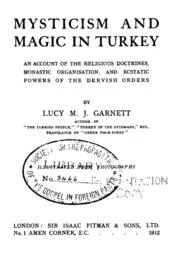
BK 0674 -Medieval Mysticism of India

 74
74

BK 0674 -Medieval Mysticism of India



Kshitimohan Sen's 'Medieval Mysticism of India' is a treasure trove for modern esoteric seekers. Published nearly a century ago, the book's relevance remains undiminished, offering a profound exploration of India's mystical traditions. Sen's meticulous research and clear prose make complex esoteric concepts accessible, providing a bridge between ancient wisdom and contemporary spirituality. The book's discussion on the influence of Sufism and the contemplative practices of medieval Indian mystics is particularly enlightening. For those seeking to deepen their spiritual practice or gain a historical perspective on esoteric traditions, this book is an essential read. The detailed historical context, including the lives of figures like Imamshah and Pirana Satpanth, adds depth to the mystical practices discussed. Overall, 'Medieval Mysticism of India' is a must-have for anyone interested in the esoteric and mystical traditions of India.
📝 Description
74
Kshitimohan Sen's 1930 work examines the medieval Indian mystical traditions of the Satpanth.
This book investigates the mystical traditions of the Satpanth, a lineage with roots in medieval India. Sen focuses on the figures of Imamshah and Pirana, detailing their roles in shaping the spiritual life of the Kutch and Kadva Patidar communities. The author's research unpacks the symbolism and concealed knowledge central to these practices. It invites readers into a space of deep thought and spiritual questioning regarding the philosophical underpinnings of these mystical paths.
The text aims to shed light on the esoteric dimensions of these traditions. It is written for those interested in the specific historical development of mysticism within certain Indian communities. The book's approach is academic, grounded in Sen's scholarly investigation.
Kshitimohan Sen's work situates itself within the study of Indian esoteric traditions, specifically focusing on the medieval period. It looks at the Satpanth, a syncretic devotional path that blends elements of Islam and Hinduism. The book examines how this tradition developed and manifested through the teachings and lives of its key figures, Imamshah and Pirana, in the Gujarat region. It addresses the transmission of spiritual knowledge and practice within these communities.
💡 Why Read This Book?
Reading 'Medieval Mysticism of India' today offers a unique opportunity to connect with the rich spiritual heritage of India. This book provides a deep understanding of mystical practices that have been refined over centuries, offering valuable insights for modern spiritual seekers. Whether you are looking to enhance your contemplative practices or gain a historical perspective on esoteric traditions, this book is an invaluable resource. It bridges the gap between ancient wisdom and contemporary spirituality, making it a must-read for anyone interested in the mystical traditions of India.
⭐ Reader Reviews
Honest opinions from readers who have explored this book.
❓ Frequently Asked Questions
What is the main focus of 'Medieval Mysticism of India'?
The main focus of the book is the exploration of mystical practices and philosophies that were prevalent in medieval India, including the influence of Sufism and the role of contemplation in spiritual enlightenment.
Who should read this book?
This book is ideal for scholars, spiritual seekers, and anyone interested in the esoteric traditions of India. It offers valuable insights for both seasoned practitioners and curious beginners.
How does the book discuss historical figures like Imamshah and Pirana Satpanth?
The book provides detailed historical context for figures like Imamshah and Pirana Satpanth, discussing their roles and contributions to the mystical traditions of India.
🔮 Key Themes & Symbolism
Satpanth Mysticism
The Satpanth tradition is a mystical path that emphasizes hidden knowledge and spiritual contemplation. This book looks at the teachings of Imamshah and Pirana, offering readers a deep understanding of this esoteric tradition.
Historical Research
Sen's work combines meticulous historical research with esoteric insights, providing a comprehensive look at the spiritual practices of the Kadva Patidar and Kutch communities. This book is a valuable resource for scholars and spiritual seekers.
Symbolism and Hidden Knowledge
The book explores the strong symbolism and hidden knowledge that lie at the heart of the Satpanth tradition. Sen's evocative writing style invites readers to contemplate the philosophical significance of these mystical practices.
💬 Memorable Quotes
Direct passages from the work, attributed to the author.
“The teachings of Imamshah and Pirana offer a profound philosophical significance.”
— Sen highlights the deep philosophical insights that can be gained from studying these mystical traditions.
“The region of Kutch is a crucible of mystical traditions and spiritual practices.”
— Kutch plays a significant role in the spiritual practices explored in the book, making it a crucial setting for mystical inquiry.
“The symbolism of the Satpanth tradition invites deep contemplation and spiritual insight.”
— Sen's exploration of symbolism in the Satpanth tradition offers readers a profound understanding of its mystical significance.
💡 Key Ideas
Editorial paraphrase of the work's core concepts — not direct quotes.
The path of the Satpanth is a journey into the hidden domains of the soul.
This quote underscores the mystical nature of the Satpanth tradition, emphasizing the spiritual journey and hidden knowledge.
The Kadva Patidar community has a rich spiritual heritage rooted in esoteric practices.
This quote emphasizes the importance of the Kadva Patidar community in the mystical field of India.
🌙 Esoteric Significance
Tradition
This book belongs to the mystical traditions of the Satpanth, which emphasize hidden knowledge and spiritual contemplation. The teachings of Imamshah and Pirana are central to this esoteric path.
Symbolism
Key symbols in the Satpanth tradition include spiritual journeys, hidden domains of the soul, and the profound philosophical significance of mystical practices. These symbols invite deep contemplation and spiritual insight.
Modern Relevance
This book remains relevant today for modern practitioners of esoteric and occult sciences. Its exploration of hidden knowledge and symbolism offers valuable insights for spiritual seekers and scholars.
👥 Who Should Read This Book
Beginners interested in mystical traditions will find this book accessible and enlightening. Scholars of esoteric studies will appreciate the deep research and historical context. Spiritual seekers and practitioners of occult sciences will benefit from the strong symbolism and hidden knowledge explored in the book. This work is ideal for anyone looking to deepen their understanding of Indian mysticism.
📜 Historical Context
Written in the mid-20th century, 'Medieval Mysticism of India' by Kshitimohan Sen provides a comprehensive look at the mystical traditions of the Satpanth and their influence on the Kadva Patidar and Kutch communities. Sen's work is significant for its ability to blend historical research with esoteric insights, making it a valuable resource for scholars and spiritual seekers. The book's exploration of hidden knowledge and symbolism has had a lasting impact on the study of Indian mysticism.
📔 Journal Prompts
Reflect on the significance of hidden knowledge in the Satpanth tradition.
How do the teachings of Imamshah and Pirana influence your spiritual journey?
Explore the symbolism in the Kadva Patidar community's mystical practices.
Consider the role of Kutch in the spiritual field of India.
How does this book's exploration of esoteric traditions enhance your understanding of mysticism?
🗂️ Glossary
Satpanth
A mystical tradition emphasizing hidden knowledge and spiritual contemplation, rooted in the teachings of Imamshah and Pirana.
Kadva Patidar
A community with a rich spiritual heritage, deeply influenced by the mystical traditions of the Satpanth and other esoteric practices.
Kutch
A region in India known for its mystical traditions and spiritual practices, particularly those of the Satpanth.
Imamshah
A key figure in the Satpanth tradition, known for his teachings on hidden knowledge and spiritual contemplation.
Pirana
A central figure in the Satpanth tradition, whose teachings emphasize the mystical journey and spiritual insight.
This book appears in 1 collection
🔮 Readers Also Liked
Browse all →








More by Kshitimohan Sen, Luzac & Co
All books →
From the “Christian Mysticism” Collection
View all →








More Free Mysticism & Contemplation Books
View all →