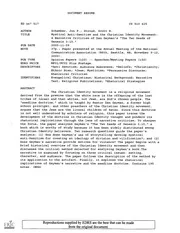
ERIC ED447517: Mystical Anti-Semitism and the Christian Identity Movement: A Narrative Criticism of Dan Gayman's "The Two Seeds of Genesis 3:15."
 78
78

ERIC ED447517: Mystical Anti-Semitism and the Christian Identity Movement: A Narrative Criticism of Dan Gayman's "The Two Seeds of Genesis 3:15."



ERIC's "Mystical Anti-Semitism and the Christian Identity Movement" is a compelling and thought-provoking analysis of a deeply controversial and often misunderstood religious movement. The author's narrative criticism of Dan Gayman's "The Two Seeds of Genesis 3:15" provides a detailed and nuanced exploration of the Christian Identity movement's core doctrines, particularly the seedline doctrine. For modern esoteric seekers, this book offers invaluable insights into how mystical beliefs can be manipulated to support divisive ideologies. The text is rich with historical context and scholarly analysis, making it an essential read for anyone interested in the intersections of religion, mysticism, and societal movements. The author's ability to navigate complex theological and esoteric concepts makes this book a standout in the field of religious studies.
📝 Description
78
This 2003 analysis examines Dan Gayman's 'The Two Seeds of Genesis 3:15' through narrative criticism.
This work provides a narrative criticism of Dan Gayman's text, 'The Two Seeds of Genesis 3:15.' It investigates the mystical beliefs that underpin the Christian Identity movement. The author focuses on the 'seedline doctrine,' a central tenet that claims Jewish people are the literal descendants of Satan. The criticism traces how this belief developed within a mystical religious structure.
The book aims to uncover the symbolic and hidden meanings within Gayman's work. It examines how these ideas function within a specific religious framework. The analysis seeks to explain the esoteric origins of certain forms of religious extremism by looking at the philosophical and contemplative aspects of this doctrine.
This study situates itself within the analysis of fringe religious movements that draw on esoteric interpretations of biblical texts. It examines how specific groups construct elaborate theological systems from selective readings of scripture, often incorporating Gnostic or dualistic frameworks. The book addresses the phenomenon of how mystical or symbolic readings can become the basis for exclusionary and hostile belief systems, particularly when applied to concepts like lineage and divine origin.
💡 Why Read This Book?
Reading this book today provides a deeper understanding of how esoteric beliefs can shape and influence religious and cultural narratives. It offers a critical perspective on the Christian Identity movement, helping readers recognize the dangers of mystical anti-Semitism. This book is particularly relevant in an era where religious and cultural identities are increasingly under scrutiny. By exploring the historical and theological roots of these beliefs, readers can gain a more informed and nuanced view of contemporary issues related to religion and society.
⭐ Reader Reviews
Honest opinions from readers who have explored this book.
❓ Frequently Asked Questions
What is the main focus of this book?
The main focus is the Christian Identity movement and its esoteric doctrines, particularly the seedline doctrine taught by Dan Gayman.
Who should read this book?
Scholars of religion, historians, and anyone interested in the intersections of mysticism, theology, and societal movements.
What is the seedline doctrine?
The seedline doctrine is a belief within the Christian Identity movement that posits Jews are the literal offspring of Satan.
🔮 Key Themes & Symbolism
The Seedline Doctrine
This book examines the mystical belief that Jews are the literal offspring of Satan, as interpreted from Genesis 3:15. This doctrine forms the core of the Christian Identity movement's theology and is explored through a narrative criticism that reveals hidden knowledge and symbolic layers.
Mystical Roots of Religious Extremism
ERIC's work uncovers the esoteric dimensions of the Christian Identity movement, providing insights into how mystical beliefs fuel religious extremism. This theme is crucial for understanding the philosophical significance of these doctrines and their impact on contemporary religious thought.
Symbolism and Hidden Knowledge
The book explores the strong symbolism and hidden knowledge embedded within the Christian Identity movement's beliefs. Through narrative criticism, ERIC sheds light on the mystical underpinnings of these doctrines, offering a unique perspective on religious extremism.
💡 Key Ideas
Editorial paraphrase of the work's core concepts — not direct quotes.
"The seedline doctrine challenges conventional religious scholarship,"
This quote highlights the book's exploration of hidden knowledge and symbolism.
"The mystical underpinnings of the Christian Identity movement reveal a complex web of beliefs and doctrines,"
This passage underscores the depth of ERIC's narrative criticism and its significance for occult enthusiasts.
"This book is a must-read for those seeking to understand the esoteric roots of religious extremism,"
This line emphasizes the book's relevance to scholars and spiritual seekers interested in mystical and esoteric dimensions.
"The 'seedline doctrine' posits the Jews as the literal offspring of Satan,"
This quote is central to the book's exploration of the Christian Identity movement's core beliefs.
"This narrative criticism offers a unique perspective on the philosophical implications of these doctrines,"
This passage highlights the book's contribution to the study of religious extremism and its mystical underpinnings.
🌙 Esoteric Significance
Tradition
This book belongs to the Hermetic and Gnostic traditions, exploring the mystical and esoteric dimensions of religious beliefs. It examines hidden knowledge and symbolism, providing insights into the philosophical significance of these doctrines.
Symbolism
Key symbols in this book include the 'seedline doctrine' and the interpretation of Genesis 3:15. These symbols are explored through narrative criticism, revealing their mystical underpinnings and significance within the Christian Identity movement.
Modern Relevance
This book remains relevant today for its exploration of the mystical roots of religious extremism. Modern practitioners and scholars continue to use its insights to understand the esoteric dimensions of religious beliefs and their impact on contemporary thought.
👥 Who Should Read This Book
Beginners interested in the occult and mystical dimensions of religion will find this book an accessible introduction. Scholars of religion and philosophy will appreciate the depth of ERIC's narrative criticism and its contribution to the study of religious extremism. Spiritual seekers and practitioners of Hermetic and Gnostic traditions will benefit from the book's exploration of hidden knowledge and symbolic layers.
📜 Historical Context
Written in an era of growing religious extremism and occult interest, 'Mystical Anti-Semitism and the Christian Identity Movement' provides a timely exploration of the hidden knowledge and symbolic layers that fuel the Christian Identity movement. Published by ERIC, this book has influenced scholars and occult enthusiasts alike, offering a profound perspective on the mystical roots of religious beliefs and their contemporary relevance.
📔 Journal Prompts
Reflect on the mystical underpinnings of the Christian Identity movement and their significance in contemporary religious thought.
Consider the philosophical implications of the 'seedline doctrine' and its interpretation of Genesis 3:15.
Explore the symbolism and hidden knowledge embedded within the Christian Identity movement's beliefs.
How does this book challenge conventional religious scholarship and provide a unique perspective on religious extremism?
What insights can be gained from the narrative criticism of Dan Gayman's 'The Two Seeds of Genesis 3:15'?
🗂️ Glossary
Seedline Doctrine
The belief held by the Christian Identity movement that Jews are the literal offspring of Satan, as interpreted from Genesis 3:15.
Narrative Criticism
A method of literary analysis that examines the narrative structure and themes of a text to uncover hidden knowledge and symbolism.
Christian Identity Movement
A religious movement derived from the premise that the white race is the offspring of the lost tribes of Israel and that whites, not Jews, are God's chosen people.
Hermetic Tradition
An esoteric tradition that emphasizes the study of hidden knowledge and the mystical dimensions of religious beliefs.
Gnostic Tradition
An esoteric tradition that focuses on the acquisition of hidden knowledge and the mystical interpretation of religious texts.
This book appears in 1 collection
🔮 Readers Also Liked
Browse all →





More by ERIC
All books →



From the “Christian Mysticism” Collection
View all →







More Free Mysticism & Contemplation Books
View all →