Autobiography of a Yogi
 83
83

Autobiography of a Yogi
Paramahansa Yogananda’s autobiography is less a conventional life story and more a chronicle of spiritual encounters and teachings. The sheer volume of extraordinary events, from levitations to miraculous healing, can strain credulity for the secular reader. Yet, the sincerity of Yogananda’s devotion and the clarity of his explanations regarding yogic science are undeniable. His description of learning Kriya Yoga under Sri Yukteswar provides a compelling case study of the guru-disciple dynamic, emphasizing rigorous discipline and profound inner transformation. While some passages read like hagiography, the book’s enduring influence stems from its accessible presentation of complex spiritual ideas. It is a foundational text for many Westerners seeking an understanding of Indian yogic traditions beyond mere physical postures.
📝 Description
83
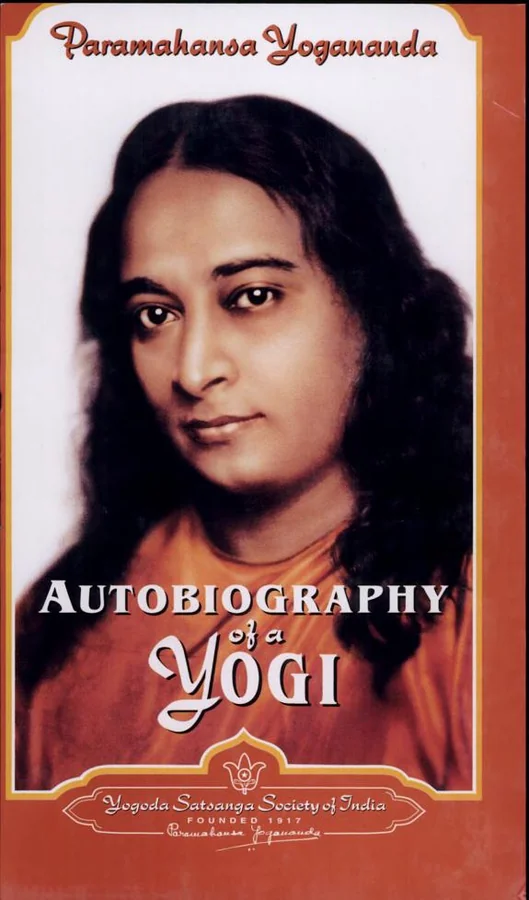
Paramahansa Yogananda's autobiography, first published in 1946, details his life and mission to introduce Kriya Yoga to the West.
Autobiography of a Yogi chronicles the life of Paramahansa Yogananda, an Indian yogi who brought Kriya Yoga to the Western world. The book recounts his childhood, his search for spiritual realization, and his tutelage under the guru Swami Sri Yukteswar Giri. Yogananda describes his encounters with various spiritual figures, his travels, and the founding of the Self-Realization Fellowship in the United States. The narrative details his early life in India, his spiritual training, and his subsequent mission to America. It covers his experiences with saints and masters, his travels across continents, and the establishment of his organization. The book offers a firsthand account of a life dedicated to spiritual awakening and disseminating yogic teachings globally.
The book appeared as Western interest in Eastern spirituality grew following World War I. Yogananda's arrival in America in 1920 and the 1946 publication of his work were significant in popularizing yoga and Vedanta. Unlike some contemporary explorations of altered states, Yogananda's text presented yogic science as a direct path to spiritual evolution, situating his work within a tradition of Indian spiritual transmission.
💡 Why Read This Book?
• Learn about Kriya Yoga, a specific meditation technique for spiritual advancement, as detailed in the chapters concerning Yogananda's training under Sri Yukteswar. • Understand the guru-disciple relationship as a vital component of spiritual growth, exemplified by Yogananda’s devotion to his master. • Gain insight into the yogic perspective on the universe and consciousness, as explained through Yogananda's experiences and teachings shared throughout the book.
⭐ Reader Reviews
Honest opinions from readers who have explored this book.
❓ Frequently Asked Questions
When was Autobiography of a Yogi first published?
Autobiography of a Yogi was first published in 1946, marking a significant moment for the introduction of yogic philosophy to the Western world.
Who is the author, Paramahansa Yogananda?
Paramahansa Yogananda was an Indian yogi and guru who founded the Self-Realization Fellowship in 1920 to disseminate his teachings on Kriya Yoga worldwide.
What is Kriya Yoga as described in the book?
Kriya Yoga, as presented in the autobiography, is a meditation technique designed to accelerate spiritual evolution by purifying the mind and body and increasing cosmic consciousness.
Does the book explain other Indian spiritual traditions?
Yes, the autobiography touches upon various Indian spiritual figures and traditions, including the teachings of Lahiri Mahasaya and Babaji, offering a broader view of spiritual paths.
Is the book available online for free?
The Self-Realization Fellowship makes the full text of Autobiography of a Yogi available online for free, in accordance with Yogananda's wishes.
What is the significance of Sri Yukteswar Giri?
Sri Yukteswar Giri was Paramahansa Yogananda's guru and a prominent disciple of Lahiri Mahasaya, playing a central role in Yogananda's spiritual training and the lineage of Kriya Yoga.
🔮 Key Themes & Symbolism
The Path of Kriya Yoga
The book meticulously details Kriya Yoga, presented not merely as a physical discipline but as a scientific technique for spiritual realization. Yogananda explains its origins with Mahavatar Babaji and Lahiri Mahasaya, and its transmission through his guru, Sri Yukteswar Giri. The core of Kriya Yoga involves specific breathing techniques and meditation practices aimed at accelerating the soul's evolutionary progress, harmonizing the body's subtle energies, and ultimately leading to union with the Divine. It is positioned as a direct method for achieving self-mastery and divine perception.
The Guru-Disciple Relationship
Central to the narrative is the profound and often unconventional relationship between Yogananda and his guru, Sri Yukteswar Giri. The autobiography illustrates the essential role of a spiritual guide in the seeker's journey, emphasizing obedience, unwavering faith, and the guru's unique ability to transmit spiritual energy and wisdom. Yogananda portrays Sri Yukteswar not just as a teacher but as a divine instrument, guiding his disciple through rigorous trials and profound spiritual initiations, underscoring the transformative power of this sacred connection.
Universal Laws and Cosmic Consciousness
Yogananda expounds on the idea that the universe operates according to precise, discoverable laws, akin to scientific principles. He discusses concepts such as karma, reincarnation, and the subtle energetic body (chakras and prana) to explain human experience and spiritual evolution. The book suggests that by understanding and aligning with these cosmic laws through practices like Kriya Yoga, individuals can attain a state of expanded consciousness, perceive the underlying unity of existence, and realize their divine nature.
Spiritual Science and Miracles
The autobiography bridges the perceived gap between science and spirituality by presenting yogic abilities and spiritual phenomena as extensions of natural laws, albeit ones not yet fully understood by mainstream science. Yogananda recounts numerous instances of miracles, levitation, and divine intervention, framing them not as supernatural events but as manifestations of highly refined spiritual and mental control. This perspective invites readers to consider a broader definition of reality where consciousness plays a direct, formative role.
💬 Memorable Quotes
Direct passages from the work, attributed to the author.
““The shortest path to enlightenment is the path of devotion.””
— This statement highlights the central role of love and surrender in spiritual practice, suggesting that a heart filled with devotion can be a powerful catalyst for divine realization, perhaps even more direct than intellectual understanding alone.
““The Lord is the ocean of bliss; His manifestations are the waves.””
— This metaphor illustrates the concept of the Divine as the singular source of all joy and existence, with the myriad forms and experiences in the world being temporary expressions or waves rising from that infinite ocean.
““The average man thinks he is doing God a service by doing good deeds. But the Yogi does good deeds because he is doing God.””
— This idea posits a fundamental difference between ethical action motivated by duty and action that arises spontaneously from a state of divine union, where good deeds are an inherent expression of one's realized spiritual nature.
💡 Key Ideas
Editorial paraphrase of the work's core concepts — not direct quotes.
“When the devotee becomes spiritually-minded, he begins to see God in all things.”
This paraphrased concept suggests that true spiritual awakening involves a perceptual shift, where the divine presence is no longer confined to religious contexts but is recognized as the underlying reality of all existence.
“Mind is a phantom, a shadow, a reflection of the Self.”
This quote emphasizes the illusory nature of the egoic mind from a yogic perspective, positioning it as a derivative or distorted perception of the true, eternal spiritual Self, which is the ultimate reality.
🌙 Esoteric Significance
Tradition
The work is deeply rooted in the yogic traditions of India, specifically the lineage of Kriya Yoga passed down from Mahavatar Babaji through Lahiri Mahasaya and Sri Yukteswar Giri. It integrates elements of Vedanta philosophy, emphasizing the oneness of Brahman and Atman, with practical yogic techniques for spiritual evolution. While distinct, it shares common ground with theosophical explorations of consciousness and subtle bodies prevalent in the early 20th century, but offers a more direct, experiential approach to realization.
Symbolism
Key symbols include the lotus, representing spiritual unfoldment and the awakening of consciousness (chakras); the divine light, signifying pure consciousness and the goal of yogic meditation; and the guru's touch or presence, symbolizing the transmission of spiritual energy (shaktipat) crucial for disciple's progress. The concept of 'cosmic sound' (Aum) is also paramount, representing the vibratory origin of creation and a primary object of meditation.
Modern Relevance
Contemporary figures in mindfulness, meditation, and spiritual wellness frequently reference Yogananda's teachings. Modern yoga instructors and spiritual seekers often draw upon the book's explanations of Kriya Yoga, pranayama, and the philosophical underpinnings of yogic practice. Its emphasis on scientific methodology applied to inner experience continues to resonate with those seeking empirical validation for spiritual pursuits.
👥 Who Should Read This Book
• Seekers of Eastern spirituality: Those curious about yoga, meditation, and Indian philosophy will find an accessible, personal account of advanced yogic principles and practices. • Students of comparative religion: Individuals studying the diversity of spiritual paths will gain insight into a major lineage of Indian mysticism and its introduction to the West. • Personal growth enthusiasts: Readers looking for inspirational biographies and practical guidance on self-mastery and consciousness expansion will find Yogananda's journey compelling.
📜 Historical Context
First published in 1946, Paramahansa Yogananda's Autobiography of a Yogi arrived during a fertile period for cross-cultural spiritual exchange. The burgeoning interest in Eastern thought in the West was fueled by figures like Aldous Huxley, who explored mysticism, and theosophical movements. Yogananda’s work, however, offered a more direct and systematic introduction to yogic practices, particularly Kriya Yoga, through his Self-Realization Fellowship founded in 1920. Unlike academic or purely philosophical treatments, his autobiography presented spiritual realization as an attainable science. The book's reception was largely positive, though it also faced skepticism from some quarters accustomed to Western materialist paradigms. It was notably cited by figures such as George Harrison, underscoring its impact on popularizing Eastern spirituality.
📔 Journal Prompts
The concept of Kriya Yoga as a scientific path to self-realization.
Yogananda's descriptions of his interactions with Sri Yukteswar Giri.
The role of divine perception in recognizing universal laws.
Moments of perceived miracles and their interpretation within yogic philosophy.
The nature of the guru-disciple relationship as depicted in the book.
🗂️ Glossary
Kriya Yoga
A meditation technique taught by Paramahansa Yogananda, designed to accelerate spiritual evolution through specific breathing and concentration exercises that purify the mind and body.
Aum
A sacred mantra and primordial sound representing the vibratory origin of creation in Hindu philosophy; a key object of meditation in yoga.
Chakra
The energy centers within the subtle body, typically seven in number, that are believed to govern various physical, emotional, and spiritual functions.
Prana
The vital life force or energy that permeates all living beings, which yogic practices aim to control and direct.
Guru
A spiritual teacher or guide in Hinduism, Buddhism, and Sikhism, revered for their wisdom and ability to lead disciples towards enlightenment.
Maya
The illusionary power that conceals the true nature of reality and creates the phenomenal world as we perceive it; often translated as 'illusion'.
Self-Realization Fellowship (SRF)
The spiritual organization founded by Paramahansa Yogananda in 1920 to disseminate his teachings on Kriya Yoga and the spiritual sciences.
This book appears in 1 collection
🔮 Readers Also Liked
Browse all →









From the “Yoga” Collection
View all →









More Free Occult Philosophy Books
View all →