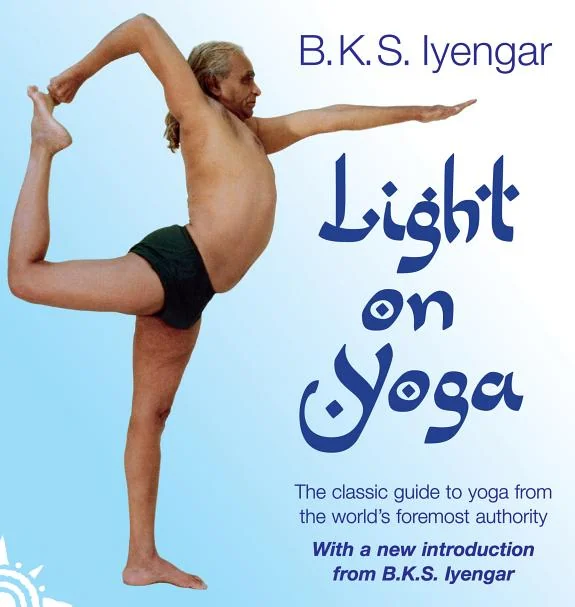
Light on Yoga
 71
71

Light on Yoga
Iyengar's 'Light on Yoga' is less a gentle invitation and more a rigorous dissection of the yogic path. Its strength lies in its almost surgical precision; the detailed instructions for each Asana, often accompanied by illustrative photographs, leave little room for ambiguity. The meticulous focus on anatomical alignment, a hallmark of Iyengar's teaching, is invaluable for preventing injury and deepening understanding. However, this very precision can sometimes feel overwhelming for the absolute beginner, presenting a formidable wall of information. The section on Pranayama, while thorough, requires careful study. A particularly illuminating passage details the engagement of Uddiyana Bandha, explaining its energetic effects with remarkable clarity. While it might lack the poetic flourish of some yogic texts, its practical, almost scientific, exposition of Asana and Pranayama is unparalleled.
This is an indispensable reference for the serious practitioner seeking mastery of form.
📝 Description
71
B. K. S. Iyengar's 'Light on Yoga' details 200 asanas and 14 breathing techniques.
First published in 2001, 'Light on Yoga' by B. K. S. Iyengar is a detailed guide to yoga practice. It systematically covers asana, or postures, and pranayama, breathing exercises. The book moves from basic poses for newcomers to complex sequences for experienced practitioners. Iyengar also discusses the philosophical aspects of yoga, including its ethical and metaphysical elements. The text includes advice on using yoga for health issues, aiming to help alleviate specific physical concerns.
The book aims for clarity and a methodical structure, making it a reference for dedicated yoga students. Beginners can find a clear path into the practice with instructions for safe and effective execution. Those with more experience can refine their technique and deepen their understanding of challenging poses. The work also appeals to readers interested in yoga's spiritual and philosophical dimensions, or those seeking practical ways to manage physical ailments through their practice. It suits students who value precise instruction and a logical progression of knowledge.
Emerging in 2001 as yoga gained global popularity, Iyengar's text offered a precise, anatomical counterpoint to more spiritual interpretations. His emphasis on alignment and systematic instruction provided a tangible framework for practitioners. This approach appealed to a growing audience seeking concrete results and a clear understanding of the physical mechanics of yoga, grounding the practice in detailed physical execution.
💡 Why Read This Book?
• Learn precise anatomical alignment for over 200 Asanas, as detailed in the extensive pose directory, ensuring safer and more effective physical practice. • Understand the foundational principles of Pranayama, including specific techniques like Kumbhaka, as outlined in the dedicated breathing chapters, to cultivate vital energy. • Gain insight into the philosophical framework of Yoga through Iyengar's interpretation of Patanjali's Yoga Sutras, presented to guide practitioners toward self-awareness.
⭐ Reader Reviews
Honest opinions from readers who have explored this book.
❓ Frequently Asked Questions
What is the primary focus of B. K. S. Iyengar's 'Light on Yoga'?
The primary focus is a systematic, detailed guide to Yoga Asana and Pranayama. It covers over 200 poses and various breathing techniques, aiming for precise alignment and therapeutic benefits, alongside an introduction to Yoga philosophy.
Is 'Light on Yoga' suitable for absolute beginners?
Yes, it includes routines for beginners, but its detailed and precise nature means beginners should approach it with patience and perhaps initial guidance from a qualified instructor. The book provides a solid foundation.
When was 'Light on Yoga' first published?
'Light on Yoga' was first published in 2001, though B. K. S. Iyengar began teaching much earlier and developed his method over decades.
Does the book explain the philosophy behind Yoga?
Yes, it includes an introduction to the philosophy of Yoga, referencing Patanjali's Yoga Sutras and explaining concepts like the Yamas and Niyamas, providing context for the physical practices.
Can 'Light on Yoga' help with specific health problems?
The book offers guidance on using Yoga for healing various health issues, detailing specific Asanas and therapeutic approaches for conditions, making it a practical resource for self-care.
What makes Iyengar's approach to Yoga unique?
Iyengar's approach emphasizes precise anatomical alignment, the use of props to achieve correct form, and a systematic progression of practice, distinguishing it from more fluid or purely spiritual styles.
🔮 Key Themes & Symbolism
Precision in Asana
The text meticulously details over 200 Asanas, emphasizing precise anatomical alignment. Iyengar's method focuses on achieving the correct form in each posture, often explaining the subtle actions of muscles and joints. This precision is presented not just for physical benefit but as a means to cultivate mental focus and prepare the body for deeper states of consciousness. The systematic breakdown ensures that practitioners understand the mechanics, making advanced poses accessible through diligent application of foundational principles.
The Power of Pranayama
Beyond physical postures, 'Light on Yoga' dedicates significant attention to Pranayama, the science of breath control. Iyengar explains that breath is intrinsically linked to life force (prana) and the mind. The book systematically introduces various breathing techniques, including retention (Kumbhaka), and internal locks (Bandhas), detailing their physiological and energetic effects. This section underscores the idea that conscious regulation of breath is crucial for developing internal energy, mental clarity, and yogic concentration.
Yoga as a Philosophical Path
The work frames Yoga not merely as a physical exercise but as a profound philosophical system aimed at self-realization. Iyengar provides an introduction to the ethical and psychological principles outlined in Patanjali's Yoga Sutras, such as the Yamas and Niyamas. This philosophical context is presented as essential for understanding the ultimate purpose of Asana and Pranayama, guiding the practitioner towards inner peace, discipline, and liberation from suffering.
Therapeutic Applications
A notable aspect of the book is its exploration of Yoga's therapeutic potential. Iyengar details specific routines and Asanas tailored to address common ailments and health concerns. This practical application demonstrates the versatility of Yoga as a healing modality, offering guidance for practitioners seeking to alleviate physical discomfort, improve bodily functions, and enhance overall well-being through dedicated practice.
💬 Memorable Quotes
Direct passages from the work, attributed to the author.
“The body is the temple of the spirit. It must be kept pure and clean.”
— This statement highlights Iyengar's view of the physical body not as an end in itself, but as a sacred vessel. Maintaining the body through disciplined practice and awareness is presented as a fundamental aspect of spiritual development.
“Asana is the firm, steady and comfortable posture.”
— This definition, often attributed to Patanjali and elaborated by Iyengar, captures the essence of a well-executed Yoga pose. It emphasizes balance between effort (firmness, steadiness) and ease (comfort), crucial for sustained practice and inner calm.
“Breath is the chariot of the soul.”
— This evocative phrase underscores the vital connection between breath and consciousness in Iyengar's teachings. It suggests that by controlling and refining the breath, one can access deeper aspects of the self and achieve spiritual progress.
“The practice of Asana is the foundation. Without it, the rest is difficult.”
— This emphasizes the primacy of physical postures in Iyengar's system, particularly for those beginning their journey. It suggests that a strong and stable physical practice is a necessary prerequisite for exploring the more subtle elements of Yoga, such as Pranayama and meditation.
“To control the breath is to control the mind.”
— This direct correlation highlights the practical application of Pranayama for mental discipline. Iyengar presents breathwork as a powerful tool for calming the nervous system, improving concentration, and achieving mental equanimity.
🌙 Esoteric Significance
Tradition
While rooted in the classical Hatha Yoga tradition, particularly as codified by Patanjali, Iyengar's approach in 'Light on Yoga' emphasizes the practical, physiological, and anatomical aspects of Yoga to an unprecedented degree. It serves as a bridge between the esoteric philosophical aims of Yoga (union of consciousness) and the tangible realities of the human body. It aligns with the broader Indian philosophical systems, particularly Samkhya and Vedanta, by presenting Asana and Pranayama as preparatory limbs (anga) for Raja Yoga, the path of meditation and self-realization.
Symbolism
The primary symbols in 'Light on Yoga' are embodied within the Asanas themselves. Each posture is a symbolic representation of stability (Sthira) and ease (Sukha), a microcosm of the balance sought in life. The concept of 'Prana' (life force) as channeled through breath (Pranayama) is a key symbolic element, representing the vital energy that animates existence and connects the physical to the subtle. The systematic progression through poses can be seen as a symbolic journey towards greater self-awareness and control.
Modern Relevance
Iyengar's meticulous system continues to influence contemporary Yoga practice globally. His emphasis on alignment and therapeutic application is foundational in many modern Hatha Yoga classes. Thinkers and practitioners focused on somatic practices, biomechanics in movement, and evidence-based approaches to well-being often reference Iyengar's precise anatomical insights. Furthermore, his method provides a rigorous physical discipline that many find complements mindfulness and contemplative practices, demonstrating its enduring relevance across diverse spiritual and wellness communities.
👥 Who Should Read This Book
• Aspiring Yoga instructors seeking a definitive, anatomically precise guide to teaching Asana and Pranayama safely and effectively. • Dedicated practitioners interested in deepening their understanding of posture mechanics, energetic principles (Prana, Bandhas), and the philosophical underpinnings of Yoga. • Individuals exploring Yoga for therapeutic purposes, looking for detailed instructions on how specific poses can address various physical ailments and promote healing.
📜 Historical Context
When 'Light on Yoga' was first published in 2001, B. K. S. Iyengar had already been teaching for over six decades, solidifying his unique methodology. The book arrived at a time when Western Yoga was experiencing explosive growth, with diverse styles emerging. Iyengar's approach, characterized by its meticulous attention to anatomical detail, precise sequencing, and the innovative use of props, provided a structured and accessible alternative to more mystical or purely meditative traditions. While figures like Swami Vivekananda had introduced Indian philosophies earlier in the 20th century, Iyengar's work focused intensely on the practical, physical discipline of Asana, making Yoga appealing to a broader audience seeking physical fitness and mental clarity. The book's clear photographic illustrations and systematic organization were crucial in standardizing the teaching of Asana globally, influencing countless instructors and establishing a benchmark for pedagogical clarity in the practice.
📔 Journal Prompts
The precise alignment of Trikonasana and its effect on the physical and mental state.
The role of Kumbhaka in Pranayama as detailed in Chapter 3.
Connecting the philosophical concept of Sthira to the physical effort in Virabhadrasana.
How the practice of Paschimottanasana, as described, might influence mental focus.
The relationship between breath control and the nervous system, according to Iyengar's explanation.
🗂️ Glossary
Asana
A sustained, stable, and comfortable posture or physical position in Hatha Yoga, designed to prepare the body and mind for deeper states of practice and meditation.
Pranayama
The practice of breath control and regulation, involving various techniques to manage and expand vital life force energy (Prana) within the body.
Yamas
The ethical restraints or moral disciplines outlined in Patanjali's Yoga Sutras, forming the first limb of Ashtanga Yoga, guiding conduct towards others.
Niyamas
The observances or self-disciplines outlined in Patanjali's Yoga Sutras, forming the second limb of Ashtanga Yoga, focusing on personal conduct and inner purification.
Bandha
An internal 'lock' or energetic seal within the body, achieved through specific muscular contractions, used in Pranayama to direct and conserve Prana.
Prana
The vital life force or energy that permeates all living beings, believed to be carried by the breath and regulated through Pranayama.
Sthira
Meaning 'steady,' 'firm,' or 'stable.' Refers to the quality of steadfastness and unwavering effort required in Asana practice.
This book appears in 1 collection
🔮 Readers Also Liked
Browse all →








From the “Yoga” Collection
View all →






More Free Occult Philosophy Books
View all →