The path of the masters
 84
84

The path of the masters
Julian Johnson's The Path of the Masters offers a rigorous framework for understanding spiritual progression, distinguishing itself from more ephemeral New Age literature. The book's strength lies in its systematic presentation of a path toward self-mastery, detailing stages and principles with a clarity that demands focused study. Johnson avoids sensationalism, instead presenting a logical progression for the aspiring spiritual student. A particular point of interest is the concept of the 'Masters' as realized beings guiding the evolutionary process, a notion explored with philosophical depth rather than mere hagiography. However, the very rigor that makes the book valuable can also be its limitation. The abstract nature of the concepts, while intellectually stimulating, may prove challenging for those seeking immediate, practical exercises. The detailed exposition of spiritual laws, while comprehensive, occasionally leans towards dense theoretical discussion, requiring considerable effort to translate into lived experience. The work's 1985 publication date places it within a specific milieu of esoteric writing, and while its core message remains relevant, its presentation style is decidedly of that era. Ultimately, The Path of the Masters is a demanding but rewarding read for the dedicated student of esoteric philosophy.
📝 Description
84
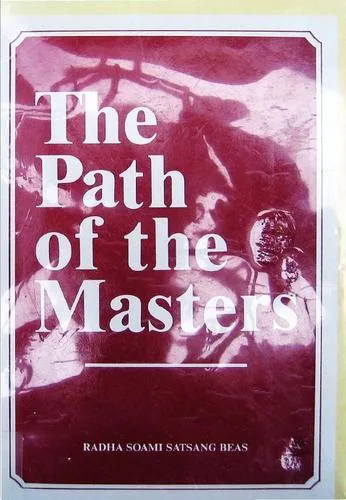
Julian Johnson's The Path of the Masters, published in 1985, maps a specific spiritual discipline.
This book details a spiritual path known as the 'Masters' path,' focusing on the study and practice of particular spiritual principles and techniques. It is not a biography of historical figures but a guide to internal spiritual discipline and personal transformation. Johnson outlines a system for spiritual evolution, highlighting concepts believed to be common across various spiritual traditions. The text is notable for its clear exposition of ideas and its methodical structure for spiritual growth.
The book is aimed at dedicated students of spiritual knowledge and practitioners of esoteric disciplines. It suits individuals already familiar with fundamental mystical and metaphysical ideas who seek a deeper understanding of a specific spiritual method. Those interested in comparative spirituality and the core principles linking different traditions will find it valuable. It is especially for readers who prefer a systematic and intellectual approach to spiritual development, rather than paths focused solely on devotion or emotion. A certain level of patience and a willingness to grapple with complex concepts are necessary.
Published in 1985, The Path of the Masters appeared during a period of increased interest in esoteric and New Age thought, following the cultural shifts of the 1960s and 70s. This era saw many books examining Eastern philosophies, Western esotericism, and alternative spiritualities. Johnson's work contributes to the Western Esoteric Tradition, alongside movements like Theosophy and Anthroposophy, while maintaining its unique approach. The book does not directly engage with specific contemporary authors but rather presents its own system.
💡 Why Read This Book?
• Gain a structured understanding of spiritual evolution, moving beyond vague notions of enlightenment by exploring Johnson's detailed stages of development. This offers a clear roadmap not found in more general spiritual texts. • Grasp the concept of the 'Masters' as realized beings within an esoteric framework, understanding their role in spiritual guidance as presented in the text, distinct from common portrayals. • Learn about the practical application of spiritual laws and principles for personal transformation, as outlined in the book's systematic approach, providing actionable insights for inner work.
⭐ Reader Reviews
Honest opinions from readers who have explored this book.
❓ Frequently Asked Questions
What is the central philosophy of Julian Johnson's 'The Path of the Masters'?
The book outlines a systematic spiritual path for personal evolution, focusing on self-mastery and the attainment of higher consciousness. It presents the concept of 'Masters' as advanced spiritual beings and details the disciplined method required to follow their 'path'.
When was 'The Path of the Masters' first published?
The book was first published in 1985, positioning it within the broader resurgence of interest in esoteric and metaphysical literature during the late 20th century.
Is 'The Path of the Masters' a biography of spiritual leaders?
No, it is not a biographical work. The term 'Masters' refers to spiritual archetypes or perfected beings who exemplify the highest stages of spiritual attainment, serving as guides for those on a similar evolutionary journey.
What kind of reader would benefit most from this book?
Serious students of esoteric philosophy and mysticism who are seeking a structured, intellectual approach to spiritual development will find this book particularly beneficial. It requires a commitment to in-depth study.
Does the book offer practical exercises for spiritual growth?
While the book details principles and a systematic approach, its focus is more on the theoretical and conceptual understanding of the spiritual path. Practical application is implied through disciplined study and inner work rather than explicit, step-by-step exercise instructions.
What is the historical context of 'The Path of the Masters'?
Published in 1985, the book emerged during a period of widespread interest in spiritual and esoteric subjects, influenced by earlier movements like Theosophy and Anthroposophy, offering a distinct perspective on spiritual evolution.
🔮 Key Themes & Symbolism
The Concept of Masters
Central to Johnson's work is the idea of 'Masters'—not as ordinary individuals, but as perfected beings who have transcended ordinary human limitations through dedicated spiritual effort. The book explores their role as exemplars and guides, representing the pinnacle of spiritual evolution. This concept frames the entire 'path' as a journey towards achieving a similar state of realization, emphasizing that such attainment is a deliberate, achievable goal through disciplined practice and understanding of higher spiritual laws.
The Spiritual Path as Discipline
Johnson presents the spiritual journey not as a passive reception of grace, but as an active, disciplined undertaking. The 'path' is characterized by rigorous self-regulation, mental clarity, and ethical conduct. This theme underscores the book's structured approach, detailing stages of development that require consistent effort and a deep engagement with esoteric principles. It highlights the transformative power of sustained inner work and the gradual purification of consciousness required for genuine progress.
Spiritual Evolution and Attainment
The book posits that spiritual growth is a process of evolution, attainable through specific means. It outlines a framework for understanding this evolution, suggesting that individuals can consciously participate in their own spiritual advancement. The ultimate goal is presented as a state of higher consciousness or 'attainment,' mirroring the realization achieved by the Masters. This theme provides a teleological structure to the esoteric teachings, offering a clear objective for the seeker's endeavors.
Esoteric Laws and Principles
Underpinning the path are fundamental esoteric laws and principles that govern the spiritual universe. Johnson's work endeavors to elucidate these laws, explaining how their understanding and application are crucial for spiritual progress. This involves concepts of cause and effect on a spiritual level, the nature of consciousness, and the energetic dynamics of the cosmos. The emphasis is on knowledge as power, where comprehending these underlying principles empowers the seeker to navigate their path effectively.
💬 Memorable Quotes
Direct passages from the work, attributed to the author.
“The path of the Masters is a disciplined progression towards spiritual realization.”
— This expresses the core message: spiritual growth is not accidental but requires deliberate effort and adherence to a structured method outlined by advanced beings.
“Masters represent the highest attainment of human spiritual evolution.”
— This highlights the archetypal nature of the Masters in the book, presenting them as beacons of what is possible for humanity through dedicated spiritual work.
“Understanding spiritual laws is crucial for reading through the path.”
— This emphasizes the intellectual and knowledge-based component of spiritual practice, suggesting that effective progress relies on comprehending universal principles.
“Inner work and self-mastery are the foundations of spiritual advancement.”
— This points to the internal nature of the transformative process described, where external achievements are secondary to the development of one's inner being.
“The journey requires sustained effort and conscious application of principles.”
— This underscores the active role of the seeker, framing the spiritual path as a continuous, intentional practice rather than a passive experience.
🌙 Esoteric Significance
Tradition
The Path of the Masters fits within the broader framework of Western Esotericism, particularly its modern iterations that seek to systematize spiritual development. It shares lineage with Theosophical and Anthroposophical currents in its emphasis on spiritual evolution and the existence of advanced beings guiding humanity. However, Johnson's work carves its own niche by presenting a more focused, disciplined path, less concerned with historical or mythological narratives and more with the practical, internal mechanics of spiritual ascent. It offers a coherent philosophical structure for those seeking a rigorous, non-dogmatic approach to inner transformation.
Symbolism
While not overtly symbolic in its language, the book's core concepts carry symbolic weight. The 'path' itself symbolizes the journey of the soul through various stages of consciousness and self-awareness. The 'Masters' can be interpreted as symbolic representations of the highest potential of human consciousness – perfected beings who embody spiritual attainment. The very structure of the path, with its implied stages and disciplines, symbolizes the ordered process of spiritual unfoldment, suggesting that the universe operates according to discernible, albeit subtle, laws.
Modern Relevance
Contemporary seekers interested in structured spiritual development, the philosophy of consciousness, and the concept of spiritual mastery often draw upon Johnson's work. Thinkers and practitioners exploring the intersection of psychology and spirituality, or those seeking a more intellectual framework for esoteric practices, find resonance in his systematic approach. The book's emphasis on self-discipline and inner work remains pertinent for individuals reading through the complexities of modern life while pursuing deeper meaning and personal transformation.
👥 Who Should Read This Book
• Serious students of esoteric philosophy seeking a structured, systematic approach to spiritual development and self-mastery. • Individuals interested in comparative spirituality who wish to understand a specific methodology for inner evolution beyond general New Age concepts. • Researchers and practitioners of metaphysical disciplines looking for a foundational text that outlines principles for conscious spiritual advancement.
📜 Historical Context
Julian Johnson's The Path of the Masters, first published in 1985, emerged during a period of significant interest in esoteric thought, influenced by the spiritual explorations of the preceding decades. The book aligns with the broader Western Esoteric Tradition, drawing parallels with movements like Theosophy, which sought to synthesize Eastern and Western spiritual philosophies, and Anthroposophy, pioneered by Rudolf Steiner. While Johnson's approach is distinct, the intellectual climate of the time fostered a receptive audience for systematic guides to spiritual development. The mid-1980s saw a surge in metaphysical and New Age literature, catering to a public increasingly seeking alternative frameworks for understanding consciousness and the universe. Johnson’s work contributed to this landscape by offering a structured, philosophical exposition of a specific spiritual methodology, distinct from the more experiential or devotional approaches prevalent in some circles. Its publication can be seen as part of a continued effort to articulate and disseminate complex esoteric teachings in a post-war era.
📔 Journal Prompts
The concept of the 'Masters' as guides for spiritual evolution.
Reflecting on the stages of the disciplined path toward self-mastery.
The role of understanding esoteric laws in one's personal journey.
How the pursuit of inner work aligns with the principles discussed.
The significance of spiritual attainment as presented by Johnson.
🗂️ Glossary
Masters
In the context of Johnson's work, 'Masters' refers to highly evolved spiritual beings who have achieved a profound level of self-realization and spiritual attainment, serving as exemplars and guides for humanity's evolution.
The Path
Refers to the systematic method and disciplined practice outlined in the book, designed for spiritual growth and the attainment of higher consciousness, often guided by the principles embodied by the Masters.
Spiritual Evolution
The process of gradual development and advancement of the soul or consciousness towards higher states of awareness, understanding, and being, often seen as a conscious and guided journey.
Self-Mastery
The state of having control over one's own thoughts, emotions, desires, and actions, achieved through discipline and spiritual practice, considered essential for progress on the esoteric path.
Esoteric Laws
Underlying principles or rules that govern the spiritual universe and the process of spiritual evolution, which, when understood and applied, facilitate progress and transformation.
Attainment
The realization or achievement of a high level of spiritual understanding, consciousness, or enlightenment, often synonymous with the state embodied by the Masters.
Inner Work
The practice of focusing on internal development, including self-reflection, meditation, ethical refinement, and the purification of consciousness, as the primary means of spiritual progress.
🔮 Readers Also Liked
Browse all →









More Free Occult Philosophy Books
View all →