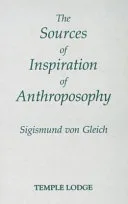
Sources of Inspiration of Anthroposophy
 74
74

Sources of Inspiration of Anthroposophy
Sigismund Von Gleich offers a structured examination of Anthroposophy's spiritual roots in "Sources of Inspiration of Anthroposophy." The book's strength lies in its direct engagement with Rudolf Steiner's core ideas, particularly the notion of spiritual streams feeding earthly movements. Gleich's attempt to delineate these streams, referencing concepts like karma and the Archangel Michael, provides a valuable framework for understanding Anthroposophy's genesis. However, the text can feel somewhat dense, requiring a pre-existing familiarity with Steiner's complex terminology. A specific passage discussing the Grail's role as a spiritual vessel for earthly renewal, while evocative, might benefit from more concrete examples of its manifestation. Ultimately, the work serves as a focused explication for those already invested in Steiner's path, rather than an introductory primer.
📝 Description
74
Sigismund Von Gleich published "Sources of Inspiration of Anthroposophy" in April 1998.
Sigismund Von Gleich's "Sources of Inspiration of Anthroposophy" examines the spiritual currents that informed Rudolf Steiner's philosophy. The book traces the origins of Anthroposophical thought, presenting it as a living movement rather than a fixed doctrine. Von Gleich argues that connecting with these original impulses is necessary for the continued vitality of spiritual movements tied to earthly life.
This work is for students and practitioners of Anthroposophy who want a deeper grasp of its spiritual roots. It will also interest scholars of esoteric traditions, comparative religion, and the history of spiritual movements in the late 19th and early 20th centuries. Those interested in Rudolf Steiner, karma, Archangel Michael, and the Grail will find specific attention paid to these topics.
Published in 1998, this book emerged from the ongoing engagement with Rudolf Steiner's extensive writings. It sits within the context of spiritual movements that developed Steiner's ideas after his death. Von Gleich's work specifically clarifies what he identified as the "fivefold stream of inspiration," which he saw as central to Anthroposophy's effectiveness and its connection to spiritual reality. The author builds directly on Steiner's lectures and writings to illuminate these sources.
💡 Why Read This Book?
• Understand the "fivefold stream of inspiration" as presented by Sigismund Von Gleich, learning how Anthroposophy draws vitality from distinct spiritual sources, a concept elaborated throughout the book. • Gain specific insight into the roles of Christ, karma, Archangel Michael, and Sophia as active spiritual powers, as detailed in the work's exploration of spiritual nourishment. • Appreciate the historical grounding of Anthroposophy by examining its connection to Rudolf Steiner's foundational work, as discussed within the book's 1998 publication context.
⭐ Reader Reviews
Honest opinions from readers who have explored this book.
❓ Frequently Asked Questions
What is the primary focus of Sigismund Von Gleich's "Sources of Inspiration of Anthroposophy"?
The book primarily focuses on identifying and explaining the "fivefold stream of inspiration" that underpins Rudolf Steiner's Anthroposophy, arguing for the necessity of drawing from these spiritual sources to maintain the vitality of earthly spiritual movements.
Who is Rudolf Steiner, and why is his work central to this book?
Rudolf Steiner (1861-1925) was an Austrian philosopher, esotericist, and social reformer who founded Anthroposophy. "Sources of Inspiration of Anthroposophy" is based on his extensive lectures and writings, seeking to clarify the spiritual origins he described.
What are some of the key spiritual figures or concepts mentioned in relation to Anthroposophy's inspiration?
The book specifically mentions Christ, the powers of karma, the Archangel Michael, and Sophia as crucial elements drawn from spiritual sources that keep earthly spiritual foundations alive and fruitful.
When was "Sources of Inspiration of Anthroposophy" first published?
The book was first published in April 1998, reflecting a later engagement with and interpretation of Rudolf Steiner's foundational work.
Is this book suitable for someone new to Anthroposophy?
While it explains core concepts, the book is best suited for those with some existing familiarity with Rudolf Steiner's work, as it delves into specific spiritual streams and their significance.
What does the book suggest about the relationship between spiritual sources and earthly movements?
It suggests that any spiritual movement founded on Earth can only remain alive and fruitful if it can repeatedly draw nourishment from its original spiritual sources, a theme central to Von Gleich's analysis.
🔮 Key Themes & Symbolism
The Fivefold Stream
The central thesis of Von Gleich's work is the concept of a "fivefold stream of inspiration." This represents the distinct, vital currents flowing from the spiritual world that are essential for the sustenance of Anthroposophy. The book argues that these streams are not static historical artifacts but active forces. By understanding and connecting with these streams, practitioners can ensure that spiritual initiatives remain dynamic and impactful on Earth, preventing stagnation and fostering continued growth.
Spiritual Nourishment for Earthly Manifestations
A core argument is that all spiritual endeavors grounded on Earth require continuous nourishment from their original sources. The book posits that without this constant renewal, these movements will eventually wither. It examines how key figures and forces, such as Archangel Michael and the Grail, act as conduits for this essential spiritual energy, vital for the ongoing life and fruitfulness of Anthroposophical principles in the human realm.
The Role of Karma and Archetypes
The book places significant emphasis on the powers of karma and the significance of archetypal figures like Sophia. It explores how these are not merely theoretical constructs but active spiritual forces that shape human destiny and spiritual development. Understanding their interplay within the streams of inspiration provides a deeper appreciation for the intricate, dynamic nature of spiritual causality and evolution as presented in Anthroposophy.
Anthroposophy as a Living Movement
Rather than presenting Anthroposophy as a rigid dogma, Von Gleich emphasizes its nature as a living, evolving spiritual science. The work highlights the continuous need to reconnect with the original spiritual impulses that founded it. This perspective underscores the dynamic relationship between the spiritual world and human consciousness, suggesting that Anthroposophy's efficacy depends on its practitioners' ability to tap into these foundational streams.
💬 Memorable Quotes
Direct passages from the work, attributed to the author.
“the fivefold stream of inspiration out of the spiritual world”
— This phrase refers to the foundational spiritual currents identified by Rudolf Steiner that imbue Anthroposophy with its life force. Von Gleich's work aims to clarify these streams and their significance for the movement's continued development.
“Christ, the powers of karma, the Archangel Michael, the Grail, Sophia”
— These are presented as key elements or figures through which spiritual inspiration flows. Their presence and active role are crucial for the grounding and vitality of spiritual initiatives on Earth, according to the book's premise.
“bases his research on Rudolf Steiner's work”
— This indicates that Sigismund Von Gleich's analysis is not speculative but directly derived from the extensive teachings and writings of Rudolf Steiner, the founder of Anthroposophy.
“suggests the author in this well-crafted book”
— This highlights the author's methodical approach and the quality of the presentation, indicating that the book is a carefully constructed exploration of its subject matter.
💡 Key Ideas
Editorial paraphrase of the work's core concepts — not direct quotes.
whatever has been founded on earth out of spiritual sources can only remain alive and fruitful if it can repeatedly draw nourishment from these original sources
This paraphrased core idea suggests that spiritual movements are not self-sustaining. They require a continuous connection to their spiritual origins, much like a plant needs water and sun, to remain vital and effective in the earthly sphere.
🌙 Esoteric Significance
Tradition
This work sits squarely within the tradition of Anthroposophy, a spiritual philosophy founded by Rudolf Steiner. It elaborates on specific concepts within Steiner's broader system, which itself draws from Hermeticism, Gnosticism, Kabbalah, and Eastern mysticism, synthesizing them into a unique modern esoteric path focused on spiritual science and human evolution.
Symbolism
Key symbols explored include the Archangel Michael, often representing spiritual strength and guidance in the cosmos, and the Grail, symbolizing a vessel for spiritual nourishment and transformation. The Sophia archetype, representing divine wisdom, is also central, highlighting the feminine aspect of the divine and its role in spiritual revelation and earthly grounding.
Modern Relevance
Contemporary Anthroposophical study groups and individual practitioners continue to engage with Von Gleich's work to deepen their understanding of foundational concepts. It remains relevant for those seeking to grasp the underlying spiritual dynamics that Steiner posited are essential for the health and future of spiritual movements in the 21st century.
👥 Who Should Read This Book
• Students of Rudolf Steiner's work seeking a focused explanation of the spiritual sources feeding Anthroposophy. • Researchers of esoteric traditions interested in the lineage and foundational concepts of Anthroposophy. • Practitioners of spiritual science looking to understand the role of karma, Archangel Michael, and Sophia in maintaining spiritual vitality.
📜 Historical Context
Published in April 1998, "Sources of Inspiration of Anthroposophy" engages with the legacy of Rudolf Steiner's spiritual science decades after his passing in 1925. The late 20th century saw continued development and interpretation of Anthroposophical ideas, often in dialogue with other esoteric and philosophical movements. Von Gleich's work specifically addresses the need to maintain the vitality of Anthroposophy by reconnecting with its spiritual origins, a concern that has resonated within the Anthroposophical Society since its early days. Unlike the more rapid, initial dissemination of Theosophy and early Anthroposophy in the late 19th and early 20th centuries, this 1998 publication reflects a more mature, perhaps more academic, phase of engagement with Steiner's complex cosmology and spiritual research.
📔 Journal Prompts
The fivefold stream of inspiration: how might these currents manifest in daily life?
Archangel Michael's role: reflect on spiritual guardianship in contemporary challenges.
The Grail's significance: consider its meaning as a vessel for spiritual nourishment.
Nourishment from original sources: identify a personal spiritual practice and its roots.
The powers of karma: contemplate its influence on spiritual development.
🗂️ Glossary
Anthroposophy
A spiritual philosophy founded by Rudolf Steiner, seeking to understand the spiritual nature of the human being and the cosmos through spiritual science and direct experience.
Spiritual Science (Geisteswissenschaft)
Rudolf Steiner's term for the systematic, verifiable investigation of spiritual realities, analogous to natural science's study of the material world.
Karma
In Anthroposophy, the law of cause and effect governing moral and spiritual development, influencing reincarnation and the evolution of consciousness.
Archangel Michael
A significant spiritual being in Anthroposophy, associated with courage, spiritual freedom, and the protection of humanity's spiritual development during specific cosmic epochs.
Sophia
The archetype of divine wisdom, often personified as a feminine spiritual being, crucial for understanding spiritual revelation and the balance of cosmic forces.
Grail
Symbolically, a vessel that holds spiritual sustenance and can inspire transformation; in Anthroposophy, it relates to specific spiritual events and forces connected to Christ's work on Earth.
Fivefold Stream of Inspiration
A concept describing the distinct spiritual currents or forces that Von Gleich identifies as essential sources feeding the life and development of Anthroposophy.