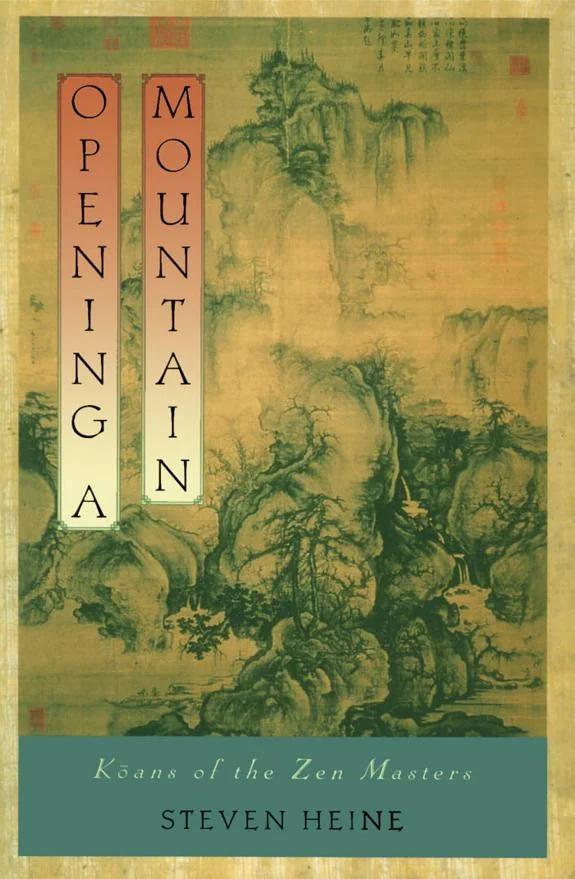
Opening a Mountain
 71
71

Opening a Mountain
Steven Heine’s *Opening a Mountain* effectively debunks the common Western misconception of the Zen kōan as a simple, logic-defying riddle. By grounding the discussion in historical and textual analysis, Heine demonstrates the kōan’s complex role within Chan and Zen monastic traditions. A notable strength is the meticulous tracing of kōan development, revealing it as a sophisticated tool for spiritual cultivation rather than just an intellectual puzzle. However, the book's academic rigor, while commendable, might present a barrier for casual readers seeking a more accessible introduction. The detailed examination of specific kōan collections, such as the *Mumonkan* (The Gateless Gate), is particularly illuminating, showing how these texts function within a lineage. Heine’s scholarship offers a vital corrective to superficial understandings, making this an essential, albeit demanding, read for dedicated students of Zen.
📝 Description
71
Steven Heine's 2002 book analyzes the Zen kōan beyond simple riddles.
Steven Heine's *Opening a Mountain* examines the Zen Buddhist kōan, first published in 2002. The book moves past common Western interpretations of kōans as mere puzzles for enlightenment. Heine traces their historical development and their essential function within Chan and Zen traditions. He presents them not as logical problems, but as instruments for spiritual practice.
This work is directed toward serious students of Buddhism, especially those interested in Zen and its philosophical foundations. It will interest academics, practitioners aiming for a deeper grasp of kōan study, and readers curious about the historical and textual origins of Zen Buddhism outside of introductory material. Those who value careful scholarship and historical context will find considerable worth in this study.
Heine's book situates the kōan within specific lineages and textual traditions of East Asian Buddhism. It contrasts with more generalized interpretations circulating in the West. The study engages with scholarship on Chan Buddhism, adding to an ongoing academic discussion.
Published in 2002, *Opening a Mountain* addresses the kōan, a central contemplative tool in East Asian Buddhism. Heine positions the kōan not as an esoteric secret but as a method for spiritual training within monastic settings. He details its use in various Chan and Zen schools, emphasizing its role in cultivating direct insight. The book traces how this practice evolved through specific textual lineages and lineages of transmission, offering a scholarly perspective on its historical and functional significance.
💡 Why Read This Book?
• Understand the kōan beyond the "sound of one hand clapping" cliché, learning its historical function in Chan Buddhism as detailed in Heine's analysis of monastic training. • Gain insight into the master-disciple transmission of Zen teachings, a core element Heine discusses when explaining how kōans are traditionally used in practice. • Appreciate the scholarly context of Zen in the West, understanding how Heine’s 2002 work corrected earlier, less nuanced popularizations of Zen concepts.
⭐ Reader Reviews
Honest opinions from readers who have explored this book.
❓ Frequently Asked Questions
What is a kōan according to Steven Heine in *Opening a Mountain*?
Steven Heine explains that a kōan is not merely a nonsensical riddle but a carefully constructed tool within Chan and Zen Buddhist monastic traditions, used for spiritual training and to break down conceptual thinking.
When was Steven Heine's *Opening a Mountain* first published?
Steven Heine's *Opening a Mountain* was first published in 2002, offering a scholarly perspective on Zen kōans during a period of growing Western interest in Buddhism.
What common Western misunderstanding does *Opening a Mountain* address?
The book addresses the widespread Western idea that kōans are simple logical paradoxes or riddles intended solely for intellectual amusement, clarifying their deeper pedagogical and spiritual purpose.
Which specific Buddhist traditions does Heine focus on?
Heine focuses primarily on Chan Buddhism (the Chinese precursor to Japanese Zen) and its subsequent development within Zen Buddhism, examining the historical use of kōans in these lineages.
Is *Opening a Mountain* suitable for absolute beginners in Zen?
While informative, the book's scholarly depth and focus on historical context make it more suitable for those with some existing familiarity with Buddhist concepts or a serious interest in academic study of Zen.
What does Heine mean by 'Opening a Mountain' in the context of kōans?
The title alludes to the profound, transformative breakthrough that a kōan practice aims to facilitate, suggesting a sudden, expansive realization akin to opening up a vast, previously inaccessible landscape.
🔮 Key Themes & Symbolism
The Kōan as Pedagogical Tool
Heine meticulously unpacks the kōan not as a philosophical puzzle but as a vital instrument within monastic training. He details how these seemingly paradoxical questions or statements, originating in Chinese Chan Buddhism, were designed to dismantle the practitioner's reliance on rational thought. The work explores how the master-disciple interaction surrounding the kōan is crucial for its effective use, fostering direct experiential insight rather than intellectual assent. This contrasts sharply with Western notions of kōans as mere intellectual curiosities.
Historical Development of Kōan Study
The book traces the evolution of the kōan from its early manifestations to its systematization in later Zen traditions. Heine examines key textual collections, such as the *Mumonkan* (The Gateless Gate) and the *Hekiganroku* (Blue Cliff Record), highlighting their compilation and influence. This historical perspective reveals how the kōan's function and interpretation shifted across different eras and geographical contexts, particularly as it moved from China to Japan and eventually to the West.
Critique of Western Interpretations
*Opening a Mountain* directly confronts and corrects popular Western misunderstandings of the kōan, often perpetuated by simplified translations or introductory texts. Heine critiques the tendency to view kōans solely through a lens of logic or mysticism, arguing for a more grounded understanding rooted in their practical application within a specific religious and cultural framework. He emphasizes that their efficacy lies in their context of practice, not in abstract conceptualization.
The Role of Direct Experience
A central theme is the emphasis on direct, non-conceptual experience that the kōan practice aims to evoke. Heine explains that the frustration or confusion generated by a kōan is intended to exhaust the discursive mind, clearing the way for a sudden awakening or insight (satori). This focus on experiential realization is presented as the core purpose, distinguishing Zen practice from purely philosophical inquiry or devotional religion.
💬 Memorable Quotes
Direct passages from the work, attributed to the author.
“The kōan is not a riddle to be solved but a problem to be struggled with.”
— This highlights the active, persistent engagement required in kōan practice. It's about confronting the limits of ordinary thinking through sustained effort, not finding a clever answer.
“Western audiences often reduce kōans to mere brain teasers, missing their spiritual function.”
— This interpretation points to Heine's core argument: the popularization of Zen in the West has often stripped kōans of their essential context as tools for spiritual liberation within monastic traditions.
“Understanding kōans requires historical awareness of Chan Buddhist monastic life.”
— This emphasizes that to grasp the true nature and purpose of kōans, one must look beyond isolated examples and consider their development within the specific cultural and institutional settings of East Asian Buddhism.
“The breakthrough achieved through kōan study is a transformation of consciousness.”
— This captures the intended outcome of kōan practice: not just intellectual understanding, but a fundamental shift in one's perception and way of being in the world.
💡 Key Ideas
Editorial paraphrase of the work's core concepts — not direct quotes.
The 'sound of one hand clapping' is famous, but its meaning is found in practice, not in explanation.
This paraphrased concept emphasizes that the value of a kōan lies in the subjective experience it generates during contemplation, rather than in any definitive, objective interpretation.
🌙 Esoteric Significance
Tradition
While Zen Buddhism is often categorized separately from Western esoteric traditions like Hermeticism or Theosophy, its emphasis on direct experience, mind training, and the potential for radical transformation aligns with certain esoteric goals. *Opening a Mountain* explores the practical methods within Zen that aim to bypass ordinary consciousness, a pursuit shared by various contemplative and mystical paths seeking non-dual awareness or gnosis.
Symbolism
The kōan itself functions as a potent symbol, representing the limitations of language and conceptual thought. The title, *Opening a Mountain*, evokes powerful natural imagery often used in Zen art and poetry to symbolize the unveiling of inherent reality or the overcoming of obstacles to enlightenment. The 'sound of one hand clapping' is a symbolic representation of non-duality, a state beyond polarized concepts.
Modern Relevance
Heine's meticulous historical analysis provides a crucial foundation for contemporary practitioners and scholars grappling with the authentic transmission of Zen in a globalized world. Modern mindfulness movements and contemplative practices, while often secularized, still draw implicitly on the principles of focused attention and mind-training that kōans embody. Thinkers interested in consciousness studies and the philosophy of mind also find value in the book's exploration of non-rational cognition.
👥 Who Should Read This Book
• Students of Zen Buddhism seeking a scholarly understanding of kōan practice beyond introductory materials, who will benefit from Heine's historical and textual analysis. • Comparative religion scholars interested in the specific pedagogical methods employed within East Asian Buddhist monastic traditions, gaining insight into Chan and Zen. • Readers curious about the philosophical underpinnings of meditation and enlightenment, who will appreciate the book's detailed exploration of how kōans function to transform consciousness.
📜 Historical Context
Published in 2002, *Opening a Mountain* entered a Western academic and popular landscape increasingly fascinated by Zen Buddhism, a trend significantly shaped by earlier writers like D.T. Suzuki. Heine’s work offered a rigorous corrective to more generalized or romanticized views of Zen, focusing specifically on the historical and textual intricacies of the kōan within Chinese Chan and Japanese Zen traditions. It engaged with a growing body of scholarship on East Asian Buddhism, providing a nuanced perspective that contrasted with the often simplistic portrayals of kōans as mere riddles. The book contributed to a more scholarly discourse, situating Zen practices within their original monastic and cultural contexts, and engaging with critical analyses of Buddhist history and philosophy that were gaining prominence.
📔 Journal Prompts
The kōan as a tool for dismantling conceptual thinking.
Historical development of kōan collections like the Mumonkan.
Critique of Western interpretations versus original function.
The role of direct experience in kōan practice.
The meaning behind the title 'Opening a Mountain'.
🗂️ Glossary
Kōan
A paradoxical anecdote or riddle used in Zen Buddhism to provoke doubt and test a student's progress in Zen practice, intended to break down rational thought.
Chan Buddhism
The Chinese precursor to Zen Buddhism, emphasizing meditation and direct experience of enlightenment. Kōans originated within this tradition.
Zen Buddhism
A school of Mahayana Buddhism that originated in China as Chan and spread to other East Asian countries, known for its emphasis on meditation and direct insight.
Mumonkan (The Gateless Gate)
A collection of 48 kōans compiled in 13th-century China by Wumen Hui-kai, widely studied in Zen Buddhism.
Hekiganroku (Blue Cliff Record)
A collection of 100 kōans compiled in 12th-century China by Yuanwu Keqin, a significant text in Zen Buddhist study.
Satori
A Japanese Buddhist term for 'awakening' or 'enlightenment,' often referring to a sudden, intuitive understanding achieved through Zen practice.
Monastic Training
The systematic education and discipline undertaken by monks and nuns within a monastery, in Zen Buddhism often involving intensive kōan study.
This book appears in 1 collection
🔮 Readers Also Liked
Browse all →![The Byrhtferth's Manuscript (MS 17) † Saint John’s College † Oxford † [1111]](/img/thumb/the-byrhtferth-s-manuscript-ms-17-saint-john-s-college-oxford-1111-the-monk-byrhtferth.webp)








From the “Zen Buddhism” Collection
View all →







More Free Sacred Texts & Gnosticism Books
View all →