ARS GOETIA KORPUS
 73
73

ARS GOETIA KORPUS
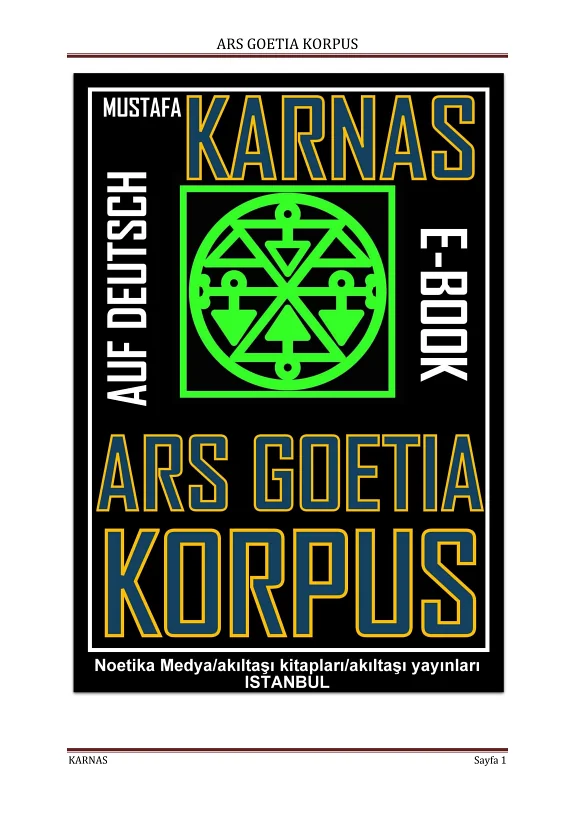
Mustafa Karnas's ARS GOETIA KORPUS offers a dense, scholarly approach to a subject often shrouded in sensationalism. The book's strength lies in its ambitious scope, attempting to encapsulate the entire "Ars Goetia culture." Karnas succeeds in presenting a broad overview, particularly in tracing the historical threads back to their likely sources. However, the integration of "quantum science" feels somewhat tacked on, lacking the detailed exposition needed to truly bridge the gap between ancient magic and modern physics. A more grounded exploration of the demonological hierarchy, perhaps detailing the specific sigils and their associated rituals as found in the 1651 *Lemegeton*, would have provided a more tangible anchor for the reader. Nevertheless, for those seeking a comprehensive cultural history of the Ars Goetia, it provides a valuable, albeit occasionally uneven, resource.
📝 Description
73
Mustafa Karnas's ARS GOETIA KORPUS analyzes the Ars Goetia's cultural footprint, its historical roots, and philosophical underpinnings.
ARS GOETIA KORPUS by Mustafa Karnas offers a detailed examination of the Ars Goetia, a significant text within Western esotericism. The book unpacks its historical development and philosophical basis, moving beyond superficial readings to uncover its deeper meanings. Karnas draws on considerable research to illuminate the complex nature of this grimoire.
The work is designed for individuals seriously interested in occult history, scholars of comparative religion, and practitioners who seek a thorough grasp of established Western esoteric writings. It is especially useful for those whose magical practices connect with or originate from the Goetia, providing fresh insights into its widespread impact.
The book considers the 72 Goetic demons less as simple evil spirits and more as intricate archetypal forces. It examines how these figures were historically created, their supposed function in the legends of Solomon, and how they have been understood in contemporary magical frameworks. The text also touches on attempts to connect older magical cosmologies with current scientific ideas.
The Ars Goetia, a central part of the Lemegeton, took its current shape around the mid-17th century, building on earlier demonological works. Its spread coincided with a time of heightened interest in magic across Europe, despite facing opposition from religious bodies. The text's origins can be traced to earlier Kabbalistic and grimoire traditions, placing it within a rich intellectual history. This book positions itself within that lineage, analyzing its content and influence.
💡 Why Read This Book?
• Gain an understanding of the Ars Goetia's extensive cultural impact beyond mere demonology, as detailed in its examination of "Ars Goetia culture." • Explore the historical lineage of the 72 Goetic demons, tracing their evolution from earlier traditions, a concept central to the book's research. • Consider novel interpretations of esoteric concepts, including an attempt to link ancient magical frameworks with contemporary "quantum science," as suggested in the book's unique approach.
⭐ Reader Reviews
Honest opinions from readers who have explored this book.
❓ Frequently Asked Questions
What is the Ars Goetia and what does ARS GOETIA KORPUS study?
The Ars Goetia is a famous grimoire detailing the purported summoning and control of 72 demons, attributed to King Solomon. ARS GOETIA KORPUS is a study examining the entire "Ars Goetia culture," its history, and philosophical underpinnings.
Who was King Solomon in relation to the Ars Goetia?
According to legend and the text's framing, King Solomon is presented as the original conjurer of the 72 spirits detailed in the Ars Goetia, commanding them through divine authority.
Does ARS GOETIA KORPUS explain how to perform Goetic rituals?
While the book examines the "Ars Goetia culture," its focus appears to be on historical and philosophical analysis rather than providing direct ritualistic instruction. It delves into the concepts behind the practices.
What is the significance of the "quantum science" mentioned in the blurb?
The blurb suggests an attempt to integrate modern quantum science with the ancient magical cosmology of the Ars Goetia, likely exploring parallels in underlying principles or the nature of reality as perceived by both.
When was the Ars Goetia first published in its known form?
The Ars Goetia, as part of the Lemegeton, was first published in its most recognized form around 1651, though its roots are older. Mustafa Karnas's study was first published in 2020.
What does the book mean by 'Ars Goetia culture'?
The term likely refers to the broader phenomenon surrounding the Ars Goetia, including its historical transmission, its influence on subsequent occult traditions, its interpretation by various scholars and practitioners, and its place in popular culture.
🔮 Key Themes & Symbolism
The 72 Goetic Entities
The book investigates the traditional enumeration and categorization of the 72 demons presented in the Ars Goetia. It explores their purported ranks, abilities, and the historical context of their compilation, moving beyond simple demonology to analyze them as complex symbolic systems within the grimoire tradition.
Solomonic Magic and Authority
Central to the Ars Goetia is the figure of King Solomon, presented as the ultimate authority who commanded these spirits. The work examines the mythos surrounding Solomon's wisdom and power, and how this attribution lends legitimacy and esoteric weight to the text's magical operations.
Esoteric Textual Analysis
ARS GOETIA KORPUS engages in a deep textual analysis of the Ars Goetia, tracing its evolution and influences from earlier magical and Kabbalistic sources. It highlights the scholarly approach to understanding the grimoire's structure, language, and intended applications within its historical milieu.
Bridging Ancient and Modern Paradigms
A unique aspect explored is the potential connection between the ancient magical worldview of the Ars Goetia and contemporary scientific concepts, specifically "quantum science." This theme suggests an inquiry into fundamental principles of reality that might underpin both esoteric systems and modern physics.
💬 Memorable Quotes
Direct passages from the work, attributed to the author.
“We will do this through the mouth of King Solomon.”
— This framing highlights the book's intention to present its analysis through the lens of traditional authority and attribution, leveraging the mystique and historical significance of Solomon within esoteric lore.
“We will also include quantum science.”
— This statement indicates an ambitious, potentially unconventional, approach to analyzing the Ars Goetia, seeking to draw parallels or integrate insights from modern physics with ancient magical traditions.
“My son Roboam, I take the wisdom of my words from Tanrı.”
— This is presented as a foundational statement from Solomon to his son, emphasizing the divine origin and transmission of esoteric knowledge, linking wisdom to a higher power ('Tanrı' likely referring to God).
“Take my words and learn wisdom.”
— This direct exhortation underscores the educational purpose of the text attributed to Solomon, positioning the grimoire's content not just as magical instruction but as a source of profound wisdom accessible through diligent study.
“This study comprises the entire ARS GOETIA-CULTURE.”
— This declaration sets the ambitious scope of the work, signaling an intent to cover the broad historical, cultural, and philosophical impact of the Ars Goetia, rather than focusing solely on its ritualistic aspects.
🌙 Esoteric Significance
Tradition
The Ars Goetia is a core part of the Western Esoteric Tradition, specifically within the lineage of ceremonial magic and grimoire studies. It represents a crystallization of demonological lore and Solomonic magic, heavily influenced by Kabbalistic concepts of hierarchy and divine authority, though often adapted for practical magical operations rather than purely theoretical contemplation.
Symbolism
Key symbols include the seventy-two Goetic demons themselves, each representing archetypal forces or specific psychological/elemental energies. The magical circle and triangle of manifestation are crucial symbols of protection and containment, essential for safely interacting with these entities. The sigils associated with each demon serve as unique identificatory keys and focal points for magical will and invocation.
Modern Relevance
Contemporary practitioners within traditions like the Golden Dawn, Thelema, and various forms of modern witchcraft frequently engage with the Ars Goetia. Thinkers such as Aleister Crowley and Israel Regardie extensively studied and commented upon its contents, influencing subsequent generations. Its archetypal figures continue to be explored in psychological and magical contexts today.
👥 Who Should Read This Book
• Students of Western Esotericism: Those seeking to understand the foundational texts of ceremonial magic and the historical development of demonology will find detailed analysis. • Comparative Religion Scholars: Researchers interested in the evolution of religious and magical beliefs, particularly concerning spirit hierarchies and ancient Near Eastern traditions, will benefit. • Advanced Occult Practitioners: Individuals already familiar with grimoires and seeking a deeper, more critical understanding of the Ars Goetia's cultural and philosophical dimensions, beyond basic ritual application.
📜 Historical Context
The Ars Goetia, first widely published as part of the Lemegeton in 1651, emerged during a fervent period of occult revival in 17th-century Europe. This era saw figures like John Dee and later occultists meticulously documenting and experimenting with magical traditions. The Ars Goetia, with its systematic cataloging of 72 demonic entities attributed to King Solomon, stood out for its practical focus on invocation and evocation. It built upon a long lineage of grimoires and demonological treatises, including earlier works like the *Pseudomonarchia Daemonum* by Johann Weyer (1577), which also listed demonic hierarchies. While contemporary scientific inquiry was burgeoning with figures like Isaac Newton, esoteric practices like those detailed in the Ars Goetia often existed in parallel, sometimes viewed with suspicion by emerging rationalist thought. Reception varied, with some embracing it as a tool for spiritual or magical attainment, while others condemned it as dangerous or heretical.
📔 Journal Prompts
The attribution of wisdom to Tanrı in Solomon's address to Roboam.
The symbolic representation of the 72 Goetic entities.
The concept of "Ars Goetia-Culture" as presented in the study.
The integration of "quantum science" with the grimoire's framework.
King Solomon's role as the authoritative source of magical knowledge.
🗂️ Glossary
Ars Goetia
The first section of the Lemegeton, a 17th-century grimoire detailing the names, ranks, and powers of the 72 demons King Solomon supposedly commanded.
Lemegeton
A comprehensive 17th-century grimoire, often called the 'Lesser Key of Solomon', comprising five books, the first of which is the Ars Goetia.
Goetic Demons
The 72 spirits or entities listed in the Ars Goetia, described with specific appearances, offices, and abilities, often considered fallen angels.
Sigil
A unique symbolic representation or seal associated with each Goetic demon, used in magical operations for identification and invocation.
Grimoire
A textbook of magic or witchcraft, typically containing instructions on how to create magical objects, perform rituals, and cast spells.
Tanrı
A Turkish word often referring to God or the divine, used here in the context of King Solomon attributing his wisdom to a higher power.
Roboam
The son of King Solomon, mentioned in the text as the recipient of his father's wisdom and teachings regarding the occult.
This book appears in 1 collection
🔮 Readers Also Liked
Browse all →









From the “Goetia” Collection
View all →


More Free Occult Philosophy Books
View all →