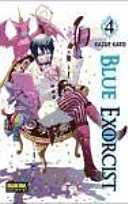
Blue exorcist 4
 78
78

Blue exorcist 4
Kazue Kato’s Blue Exorcist 4 presents a palpable escalation in the ongoing struggle against demonic forces, moving beyond simple monster-of-the-week encounters. The volume particularly shines in its depiction of the psychological toll such battles take on the younger exorcists, especially Rin’s internal conflict regarding his heritage. A notable strength lies in the nuanced character interactions; the dialogue feels earned, reflecting the growth and strain on the relationships forged in previous arcs. However, the pacing occasionally falters, with certain plot threads feeling slightly rushed to accommodate the larger overarching narrative. The sequence involving the infiltration of a corrupted sanctuary, while visually dynamic, could have benefited from more deliberate setup. Despite this, the work remains a compelling entry, reinforcing its thematic core. Blue Exorcist 4 solidifies its place as a significant chapter in the ongoing saga of good versus evil.
📝 Description
78
Blue Exorcist 4 continues Kazue Kato's saga of exorcists battling demons, focusing on character growth and rising conflicts.
In Blue Exorcist 4, Kazue Kato advances the ongoing conflict between exorcists and demonic forces. The story follows young protagonists as they face escalating challenges and develop their abilities. This volume is set in a world where humans and demons exist in a tense balance, policed by an order of exorcists tasked with combating supernatural threats. The narrative weaves together the characters' evolving relationships, their growing powers, and the machinations of hidden groups influencing events. It specifically details the struggles and triumphs of Rin Okumura and his allies as they confront increasingly dangerous adversaries.
This installment is aimed at readers already invested in the Blue Exorcist series. Those who enjoy character development, supernatural action, and the tension between fate and personal choice will find this volume satisfying. It highlights the shifting dynamics within Rin's group as they face new threats. Understanding the preceding volumes is beneficial, as the narrative builds upon established plotlines and character arcs.
Published within the long-running Blue Exorcist manga series, which began in 2009, this volume contributes to a modern interpretation of demonology in popular culture. Kazue Kato's work engages with themes common in Shonen manga, where young heroes contend with supernatural forces and hidden worlds. The series positions exorcism not just as a physical combat against demons, but as a spiritual and psychological struggle for the characters. It examines how inherited legacies, particularly Rin's connection to Satan, shape identity and power.
💡 Why Read This Book?
• Gain deeper insight into the Okumura brothers' complex relationship and Rin’s internal battle with his demonic heritage, a core element established in the series' early volumes. • Witness the evolving strategies and teamwork of the True Cross Academy students as they face new threats, reflecting the series' progression since its 2009 debut. • Understand the philosophical underpinnings of exorcism as depicted by Kazue Kato, moving beyond simple combat to explore spiritual and psychological resistance.
⭐ Reader Reviews
Honest opinions from readers who have explored this book.
❓ Frequently Asked Questions
When was Blue Exorcist 4 originally published in Japan?
Blue Exorcist 4, as part of the ongoing manga series by Kazue Kato, was released in Japan following the serialization that began in 2009. Specific volume release dates vary by country, but the fourth compiled volume would have appeared in the early years of the series' run.
What are the main themes explored in Blue Exorcist 4?
The primary themes include the struggle against demonic forces, the burden of inherited power, the nature of good and evil, and the importance of found family. Rin Okumura's internal conflict is central to these explorations.
Who is the author of Blue Exorcist 4?
The author of Blue Exorcist 4 is Kazue Kato, who began the manga series in 2009. Her distinctive art style and storytelling have defined the world of the Blue Exorcist.
Does Blue Exorcist 4 introduce new major characters?
While Blue Exorcist 4 focuses on developing existing characters and their relationships, it may introduce supporting characters or antagonists that further the plot within the established cast.
Is Blue Exorcist 4 suitable for someone new to the series?
It is generally recommended to start with the first volume of Blue Exorcist. Blue Exorcist 4 builds directly upon previous plotlines and character developments that began in 2009.
What is the primary setting for Blue Exorcist 4?
The primary setting continues to be the world where demons and humans coexist, often centering around the True Cross Academy, a school for exorcists, and its surrounding areas.
🔮 Key Themes & Symbolism
Demonic Heritage and Identity
The series consistently grapples with Rin Okumura's identity as the son of Satan. Blue Exorcist 4 examines how this lineage impacts his relationships, his powers, and his perception of himself. It questions whether one's destiny is predetermined by birth or shaped by choices. This exploration is crucial for understanding Rin's character arc and the internal conflicts he faces, especially when confronting other demons who recognize his bloodline.
The Nature of Exorcism
Exorcism in Blue Exorcist is depicted as more than just a ritualistic banishment; it is a multi-faceted discipline requiring physical, mental, and spiritual fortitude. Volume 4 showcases various exorcism techniques and emphasizes the psychological toll on the exorcists. The narrative explores the fine line between light and darkness, and how exorcists must confront the very forces they fight, sometimes drawing parallels to their own inner struggles.
Found Family and Loyalty
Despite the grim circumstances and the constant threat of demonic invasion, the bonds of friendship and loyalty form a core theme. The characters at True Cross Academy, particularly Rin and his close companions, form a chosen family. Blue Exorcist 4 highlights their interdependence and willingness to protect one another, demonstrating that human connection can be a powerful force against overwhelming evil.
The Struggle Against Corruption
The series often portrays how demonic influence can corrupt individuals, places, and even institutions. Volume 4 likely continues to explore this theme, showing how characters must remain vigilant not only against external demonic attacks but also against internal corruption or manipulation. This aspect adds a layer of political intrigue and moral complexity to the supernatural conflict.
💬 Memorable Quotes
Direct passages from the work, attributed to the author.
“My flames are my own.”
— This declaration signifies Rin Okumura's assertion of his identity and power, rejecting the notion that his demonic heritage solely defines him. It's an important moment of self-acceptance and defiance.
“We fight demons, but we must also fight our own darkness.”
— This sentiment reflects the internal struggles faced by the exorcists. It highlights that true victory requires conquering personal fears and weaknesses, not just external enemies.
“A family isn't just blood.”
— This concept underscores the importance of chosen bonds and loyalty among the characters. It emphasizes that true family is built on shared experiences and mutual support.
“The path of an exorcist is paved with sacrifice.”
— This phrase acknowledges the profound personal costs associated with fighting demonic forces. It suggests that heroism in this world demands significant selflessness and difficult choices.
“Even in darkness, a flicker of hope remains.”
— This optimistic outlook suggests that even in the direst situations, the possibility of overcoming evil persists. It serves as a thematic anchor for the protagonists' ongoing struggle.
🌙 Esoteric Significance
Tradition
Blue Exorcist draws loosely from Abrahamic demonology and Christian exorcism traditions, reinterpreting them within a modern manga framework. It does not adhere strictly to any single historical esoteric lineage but rather synthesizes elements to create its unique world. The concept of Satan as a central antagonist, alongside angels and the hierarchy of demons, echoes Christian cosmology, while the idea of specialized orders combating supernatural threats can be found in various magical traditions, including some branches of Western esotericism.
Symbolism
Key symbols include the Blue Flames, representing Rin Okumura's demonic heritage and his unique power derived from Satan. These flames symbolize both destructive potential and a source of unique strength. The Exorcist Order itself, with its ranks and rituals, symbolizes organized resistance against chaos. Furthermore, the True Cross Academy, as a place of learning and training, represents the pursuit of knowledge and discipline required to combat the infernal.
Modern Relevance
The series' modern interpretation of exorcism and demonology continues to resonate with contemporary audiences interested in supernatural fiction. Its exploration of inherited trauma, identity, and the blurred lines between good and evil speaks to modern psychological concerns. While not directly influencing academic esoteric studies, Blue Exorcist contributes to popular culture's ongoing engagement with occult themes, inspiring fan communities and discussions about demonology in fiction.
👥 Who Should Read This Book
• Fans of action-oriented manga with supernatural elements who enjoy character development. • Readers interested in modern interpretations of demonology and exorcism narratives, exploring themes of good versus evil. • Established followers of the Blue Exorcist series eager to continue the storyline and witness the evolution of Rin and his companions.
📜 Historical Context
Kazue Kato's Blue Exorcist series, which includes volume 4, emerged from the vibrant manga field of the late 2000s and early 2010s. Serialization began in Shueisha's Jump Square in 2009, a period marked by the enduring popularity of supernatural action titles. While not directly engaging with specific esoteric movements of the time, the series tapped into a broader cultural fascination with demonology and the occult, a trend mirrored in other media. The reception of Blue Exorcist has been largely positive, contributing to its significant sales figures and anime adaptations, positioning it as a major shonen success. Unlike works that might draw from specific historical grimoires or occult societies, Kato's approach is more contemporary, blending traditional demon lore with modern school-life drama and action. Its success occurred alongside other popular series like *Fullmetal Alchemist* (which concluded its original run in 2010) and *Soul Eater* (which concluded in 2013), all exploring themes of supernatural conflict and young heroes.
📔 Journal Prompts
Rin's blue flames as a symbol of his dual nature, explore personal conflicts.
The sacrifices made by exorcists in the face of demonic threats.
Analyze the concept of 'found family' within the True Cross Academy.
Reflect on the different types of demons and their symbolic representations.
Consider the balance between inherited power and personal choice for characters like Rin.
🗂️ Glossary
Exorcist
An individual trained and authorized to combat and banish demons and other malevolent supernatural entities using specialized techniques and artifacts.
True Cross Academy
A prestigious institution dedicated to training young exorcists. It serves as a primary setting for many of the series' events and character interactions.
Satan
The primary antagonist in the series, a powerful demon who is the father of Rin and Yukio Okumura, representing the ultimate source of demonic power.
Demonic Flames
The signature power wielded by Rin Okumura, a manifestation of his lineage as Satan's son. These flames possess immense destructive capabilities.
Gehenna
The demonic realm, often depicted as the origin of demons and a place of infernal power, existing parallel to the human world.
Mephisto Pheles
A powerful and enigmatic demon who acts as the primary administrator of True Cross Academy, often manipulating events from behind the scenes.
Assiah
The human world, in contrast to Gehenna, where humans reside and where the primary conflict between exorcists and demons takes place.