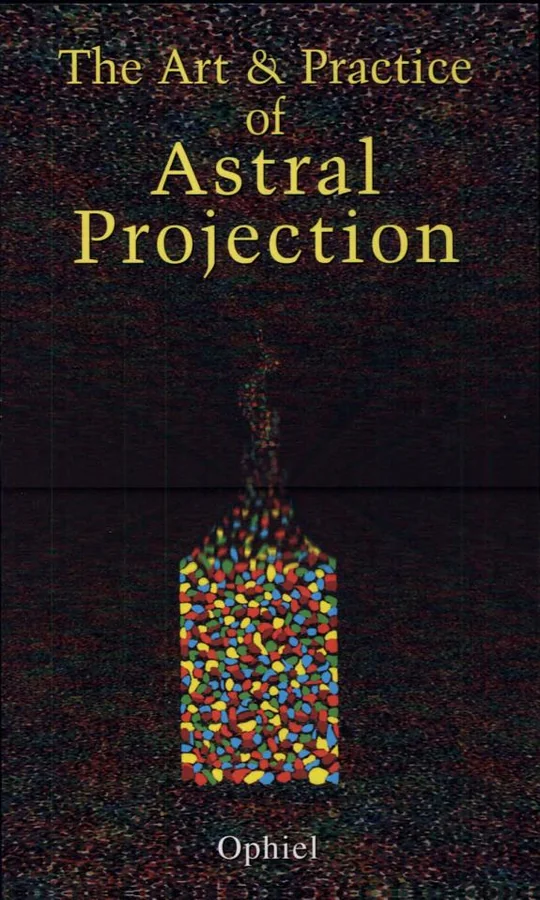
The Art and Practice of Astral Projection
 82
82

The Art and Practice of Astral Projection
Ophiel's 1974 treatise on astral projection is notable for its directness. Unlike many contemporary works that couch such practices in metaphor, Ophiel provides a manual, replete with specific exercises. The section detailing the "astral cord" and its function is particularly lucid, offering a concrete, if somewhat mechanical, explanation for maintaining connection to the physical form. However, the prose, while clear, can feel somewhat dry, lacking the evocative language that might inspire a novice. The emphasis on precise mental control, while essential, might also present a barrier for those who find such rigorous discipline challenging. Ophiel offers a functional blueprint for astral travel, prioritizing technique over spiritual narrative.
📝 Description
82
Ophiel's 1974 guide details conscious travel beyond the physical body.
Ophiel's "The Art and Practice of Astral Projection" provides clear instructions for conscious travel outside the physical form. Published in 1974, the book aims to clarify this process. It details the necessary preparation, how to initiate and maintain an astral experience, and importantly, how to return safely with full memory. The text is for serious practitioners interested in occultism, esoteric psychology, and consciousness separate from the body. It requires patience, discipline, and a willingness to engage in challenging mental exercises.
The work focuses on a methodical approach to astral projection. Key elements include cultivating willpower, employing visualization techniques, and achieving a specific mental detachment. Ophiel introduces the concepts of the astral body and the astral plane. The book also stresses the need for lucidity during projection and offers guidance on potential difficulties and safeguards to ensure a controlled and useful experience.
Emerging in the early 1970s, a time of renewed interest in occultism building on Theosophy and the Golden Dawn, Ophiel's book offered practical methods for spiritual exploration. It joined a growing collection of works providing accessible techniques for altered states and non-physical experiences outside conventional religious or academic paths. The book addressed a desire for direct experience of consciousness independent of the physical.
💡 Why Read This Book?
• Learn a systematic method for astral projection, including specific visualization and relaxation techniques detailed in Ophiel's original 1974 publication, enabling direct exploration of non-physical states. • Understand the concept of the "astral cord" as described by Ophiel, providing a conceptual framework for maintaining safety and connection during out-of-body experiences. • Gain practical directions for returning from the astral plane with full memory retention, a crucial element for integrating such experiences into waking consciousness.
⭐ Reader Reviews
Honest opinions from readers who have explored this book.
❓ Frequently Asked Questions
When was 'The Art and Practice of Astral Projection' first published?
The book 'The Art and Practice of Astral Projection' by Ophiel was first published on January 15, 1974.
What is the primary goal of the techniques described in Ophiel's book?
The primary goal is to enable the practitioner to consciously enter the astral plane, function within it, and return to the physical body with complete memory of the experience.
Does Ophiel discuss the astral cord in this book?
Yes, Ophiel's work includes explanations and discussions regarding the astral cord, often referred to as the silver cord, which connects the physical body to its astral counterpart.
Is this book suitable for complete beginners in occult studies?
While Ophiel provides directions, the book assumes a degree of seriousness and discipline. Beginners interested in occultism who are prepared for focused mental practice will find it most beneficial.
What kind of preparation does the book suggest before attempting astral projection?
The book emphasizes mental preparation, including relaxation techniques, visualization exercises, and developing a strong will and focus to achieve the desired state of consciousness.
Can the methods in 'The Art and Practice of Astral Projection' be used for learning or exploration?
Yes, the book's premise is that the astral plane is a real environment that can be explored for knowledge, experience, and personal development, provided the practitioner is prepared and lucid.
🔮 Key Themes & Symbolism
Conscious Astral Travel
The central theme is the deliberate and aware projection of consciousness from the physical body into the astral plane. Ophiel breaks down the process into actionable steps, focusing on mental discipline, visualization, and the cultivation of a specific state of awareness. The aim is not accidental or uncontrolled out-of-body experiences, but rather a systematic practice that allows for exploration and interaction with non-physical realities while maintaining full consciousness and memory.
The Astral Body and Plane
The book elaborates on the nature of the astral body as a vehicle for consciousness and the astral plane as a distinct area of existence. Ophiel provides theoretical frameworks for understanding these concepts, describing the astral plane as a locus of subtle energies and experiences accessible through focused intent. This exploration moves beyond mere speculation, offering a practical guide to navigating this dimension.
Memory and Lucidity Retention
A critical aspect of Ophiel's teaching is the importance of returning from astral projection with intact memory and lucidity. The work addresses the common problem of forgetting experiences upon waking or losing awareness during the projection. It offers specific techniques and mental exercises designed to ensure that the practitioner can recall their journeys and integrate the knowledge gained.
Willpower and Mental Discipline
Ophiel consistently emphasizes the role of willpower and rigorous mental discipline in achieving successful astral projection. The book outlines exercises that strengthen focus, concentration, and imaginative control. This disciplined approach is presented as essential for overcoming the limitations of the physical mind and body, enabling the practitioner to achieve the desired state for projection.
💬 Memorable Quotes
Direct passages from the work, attributed to the author.
“The astral body is a vehicle of consciousness.”
— This statement expresses the book's core premise: that our consciousness can inhabit a distinct, non-physical body capable of independent movement and perception.
“You must learn to relax completely, yet remain alert.”
— This highlights the paradoxical state required for astral projection—a deep physical and mental stillness combined with heightened, focused awareness.
“The astral cord connects you to your physical body.”
— This refers to the concept of a vital link, often described as a silver cord, that maintains the connection between the physical form and the astral body during out-of-body experiences.
“Practice is the key to mastery in astral projection.”
— This emphasizes that astral projection is not an innate talent for most, but a skill developed through consistent application of specific techniques and exercises.
“Return with memory available.”
— This phrase underscores the crucial goal of retaining awareness and recollection of the astral journey upon re-entering the physical body, ensuring the experience is not lost.
🌙 Esoteric Significance
Tradition
This work is firmly rooted in the Western Esoteric Tradition, particularly drawing from practical magic and occultism influenced by Hermeticism and post-Theosophical thought. It diverges from purely philosophical contemplation by providing a structured, operational methodology. Unlike purely Kabbalistic or Gnostic systems that might focus on divine emanations or spiritual liberation through knowledge, Ophiel's text offers a pragmatic system for exploring subtle realms, emphasizing personal agency and direct experience.
Symbolism
While Ophiel's text is notably practical, the concept of the "astral cord" serves as a potent symbol of the vital connection between the physical and non-physical bodies, representing life force and continuity. The "astral plane" itself functions as a symbolic landscape, representing the mind's potential for creation and exploration beyond material constraints. The act of "returning with memory" symbolizes the integration of higher consciousness or spiritual knowledge into the mundane world, bridging the gap between the inner and outer realities.
Modern Relevance
Contemporary practitioners of lucid dreaming, remote viewing, and various forms of consciousness exploration often find Ophiel's direct approach valuable. Thinkers and groups within modern occultism and neo-shamanism who focus on practical application and verifiable techniques echo the methodology presented here. The book remains a reference for those seeking structured methods for out-of-body experiences, contributing to the ongoing discourse on the nature of consciousness and its potential beyond the physical form.
👥 Who Should Read This Book
• Aspiring astral projectors seeking a structured, step-by-step guide rather than purely theoretical discourse. • Practitioners of Western Esotericism interested in augmenting their studies with practical techniques for exploring subtle realms. • Students of consciousness and metaphysics looking for a historical manual on achieving and controlling out-of-body experiences.
📜 Historical Context
Ophiel's "The Art and Practice of Astral Projection," first published in 1974, emerged during a period of heightened interest in parapsychology and esoteric phenomena, following the counter-cultural shifts of the 1960s. This era saw a proliferation of 'how-to' guides for altered states of consciousness, often drawing inspiration from earlier occult traditions like Theosophy and the work of figures such as Helena Blavatsky and Aleister Crowley. While the broader spiritual landscape included New Age movements and Eastern mysticism, Ophiel's approach was more grounded in the Western esoteric tradition, focusing on practical, disciplined techniques for verifiable out-of-body experiences rather than purely philosophical or devotional paths. The book contributed to a growing body of literature that sought to clarify such practices, making them accessible to a wider audience interested in exploring consciousness beyond conventional limits. Its direct, instructional style offered a contrast to more mystical or theoretical texts.
📔 Journal Prompts
The Astral Body's composition and function.
Methods for achieving complete relaxation while maintaining alertness.
The practical application of willpower in astral projection.
The significance of the astral cord in maintaining connection.
Strategies for memory retention upon returning from the astral plane.
🗂️ Glossary
Astral Body
A subtle, non-physical body composed of finer energies, believed to be the vehicle of consciousness during astral projection and other non-physical experiences.
Astral Plane
A non-physical dimension or area of existence, often described as a plane of consciousness, emotion, and subtle energies, accessible through specific mental states.
Astral Projection
The intentional act of projecting one's consciousness, often via the astral body, out of the physical body to travel and perceive on the astral plane.
Astral Cord (Silver Cord)
A vital, elastic cord connecting the physical body to the astral body, thought to sustain life and consciousness during out-of-body experiences.
Lucidity
The state of full awareness and conscious control maintained during an astral projection or other altered state of consciousness.
Willpower
The mental faculty of conscious control and determination, emphasized by Ophiel as crucial for initiating and directing astral projection.
Memory Retention
The ability to recall and consciously remember experiences had while on the astral plane upon returning to the physical body.