Archetypes at Work
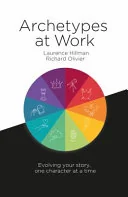
 80
80

Archetypes at Work
Laurence Hillman and Richard Olivier's *Archetypes at Work* offers a pragmatic lens on the often-esoteric concept of archetypes. The strength of the book lies in its attempt to operationalize Jungian ideas for organizational contexts, moving beyond purely theoretical discussions. The clarity with which the authors describe their assessment method is commendable, providing a tangible framework for self-reflection and team analysis. However, the initial exposition of the 'Archetypes at Work(tm)' system feels somewhat dense, requiring careful reading to grasp the full methodology. A specific passage detailing the 'Sage' archetype's potential pitfalls in an organizational setting, for instance, highlights the nuanced application the authors intend. While the book successfully bridges psychology and business, some readers might find the direct application of archetypes to corporate strategy a stretch, seeking more empirical validation. Nevertheless, it provides a valuable, albeit academic, toolkit for understanding deep-seated behavioral patterns.
📝 Description
80
Archetypes at Work, published in November 2019, offers a structured method for recognizing and using inherent human patterns.
Laurence Hillman and Richard Olivier's book, Archetypes at Work, presents a structured methodology for identifying and leveraging inherent human patterns. It posits that these archetypal forces, deeply embedded in our motivations and values, significantly influence individual and collective behavior. The method aims to bring these often-unseen dynamics into conscious awareness for improved effectiveness and future readiness.
This framework is designed for leaders, consultants, and individuals seeking to enhance personal and organizational development. It caters to those interested in understanding the underlying drivers of human action and applying this knowledge to foster adaptability and growth in complex environments. The approach is applicable to various scales, from individual mindset shifts to large-scale organizational transformation.
This work emerges from a lineage of psychological and philosophical inquiry into archetypal patterns, building upon Carl Jung's exploration of universal symbols and the collective unconscious. It situates itself within contemporary organizational psychology and leadership studies, seeking to offer a practical application of archetypal theory. The core principle is that conscious engagement with these archetypal energies allows for more intentional decision-making and a greater capacity to adapt to evolving circumstances.
💡 Why Read This Book?
• Understand your core motivational patterns by learning about the 'Archetypes at Work(tm)' framework, a system developed with a focus on future readiness. • Gain practical tools for assessing organizational dynamics, inspired by Carl Jung's foundational work on archetypes and the collective unconscious. • Discover how to consciously leverage intrinsic human patterns, a concept explored through the book's methodology dating back to its 2019 publication.
⭐ Reader Reviews
Honest opinions from readers who have explored this book.
❓ Frequently Asked Questions
What is the Archetypes at Work(tm) method?
Archetypes at Work(tm) is a proprietary method designed to assess and develop individuals and organizations by identifying underlying human patterns, known as archetypes, that influence behavior and decision-making.
Who are the authors of Archetypes at Work?
The authors are Laurence Hillman and Richard Olivier. The book was first published on November 28, 2019.
How does this book relate to Carl Jung's work?
The book builds upon Carl Jung's theories of archetypes and the collective unconscious, applying these concepts to modern organizational and personal development contexts.
Can Archetypes at Work(tm) be used for personal development?
Yes, the method is designed for both individual self-awareness and organizational analysis, aiming to help people understand their inner motivations and values more consciously.
What is the primary goal of applying archetypes in an organization?
The primary goal is to enhance effectiveness and future readiness by bringing unconscious archetypal patterns into conscious awareness, allowing for more intentional action.
When was Archetypes at Work first published?
Archetypes at Work was first published on November 28, 2019.
🔮 Key Themes & Symbolism
Unseen Influences
The book emphasizes that archetypes operate largely beneath conscious awareness, acting as powerful, often invisible, forces that shape our motivations, mindsets, and values. This perspective challenges the notion that decisions are purely rational, highlighting the deep-seated, universal patterns that drive human experience and behavior within both personal lives and professional settings.
Organizational Fitness
A core theme is preparing individuals and organizations for future challenges by understanding and consciously deploying archetypal energies. This involves assessing the prevailing archetypal landscape within a group or company to identify strengths, blind spots, and potential areas for development, thereby enhancing adaptability and resilience.
Conscious Application
Rather than simply identifying archetypes, the work focuses on their practical application. The method provides a framework for managers, leaders, and individuals to consciously engage with these patterns, transforming them from passive influences into active tools for growth, innovation, and effective leadership in a rapidly changing world.
Inner Motivations and Values
Archetypes are presented as fundamental drivers embedded within our inner worlds. Understanding these patterns offers a pathway to deeper self-knowledge, revealing the roots of our core beliefs and values. This introspective aspect is crucial for authentic leadership and sustainable personal development, connecting outer actions to inner truths.
💬 Memorable Quotes
Direct passages from the work, attributed to the author.
“Archetypes are underlying patterns of human nature and experience. As such they are - often invisibly - "running the show".”
— This statement expresses the book's central premise: that universal, unconscious patterns significantly dictate our actions and perceptions, often without our direct awareness.
“The better we understand these patterns and the more consciously we use them, the more effective we will be.”
— This highlights the practical utility of archetypal understanding. It suggests that self-awareness and intentional application of these deep psychological structures lead to enhanced personal and professional efficacy.
“They are embedded in our inner motivations and mindset and deeply rooted in our values.”
— This points to the foundational role of archetypes in shaping individual identity and moral compass. It links these deep psychological structures directly to what drives us and what we deem important.
“The work explores how archetypes shape individual and collective consciousness.”
— This interpretation focuses on the dual impact of archetypes, influencing not only personal internal states but also the shared understanding and dynamics within groups and societies.
💡 Key Ideas
Editorial paraphrase of the work's core concepts — not direct quotes.
Archetypes at Work(tm) offers an exciting framework to assess and develop people and organizations to become fit for the future.
This paraphrased concept emphasizes the forward-looking and developmental aspect of the Archetypes at Work(tm) methodology, positioning it as a tool for adaptation and growth in evolving environments.
🌙 Esoteric Significance
Tradition
While not strictly adhering to a single esoteric lineage, *Archetypes at Work* is deeply indebted to the analytical psychology of Carl Jung. Jung's exploration of archetypes, symbols, and the collective unconscious positions his work within a broader Western esoteric and psychological tradition that seeks to understand the deeper, non-rational layers of human consciousness.
Symbolism
The core symbolism revolves around the archetypes themselves, which function as psychic blueprints. These are not necessarily visual symbols in the book but rather conceptual patterns representing universal human experiences like the Hero, the Sage, or the Trickster. Their significance lies in their power to structure perception and motivate behavior, acting as potent, albeit abstract, symbols of human potential and challenge.
Modern Relevance
Contemporary thinkers in fields like organizational psychology, leadership coaching, and even narrative therapy continue to draw upon archetypal frameworks. The book's emphasis on practical application appeals to modern approaches that seek to integrate psychological depth with tangible results, making its methodology relevant for those exploring conscious leadership and organizational transformation.
👥 Who Should Read This Book
• Leaders and managers seeking to understand the deeper drivers of team performance and organizational culture, moving beyond surface-level interactions. • Coaches and consultants looking for a structured framework to facilitate personal growth and organizational development, grounded in psychological theory. • Individuals interested in self-discovery and understanding the universal patterns that shape their motivations, values, and life choices.
📜 Historical Context
Published in late 2019, *Archetypes at Work* arrived during a period of heightened interest in applying psychological frameworks to business and leadership development. The book draws heavily from the psychological tradition initiated by Carl Jung, whose work on archetypes and the collective unconscious gained significant traction in the mid-20th century. Hillman and Olivier's contribution lies in systematizing these concepts into a practical methodology for organizational assessment, distinguishing it from purely academic explorations. This period also saw a rise in coaching and consultancy practices seeking innovative tools for personal and corporate growth, making the book relevant to practitioners. While not directly engaging with a specific contemporary movement in the way some esoteric texts do, it positioned itself as a modern application of enduring psychological principles, offering an alternative to purely behavioral or data-driven management approaches.
📔 Journal Prompts
The 'Archetypes at Work(tm)' framework's impact on your professional identity.
Identify a situation where an archetype seemed to be 'running the show' unconsciously.
How might understanding your dominant archetypes enhance your decision-making?
Reflect on the 'organizational fitness' described in the book.
Consider the interplay between personal values and archetypal roots.
🗂️ Glossary
Archetype
Fundamental, inherited patterns of thought or imagery derived from the collective unconscious, which are the psychic counterpart of instinct. They represent universal human experiences and motivations.
Collective Unconscious
A concept developed by Carl Jung, referring to a layer of the unconscious mind shared by all humanity, containing archetypes and instincts common to all people.
Mindset
A person's established set of attitudes or beliefs, often shaped by underlying archetypal patterns, which influences how they perceive and react to situations.
Organizational Fitness
The capacity of an organization to adapt, thrive, and remain effective in the face of changing internal and external environments, influenced by its collective archetypal dynamics.
Values
Deeply held principles or standards that guide behavior and judgment, often rooted in fundamental archetypal motivations and personal experiences.
Inner Motivations
The intrinsic psychological drivers and desires that compel an individual's actions, often stemming from underlying archetypal patterns.
Archetypes at Work(tm)
A specific method developed by Laurence Hillman and Richard Olivier for assessing and applying archetypal patterns in personal and organizational development contexts.
This book appears in 1 collection
🔮 Readers Also Liked
Browse all →









From the “Archetypes” Collection
View all →![Archetypal principles and hierarcheis [sic]](/img/thumb/archetypal-principles-and-hierarcheis-sic-john-peter-anton.webp)






More Free Occult Philosophy Books
View all →