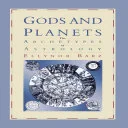
Gods and Planets
 76
76

Gods and Planets
Eleanor Barz’s "Gods and Planets" offers a compelling, if occasionally overly literal, marriage of planetary myth and Jungian psychology. The strength lies in its vivid re-telling of ancient stories, breathing life into figures like the tempestuous Mars and the disciplined Saturn. Barz’s interpretation of Jupiter’s struggle against Saturn, for instance, provides a surprisingly nuanced exploration of authority and rebellion that resonates beyond simple astrological interpretation. However, the work sometimes leans heavily on Jungian terminology, potentially alienating readers unfamiliar with the specifics of analytical psychology. A key passage detailing Mercury’s swift movements as symbolic of intellectual agility and communication offers a clear, potent example of the book’s success. Ultimately, "Gods and Planets" succeeds as an evocative mythological primer for the psychologically inclined.
📝 Description
76
Eleanor Barz's 1993 book connects ancient planetary deities to Jungian psychology.
Published in August 1993, "Gods and Planets" by Eleanor Barz re-examines Western astrology's core myths through a psychological lens. Barz connects the archetypal figures of planetary deities like Mars, Venus, Jupiter, and Saturn to psychological dynamics detailed by Carl Jung. She presents these mythological narratives in an accessible way, aiming to show the link between ancient cosmology and the human mind.
This book suits individuals interested in the overlap of mythology, psychology, and astrology. It appeals to those wanting a deeper, archetypally informed view of astrological symbols beyond simple prediction. Readers familiar with Jungian analysis and its use in cultural stories will find much here. It is also useful for students of comparative religion or esoteric philosophy who wish to study the personification of cosmic forces.
The book's central idea is that the myths of planetary gods are psychological blueprints. Each planet and its deity embodies distinct archetypal energies and complexes that appear in human behavior and consciousness. Barz uses these mythological personas to illustrate concepts.
Eleanor Barz's work was published in the early 1990s, a time when Jungian psychology and esoteric studies saw renewed interest. It fit within a larger movement that reinterpreted ancient traditions using modern psychological ideas. Barz's focus on the psychological drama within planetary myths offered an alternative to more mechanistic or deterministic astrological views, contrasting with authors like Richard Tarnas who examined cosmic influences on history.
💡 Why Read This Book?
• Understand the mythological underpinnings of astrological archetypes, moving beyond simplistic planetary meanings by examining the specific narratives of gods like Jupiter and Saturn as presented by Barz. • Gain insight into Jungian psychology by seeing core concepts like archetypes and psychological complexes illustrated through the personified drama of planetary deities. • Discover a unique approach to natal chart interpretation that prioritizes the psychological narrative of the planets, as detailed in the book's engagement with figures like Mars and Venus.
⭐ Reader Reviews
Honest opinions from readers who have explored this book.
❓ Frequently Asked Questions
What is the primary psychological theory informing "Gods and Planets"?
The book is primarily informed by the analytical psychology of C. G. Jung. Barz uses Jungian concepts such as archetypes, the collective unconscious, and individuation to interpret the myths of the planetary gods.
When was "Gods and Planets" first published?
The book was first published on August 1, 1993.
Does Eleanor Barz offer predictive astrological advice in this book?
No, "Gods and Planets" focuses on the archetypal and psychological dimensions of astrological symbolism, rather than predictive techniques. It aims to deepen understanding of planetary energies through myth.
How does the book connect mythology and astrology?
Barz connects them by positing that the ancient myths of planetary gods are symbolic representations of fundamental psychological forces and dynamics, which are then reflected in astrological interpretations.
Is "Gods and Planets" suitable for beginners in astrology?
Yes, while it delves into Jungian psychology, the book's engaging presentation of myths makes it accessible for beginners interested in the symbolic and psychological aspects of astrology.
What specific planetary myths are explored in the book?
The book explores myths associated with various planets, including the relationships and conflicts between deities like Mars, Venus, Jupiter, and Saturn, and the characteristics of Mercury.
🔮 Key Themes & Symbolism
Planetary Archetypes and Jung
The core of Barz's work lies in mapping the psychological archetypes defined by C. G. Jung onto the personified gods of the planets. Each celestial body, from the assertive Mars to the expansive Jupiter, is presented not just as an astrological symbol but as a manifestation of distinct psychic energies. The book details how these archetypes, like the shadow or the anima/animus, play out in mythological narratives, offering a framework for understanding personal psychological dynamics through the lens of ancient cosmic personifications.
Mythological Narrative as Psychological Drama
Barz argues that the myths surrounding planetary deities are ancient psychological dramas that reveal fundamental truths about the human condition. The interactions between gods like Jupiter and Saturn, or the dynamics between Mars and Venus, are interpreted as symbolic representations of internal conflicts and developmental stages. By recounting these stories, the book aims to make abstract psychological concepts tangible and relatable, demonstrating how ancient cultures encoded useful insights into the psyche through their cosmology.
The Psyche and the Cosmos
This work posits an intrinsic link between the human psyche and the celestial order. The planets and their associated myths are seen as mirroring the internal field of consciousness. Barz explores how understanding these cosmic personifications can lead to greater self-awareness and integration, reflecting Jung's concept of individuation. The book suggests that the very structure of our solar system and the stories we tell about its inhabitants hold keys to understanding our own psychological makeup.
💬 Memorable Quotes
Direct passages from the work, attributed to the author.
“What happens when Mars and Venus are in love?”
— This rhetorical question opens the book, immediately framing the exploration as an investigation into the dynamic, often passionate, interplay between contrasting archetypal energies represented by these planets.
“How does Jupiter defend himself against Saturn, his difficult father?”
— This highlights the book's approach: using mythological conflict to explore psychological themes of authority, rebellion, and generational dynamics, viewed through a Jungian lens.
“To whom does Mercury hurry with his cap of invisibility and his winged shoes?”
— This imagery points to Mercury's role as a messenger and psychopomp, symbolizing swift communication, intellect, and the movement of consciousness between different realms or states.
“Drawing on the psychology of C. G. Jung, Ellynor Barz looks into the foundations of astrology by recounting the myths of the planetary gods.”
— This is a core statement of the book's methodology, emphasizing the integration of Jungian psychology with astrological symbolism via mythological narratives.
“Engaging and amusing her presentation also offers new and surprising insights for both psychology and astrology.”
— This suggests the book's value lies not just in academic exploration but in its ability to offer fresh perspectives and an enjoyable reading experience, bridging disciplinary divides.
🌙 Esoteric Significance
Tradition
This work sits within the broad umbrella of Western Esotericism, specifically drawing from the psychological interpretations of mythology popularized by C. G. Jung. It bridges the gap between psychological analysis and traditional astrological symbolism, viewing planetary deities as archetypal manifestations rather than purely physical bodies or predictive devices. It aligns with Neoplatonic and Hermetic ideas of correspondence between the macrocosm (cosmos) and the microcosm (psyche), reinterpreting these ancient links through a modern psychological lens.
Symbolism
The primary symbols explored are the planets themselves, personified as gods (e.g., Mars, Venus, Jupiter, Saturn, Mercury). These figures embody distinct psychological complexes and archetypal energies. Mars represents assertion and conflict, Venus embodies attraction and relationship dynamics, Jupiter signifies expansion and authority, Saturn represents limitation and structure, and Mercury symbolizes communication and intellect. The myths surrounding these deities are interpreted as symbolic narratives of internal psychic processes and developmental stages.
Modern Relevance
Barz's approach remains relevant today for practitioners of modern Jungian astrology, psychological astrology, and archetypal psychology. Contemporary figures and schools that emphasize the symbolic and psychological dimensions of astrology, rather than solely predictive aspects, often draw upon this kind of interpretive framework. The book’s method of exploring the psyche through myth speaks to ongoing interest in depth psychology and its application to understanding cultural narratives and personal development.
👥 Who Should Read This Book
• Students of Jungian psychology seeking practical applications of archetypal theory in mythology and cosmology. • Astrologers interested in deepening their understanding of planetary symbolism beyond traditional interpretations, focusing on psychological dynamics. • Readers of comparative mythology and religious studies looking for a psychological framework to analyze ancient narratives and their connection to human consciousness.
📜 Historical Context
Eleanor Barz's "Gods and Planets" emerged in 1993, a period marked by a significant resurgence of interest in Jungian psychology and esoteric traditions. The early 1990s saw a confluence of academic and popular engagement with archetypal studies, comparative mythology, and depth psychology. Works like Richard Tarnas's "The Passion of the Western Mind" (1991) explored cosmic influences on history, while a growing audience sought psychological interpretations of ancient wisdom. Barz’s approach, directly applying C. G. Jung's framework to planetary myths, positioned her work within this intellectual current. It offered a counterpoint to purely scientific or deterministic astrological models, aligning with a broader movement to reintegrate symbolic and mythic thinking into modern understanding. The book contributed to a dialogue that saw psychological insights applied to cultural phenomena, finding favor among readers interested in both esoteric symbolism and the workings of the psyche.
📔 Journal Prompts
The mythological portrayal of Jupiter's defense against Saturn.
Mercury's journey with his cap of invisibility and winged shoes.
The archetypal energies of Mars and Venus in relation.
The planetary gods as representations of psychological complexes.
The connection between astrological foundations and C. G. Jung's theories.
🗂️ Glossary
Archetype
In Jungian psychology, a universal, inherited pattern of thought or image derived from the collective unconscious, appearing in various forms in the myths and symbols of all cultures. Planets are viewed as embodying specific archetypes.
Collective Unconscious
According to Jung, a part of the unconscious mind derived from ancestral experience and capable of evocation. It is the source of archetypes and is common to all humanity.
Individuation
Jung's concept describing the psychological process of integrating the conscious and unconscious aspects of the personality to form a whole, unique individual. The planetary myths are seen as stages or elements within this process.
Psychopomp
A guide of souls from the world of the living to the world of the dead. In the context of the book, Mercury often serves this function, symbolizing the transition of consciousness.
Anima/Animus
Jungian terms for the unconscious feminine aspect in the male psyche (anima) and the unconscious masculine aspect in the female psyche (animus). These archetypes are often reflected in mythic pairings.
Shadow
In Jungian psychology, the unconscious, repressed, or rejected aspects of the personality. Mythological conflicts can symbolize the struggle with one's shadow.
Analytical Psychology
The school of psychology founded by Carl Jung, emphasizing the importance of archetypes, the collective unconscious, and individuation.
This book appears in 1 collection
🔮 Readers Also Liked
Browse all →








From the “Archetypes” Collection
View all →






More Free Occult Philosophy Books
View all →





![Secret Societies of the Middle Ages [by T. Keightley]](/img/thumb/secret-societies-of-the-middle-ages-by-t-keightley-thomas-keightley-272139.webp)