Archetypes

 74
74

Archetypes
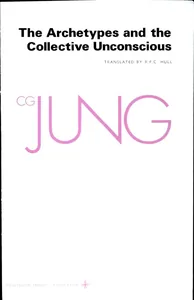
Elémire Zolla’s "Archetypes" presents a dense, comprehensive survey of the primordial patterns that govern human experience, a subject he approaches with an encyclopedic breadth that is both its greatest strength and its most daunting feature. The work is particularly compelling in its extensive cross-cultural comparisons, linking seemingly disparate myths and symbols from Vedic India to Western folklore, demonstrating a remarkable intellectual synthesis. Zolla’s assertion that archetypes are not just psychological imprints but active forces in the cosmos offers a provocative perspective for those outside strict Freudian or Jungian interpretations. However, the sheer volume of material can sometimes overwhelm the central argument, making specific passages feel more like a curated anthology than a tightly argued thesis. The section exploring the archetype of the "divine child" across cultures, while rich in examples, could benefit from a more focused analytical thread. "Archetypes" is an indispensable, albeit challenging, resource for anyone committed to understanding the deep structures of human symbolism.
📝 Description
74
Elémire Zolla's 1981 book "Archetypes" examines how universal patterns influence human consciousness and history.
First published in 1981, Elémire Zolla's "Archetypes" investigates the pervasive influence of archetypal patterns on human consciousness, history, and creativity. The work draws from a wide range of global traditions, incorporating Eastern philosophies, Western esoteric thought, scientific theories, and artistic expressions. It aims to shed light on the deeper structures of the human psyche and the cross-cultural recurrence of symbolic forms. Readers interested in the philosophical underpinnings of myth and the origins of recurring narratives will find substantial material within its pages. The book systematically addresses the nature of archetypes, their manifestation in thought and behavior, and the potential for conscious engagement with them. Zolla proposes that these primordial patterns are fundamental forces shaping reality, informing dreams, myths, and artistic creations. The book offers a framework for understanding their role in both individual lives and collective human history.
Published in 1981, "Archetypes" emerged during a period of renewed interest in Jungian psychology and comparative religion. Zolla's work engages with intellectual currents that sought to unify disparate fields of knowledge, but it distinguishes itself by its broad scope and integration of non-Western spiritual traditions. It moves beyond frameworks that primarily focused on Western psychological perspectives, offering a more global view of symbolic life and the recurring forms found across human cultures. The book connects these patterns to esoteric thought, suggesting their influence extends beyond purely psychological constructs.
💡 Why Read This Book?
• Understand the pervasive influence of archetypes on human history and dreams, drawing on Zolla's extensive research across Eastern and Western traditions, as detailed in the book's comparative analyses. • Explore the concept of archetypes not merely as psychological constructs but as active forces, a perspective informed by Zolla's original interpretations of myths and symbols from diverse cultures. • Discover practical ways to relate more creatively to these fundamental patterns, a key aim of the book's exploration of their manifestation in art, literature, and personal experience.
⭐ Reader Reviews
Honest opinions from readers who have explored this book.
❓ Frequently Asked Questions
When was Elémire Zolla's "Archetypes" first published?
Elémire Zolla's "Archetypes" was first published in 1981. The edition available from Esoteric Library was reissued in 2015.
What kind of traditions does Zolla draw from in "Archetypes"?
Zolla draws from a vast array of traditions, including Eastern philosophies, Western esoteric thought, scientific theories, literature, art, and poetry.
Is "Archetypes" a psychological study or something more?
While informed by psychological concepts, "Archetypes" extends beyond a purely psychological study, exploring the philosophical and spiritual dimensions of these patterns across cultures and history.
What is the main question "Archetypes" seeks to answer?
The book addresses how archetypes dominate human history and dreams, how to define and evaluate them, and whether a more creative relationship with them is possible.
Who would benefit most from reading "Archetypes"?
Students of comparative mythology, esoteric studies, psychology, and anyone interested in the deep structures of human symbolism and cross-cultural myth will find this book valuable.
What is the Esoteric Library edition of "Archetypes"?
The Esoteric Library edition is a reissued version of Elémire Zolla's original 1981 work, making this scholarly exploration of archetypes accessible to a contemporary audience.
🔮 Key Themes & Symbolism
The Ubiquity of Archetypes
This theme explores how archetypal patterns are not confined to individual psychology but actively shape collective human endeavors, from historical movements to artistic expression. Zolla posits that these primordial forms are fundamental to understanding human existence, influencing everything from our dreams to our societal structures. The book meticulously gathers evidence from diverse global cultures, suggesting a universal grammar of the psyche that transcends specific historical periods or geographical locations.
Archetypes and Creative Expression
Zolla investigates the profound connection between archetypal forces and human creativity. He argues that art, literature, and even scientific discovery are often manifestations of these underlying patterns. The work examines how artists and thinkers intuitively tap into the collective unconscious, drawing forth symbols and narratives that resonate deeply because they echo these ancient, universal forms. This section offers a framework for analyzing creative works through the lens of archetypal symbolism.
Conscious Engagement with Archetypes
A central concern of the book is the possibility of a more conscious relationship with archetypal influences. Zolla suggests that by understanding these patterns, individuals can move from being passively dominated by them to actively integrating them into their lives. This involves recognizing their presence in personal experiences, cultural narratives, and spiritual traditions, thereby fostering personal growth and a deeper self-awareness. The work guides readers toward a more intentional interaction with these psychic forces.
Cross-Cultural Archetypal Resonance
This theme highlights Zolla's extensive research into the recurring nature of archetypal imagery and narratives across disparate cultures and epochs. From ancient myths to contemporary phenomena, the book demonstrates how similar symbolic structures appear independently in various traditions, such as Vedic India and classical Greece. This comparative approach underscores the idea of a shared human psyche and provides a rich source of material for understanding universal themes in myth and religion.
💬 Memorable Quotes
Direct passages from the work, attributed to the author.
“Man is dominated by his archetypes; they mould not only his history but his dreams.”
— This foundational statement expresses Zolla's core thesis: archetypes are not merely abstract concepts but powerful forces that actively shape human reality, influencing both our personal inner lives and our collective historical trajectory.
“How are we to define and evaluate them?”
— This question, posed by Zolla, highlights the critical challenge in studying archetypes: moving beyond mere recognition to a rigorous understanding of their nature, function, and impact across different domains of human experience.
“Is it perhaps possible for us to relate more creatively to them?”
— This interrogative suggests Zolla's aim to move beyond theoretical exposition towards practical application, exploring how conscious engagement with archetypes can foster personal growth and a richer, more intentional life.
“The author gathered together a vast amount of material drawn from Eastern and Western traditions, from science, literature, art and poetry.”
— This factual statement points to the encyclopedic scope of Zolla's research, emphasizing the interdisciplinary approach taken to understand archetypes through a wide range of human knowledge and expression.
“The answers he puts forward are often highly original.”
— This assertion underscores the unique contribution of Zolla's work, suggesting that his synthesis and interpretations of archetypal theory offer novel perspectives that challenge conventional understandings.
🌙 Esoteric Significance
Tradition
Zolla's work engages deeply with the Western esoteric tradition, particularly its Hermetic and alchemical underpinnings, which view symbols and patterns as keys to understanding cosmic and psychological realities. However, it significantly departs from a purely Western focus by incorporating extensive material from Eastern spiritual lineages, such as Vedanta and Buddhism. This integration positions "Archetypes" as a bridge between diverse esoteric philosophies, suggesting a universal symbolic language that informs various spiritual paths, rather than adhering strictly to one lineage.
Symbolism
The book frequently references archetypal symbols such as the Serpent, the Mandala, and the Divine Child. The Serpent often represents primordial energy, transformation, and cyclical renewal across cultures. The Mandala symbolizes cosmic order, wholeness, and the integration of the self. The Divine Child archetype signifies potential, innocence, and the birth of new consciousness or a spiritual savior. Zolla explores how these potent symbols manifest in myths, religious iconography, and psychological experiences, serving as recurring motifs of profound spiritual and existential significance.
Modern Relevance
Contemporary thinkers in Jungian psychology, depth psychology, and comparative mythology continue to reference Zolla's comprehensive approach. His work is relevant to modern integral psychology and transpersonal studies, which seek to synthesize spiritual, psychological, and scientific knowledge. Furthermore, artists, writers, and spiritual seekers interested in the cross-cultural power of myth and symbolism find "Archetypes" a valuable resource for understanding the underlying patterns that inform creative expression and spiritual quests today.
👥 Who Should Read This Book
• Students of comparative mythology and religion: Gain a profound understanding of recurring themes and symbols across diverse cultures, facilitated by Zolla's extensive cross-cultural research. • Practitioners of depth psychology and Jungian analysis: Deepen your comprehension of archetypal theory with a broader perspective that integrates Eastern philosophies and esoteric traditions beyond standard Western frameworks. • Intellectual historians and philosophers: Explore the evolution of ideas about human consciousness and symbolism, examining how archetypes have been conceptualized across millennia and varied intellectual currents.
📜 Historical Context
When Elémire Zolla's "Archetypes" first appeared in 1981, the intellectual landscape was ripe for explorations into the deeper structures of the human psyche and the universality of myth. Carl Jung's theories on archetypes and the collective unconscious, though developed decades earlier, continued to exert a significant influence, alongside growing interest in comparative religion and anthropology. Zolla's work distinguished itself by integrating a vast spectrum of material, moving beyond a purely Western psychological framework. He drew heavily on Eastern spiritual traditions, particularly Hinduism and Buddhism, and engaged with philosophical and literary currents that sought to bridge the gap between science and spirit. While Jungian analysis was well-established, Zolla's encyclopedic synthesis, linking ancient Indian philosophy with modern scientific thought and artistic expression, offered a unique perspective that challenged the prevailing reductionist tendencies in some academic circles. The book arrived at a time when interdisciplinary studies were gaining traction, making its broad scope both timely and significant.
📔 Journal Prompts
The dominance of archetypes in shaping history and dreams.
Defining and evaluating archetypal patterns in personal experience.
Creative relationship with the primordial patterns of the psyche.
Archetypal manifestations in art and literature.
The cross-cultural resonance of symbolic imagery.
🗂️ Glossary
Archetype
A primordial, universal pattern or image that derives from the collective unconscious and is believed to influence human behavior and perception. These are fundamental psychic structures that manifest in myths, symbols, and dreams across cultures.
Collective Unconscious
A concept, largely attributed to Carl Jung, referring to a layer of the unconscious psyche that is shared by all humanity. It contains archetypes and is inherited rather than developed through personal experience.
Primordial
Existing at or from the beginning of time; ancient and fundamental. In the context of archetypes, it refers to their ancient, innate, and foundational nature within the human psyche.
Mythology
The body of myths belonging to a particular religious or cultural tradition. Zolla uses mythology as a primary source for identifying and understanding archetypal patterns.
Symbolism
The use of symbols to represent ideas and qualities. In Zolla's work, symbolism is crucial for understanding how archetypes are expressed and communicated across different cultures and contexts.
Esoteric
Intended for or likely to be understood by only a small number of people with a specialized knowledge or interest. Zolla's work often explores esoteric interpretations of symbols and myths.
Vedanta
A school of Hindu philosophy that forms the theoretical basis for much of modern Indian thought. Zolla draws upon its concepts of consciousness and ultimate reality.
This book appears in 1 collection
🔮 Readers Also Liked
Browse all →









From the “Archetypes” Collection
View all →



More Free Occult Philosophy Books
View all →