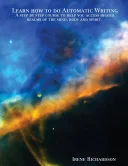
Learn how to Do Automatic Writing
 74
74

Learn how to Do Automatic Writing
Irene Richardson’s 2008 guide, "Learn how to Do Automatic Writing," offers a pragmatic, if somewhat direct, entry point into the practice. The book’s strength lies in its clear, step-by-step methodology, which demystifies what can often seem like an arcane art. Richardson avoids overly flowery language, focusing instead on actionable advice for contacting what she terms 'higher realms.' A particular passage detailing how to prepare one's space for a channeling session, emphasizing simple grounding rituals, stands out for its practicality. However, the book’s limitation is its broad scope; the assertion that one can contact 'a teacher from another Galaxy' feels less substantiated than the more grounded advice on connecting with personal spirit guides. Ultimately, it serves as a functional primer for those eager to experiment with psychographic techniques.
📝 Description
74
Irene Richardson's 2008 book teaches automatic writing for communication with non-physical sources.
This guide provides a structured method for practicing automatic writing, also known as psychography or channeling. It breaks down the process into simple steps, making it accessible for newcomers. The book suggests that through this practice, individuals can receive written messages from various non-physical entities. These might include spirits of deceased loved ones, spirit guides, or even beings from other worlds. The work is intended for those interested in spiritual development, enhancing intuition, or exploring communication beyond the physical realm.
The author focuses on cultivating a receptive mental state to allow 'other' intelligence to come through. This involves techniques for quieting the conscious mind and building trust in the channeled messages. The book aims to help readers use their minds as conduits for this form of communication.
Published in 2008, Richardson's work aligns with the New Age interest in spirituality and parapsychology. It draws on earlier traditions within spiritualism, which began in the mid-19th century with figures like Leonora Piper. The book connects to a broader exploration of consciousness and the potential for communication beyond material existence, often influenced by movements like Theosophy.
💡 Why Read This Book?
• Learn specific techniques for quieting the conscious mind to facilitate receptivity, as detailed in the book's initial chapters, enabling a direct experience of intuitive guidance. • Discover methods for establishing contact with personal Spirit Guides and Guardian Angels, a core promise of the work, offering a personal connection to spiritual support. • Explore the potential for receiving messages from beyond the veil, as outlined by Irene Richardson's 2008 publication, potentially providing comfort or insight from departed family members.
⭐ Reader Reviews
Honest opinions from readers who have explored this book.
❓ Frequently Asked Questions
What is the core principle behind automatic writing as taught by Irene Richardson?
The core principle is learning to bypass the conscious, analytical mind to act as a conduit for information from higher consciousness or spiritual entities, as detailed in Richardson's step-by-step course.
Can automatic writing help me communicate with deceased loved ones?
Yes, the book explicitly states that one of the primary applications of automatic writing taught is to facilitate contact with family members who have passed on.
Is Irene Richardson's book suitable for absolute beginners in spiritual practices?
The book is designed as a step-by-step course, suggesting it is suitable for beginners interested in exploring automatic writing and accessing higher realms of mind, body, and spirit.
What kind of entities does the book suggest can be contacted through automatic writing?
The book suggests contact with a range of entities, including deceased family members, Spirit Guides, Guardian Angels, and even teachers from other galaxies.
When was 'Learn how to Do Automatic Writing' first published?
Irene Richardson's 'Learn how to Do Automatic Writing' was first published on May 26, 2008.
Does the book offer guidance on verifying the messages received through automatic writing?
While not explicitly detailed in the blurb, a practical guide to automatic writing would likely include methods for discernment and verification of channeled information.
🔮 Key Themes & Symbolism
Channeling Higher Consciousness
The central theme revolves around the practice of automatic writing as a method to receive messages from non-physical intelligences. This involves cultivating a receptive state, often described as allowing a higher aspect of consciousness or external entities to communicate through the writer's hand. The book likely guides the reader in distinguishing between their own thoughts and external input, fostering a connection to what is presented as a more evolved or spiritual source of information.
Inter-dimensional Communication
This work explores the potential for communication across different dimensions or planes of existence. It posits that through automatic writing, individuals can establish contact with beings such as Spirit Guides, Guardian Angels, and even 'teachers from another Galaxy.' This theme addresses the esoteric belief in a multi-layered reality where communication with entities beyond our immediate physical perception is possible and accessible through dedicated practice.
Grief and Connection
A significant aspect highlighted is the potential for automatic writing to aid in the grieving process. By facilitating contact with deceased family members, the practice offers a channel for continued connection, perceived closure, or the reception of comforting messages. This theme taps into the deep human desire to maintain bonds with loved ones even after their physical passing, presenting automatic writing as a tool for spiritual solace.
Self-Development and Intuition
Beyond direct communication, the book implicitly promotes self-development through the enhancement of intuition and psychic abilities. Learning automatic writing is framed as a process that sharpens one's inner senses, increases self-awareness, and builds confidence in one's spiritual connection. It encourages the user to trust their inner guidance, fostering personal growth and a deeper understanding of their own spiritual path.
💬 Memorable Quotes
Direct passages from the work, attributed to the author.
“Contact family members who have passed on.”
— This phrase directly addresses the therapeutic potential of automatic writing for those experiencing loss, suggesting a method to bridge the gap between the living and the departed for comfort or resolution.
“Contact your Spirit Guides and Guardian Angels.”
— This highlights the book's focus on establishing relationships with one's personal spiritual support system, framing automatic writing as a direct line to guidance and protection.
“Find a teacher from another Galaxy.”
— This ambitious claim broadens the scope of potential communication, suggesting the possibility of learning from highly advanced non-terrestrial intelligences through the practice.
“Access higher domains of the mind, body and spirit.”
— This expresses the overarching goal of automatic writing as presented, indicating a journey of spiritual expansion and connection to subtler energetic frequencies.
“The possibilities are endless once you learn how to do Automatic Writing.”
— This concluding statement emphasizes the transformative and limitless potential that the author attributes to mastering the skill of automatic writing.
🌙 Esoteric Significance
Tradition
This work aligns with the broader tradition of spiritualism and channeled literature, which gained significant momentum in the late 19th and early 20th centuries, influenced by movements like Theosophy. It departs from strictly Hermetic or Kabbalistic texts by focusing on direct, personal communion rather than complex symbolic systems or ritualistic magic, presenting a more accessible, intuitive approach to contacting unseen realms.
Symbolism
While the book's blurb doesn't detail specific symbols, the act of 'writing' itself can be seen as symbolic. It represents the externalization of internal or non-physical thought, bridging the gap between the unseen and the seen. 'Higher realms' function as a symbolic locus for advanced consciousness, while 'Spirit Guides' and 'Guardian Angels' are archetypal symbols of benevolent spiritual assistance.
Modern Relevance
Richardson's guide remains relevant for contemporary practitioners of intuitive development and energy healing modalities. Modern mindfulness, meditation apps, and even therapeutic approaches that encourage journaling and self-expression echo the core principle of accessing subconscious or superconscious states. Thinkers exploring consciousness studies and those engaged with neo-shamanic practices may find its direct approach to channeling a useful point of reference.
👥 Who Should Read This Book
• Individuals interested in developing their intuition and psychic abilities, seeking a structured method to practice receiving non-physical guidance. • Those grieving or seeking connection with departed loved ones, looking for a potential avenue to receive messages or a sense of continued presence. • Beginners in esoteric studies who are curious about channeling and spiritual communication but prefer a practical, step-by-step approach over dense theoretical texts.
📜 Historical Context
Irene Richardson's "Learn how to Do Automatic Writing," published in 2008, emerged during a period of sustained interest in New Age spirituality and alternative consciousness exploration. The mid-to-late 20th century had seen significant developments in parapsychology and channels like Werner Erhard's EST (Erhard Seminars Training) and subsequent human potential movements, which often explored altered states of consciousness. Automatic writing itself gained prominence in the late 19th century with figures like Leonora Piper, a prominent medium investigated by the Society for Psychical Research. By 2008, this practice was often discussed within circles influenced by Theosophy and channeled material, such as that popularized by authors like J.Z. Knight (Ramtha). Richardson's work fits within this lineage, offering a practical guide at a time when online communities were increasingly sharing esoteric knowledge, though it likely faced skepticism from more scientifically-oriented psychology disciplines.
📔 Journal Prompts
Prepare your writing space for communion with Spirit Guides.
Reflect on the potential messages from a Galaxy teacher.
Describe the feeling of bypassing your conscious mind.
Analyze a message received from a departed family member.
Consider the nature of higher realms accessible through writing.
🗂️ Glossary
Automatic Writing
A psychographic technique where the writer's hand moves seemingly of its own accord, transcribing messages from non-physical sources or the subconscious mind.
Higher Realms
Non-physical planes of existence characterized by higher consciousness, spiritual energy, and beings of elevated awareness.
Spirit Guides
Entities believed to offer guidance, support, and wisdom to individuals throughout their spiritual journey, often working with them from the spiritual planes.
Guardian Angels
Angelic beings assigned to protect and guide individuals, providing spiritual assistance and safeguarding them from harm.
Psychography
An alternative term for automatic writing, emphasizing the 'psychic' or spiritual origin of the transcribed messages.
Channeling
The process of receiving information or energy from a source outside the individual's normal conscious awareness, often attributed to spirits or higher consciousness.
Discarnate Entities
Beings or spirits that exist without a physical body, often considered to be deceased individuals or spiritual guides.
This book appears in 1 collection
🔮 Readers Also Liked
Browse all →








From the “Clairsentience” Collection
View all →




More Free Occult Philosophy Books
View all →