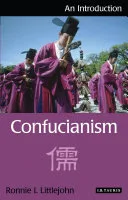
Confucianism
 73
73

Confucianism
Ronnie L. Littlejohn's "Confucianism" provides a necessary corrective to the often-reductive Western view of this enduring philosophy. The author meticulously traces the intellectual lineage and societal impact of Confucian thought, demonstrating its persistent influence even through periods of intense ideological opposition in 20th-century China. A particular strength lies in the nuanced presentation of *Li* (rites and propriety), moving beyond a simplistic understanding of mere ritual to reveal its function in cultivating social harmony and ethical character. However, the text occasionally leans towards academic exposition, which might daunt the casual reader unfamiliar with philosophical discourse. Despite this, the exploration of Confucianism's resurgence as a pragmatic guide for both personal and corporate life in contemporary China offers a compelling angle. This is a solid, scholarly overview, indispensable for understanding a cornerstone of East Asian civilization.
📝 Description
73
Ronnie L. Littlejohn's 2008 book analyzes Confucianism's two-millennia influence on East Asian civilization.
This volume examines Confucianism as a philosophical and ethical system that has deeply shaped East Asian civilization for over two thousand years. It argues that Confucianism is not merely a historical relic but a living tradition, central to China's cultural identity and increasingly significant in global discussions today. The book details the core principles that have long informed personal conduct, social structures, and government.
It provides historical context, noting periods of suppression and the philosophy's enduring resilience through dynastic changes and ideological shifts. The text traces Confucianism's evolution from its beginnings to its continued presence. Littlejohn clarifies central concepts such as *Ren* (benevolence), *Li* (rites and propriety), *Xiao* (filial piety), and *Junzi* (the noble person). The book shows how these ideas connect to form a cohesive ethical system and how they apply to relationships, community, and ideal statecraft, focusing on virtue cultivation.
While not strictly an esoteric text in the Western sense, Confucianism, as presented here, deals with the cultivation of virtue and the ordering of society through ritual and ethical practice. Its emphasis on self-cultivation, moral development, and the harmonious integration of the individual within social and cosmic orders shares common ground with many traditions that seek deeper understanding of human potential and societal well-being. The text illuminates how these principles, though often seen as social or political, carry a spiritual dimension for adherents seeking to live a good life.
💡 Why Read This Book?
• Gain a concrete understanding of *Ren* (benevolence) and *Li* (rites and propriety), seeing how these foundational concepts from ancient China continue to shape ethical decision-making. • Appreciate the historical resilience of Confucianism, learning how it survived periods of suppression, such as the anti-Confucian campaigns following the 1949 revolution, to remain a vital part of China's identity. • Analyze the pragmatic application of Confucian principles in modern contexts, as detailed in the book's examination of its resurgence in personal, corporate, and national life.
⭐ Reader Reviews
Honest opinions from readers who have explored this book.
❓ Frequently Asked Questions
What is the primary goal of Confucianism as presented in Ronnie L. Littlejohn's book?
The book presents Confucianism's primary goal as the cultivation of individual moral character and the establishment of social harmony through ethical conduct, education, and adherence to proper social roles and rituals (*Li*).
How does "Confucianism" by Ronnie L. Littlejohn explain the concept of *Junzi*?
The work defines *Junzi*, or the noble person, as an ideal individual who embodies Confucian virtues like benevolence (*Ren*) and righteousness (*Yi*), actively striving for moral self-perfection and exemplary leadership.
When was Confucianism first published and by whom?
The book "Confucianism" by Ronnie L. Littlejohn was first published on October 23, 2010, by Columbia University Press.
Does the book discuss the criticism Confucianism faced in 20th-century China?
Yes, the book explicitly addresses the period from the 1950s to the 1990s when Confucianism was reviled by Chinese intellectuals and speaks to its subsequent resurgence.
What role does filial piety (*Xiao*) play in the philosophy as described by Littlejohn?
Littlejohn's work emphasizes *Xiao* (filial piety) as a cornerstone of Confucian ethics, extending the respect and care shown to parents to broader social relationships and civic duty.
Is Confucianism presented as a religion or a philosophy in this book?
The book positions Confucianism primarily as a philosophy and ethical system, though it acknowledges its deep integration with Chinese social customs and ancestral veneration, which carry religious overtones.
🔮 Key Themes & Symbolism
The Cultivation of Virtue
The book meticulously details the Confucian emphasis on moral self-cultivation as the foundation for a well-ordered society. Central concepts like *Ren* (benevolence) and *Yi* (righteousness) are presented not as abstract ideals but as practical virtues to be actively developed through education, reflection, and adherence to *Li* (rites and propriety). This process aims to create the *Junzi*, or noble person, whose character serves as a model for others, thereby fostering ethical leadership and personal integrity.
Social Harmony and Order
A core theme is Confucianism's focus on establishing and maintaining social harmony through clearly defined roles and reciprocal relationships. The text explores how *Li* extends beyond personal conduct to encompass social etiquette, governmental structures, and familial duties, particularly *Xiao* (filial piety). Littlejohn illustrates how these prescribed relationships and rituals create a stable social fabric, minimizing conflict and promoting collective well-being, a stark contrast to more individualistic philosophies.
Resilience and Contemporary Relevance
The work powerfully argues for Confucianism's enduring influence and its surprising comeback in modern China, challenging the notion that it was successfully eradicated by 20th-century ideological movements. It examines how its pragmatic approach to ethics, governance, and social responsibility is being reinterpreted and applied to contemporary challenges in personal life, corporate culture, and international relations, demonstrating its adaptability.
The Role of Education
Education is presented as a vital tool for moral development and societal progress within the Confucian framework. The book highlights the importance of studying the classics, engaging in ethical reflection, and learning from the example of sage-kings and virtuous individuals. This emphasis on continuous learning and intellectual refinement is seen as essential for nurturing the *Junzi* and perpetuating the ethical traditions.
💬 Memorable Quotes
Direct passages from the work, attributed to the author.
“Confucianism has defied eradication, remaining a fundamental part of the nation's soul for 2500 years.”
— This statement expresses the core argument about Confucianism's deep historical roots and its remarkable ability to persist as a cultural and ethical force, even through periods of intense political and intellectual opposition.
“It is arguably Confucianism, not Communism, which lies at the core of China's deepest sense of self.”
— This provocative assertion challenges conventional Western understandings of China's identity, suggesting that the enduring philosophical traditions are more foundational to its self-conception than more recent political ideologies.
“Confucianism has defied eradication, remaining a fundamental part of the nation's soul for 2500 years.”
— This highlights the enduring nature of Confucian thought, emphasizing its deep connection to Chinese identity across millennia, suggesting a cultural continuity that transcends political upheaval.
“reviled by Chinese intellectuals of the 1950s-1990s, who spoke of it as 'yellow silt clotting the arteries of the country'”
— This powerful metaphor illustrates the intensity of the criticism Confucianism faced during a specific historical period, portraying it as an impediment to progress and modernity by its detractors.
“making a strong comeback as a pragmatic philosophy of personal as well as corporate”
— This points to the contemporary resurgence of Confucian ideals, suggesting their practical applicability not only in individual ethical development but also in the functioning of businesses and organizations.
🌙 Esoteric Significance
Tradition
While Confucianism is not typically categorized within Western esoteric traditions like Hermeticism or Kabbalah, Littlejohn's work allows for an esoteric reading by focusing on its principles of self-cultivation, ethical perfection, and the pursuit of a harmonious cosmic order. The emphasis on inner transformation and the alignment of the individual with societal and universal principles can be seen as paralleling esoteric quests for gnosis or enlightenment, albeit through distinctly socio-ethical means.
Symbolism
Key symbols explored include the *Junzi* (noble person), representing the ideal human attainment through moral discipline, and *Li* (rites and propriety), which symbolizes the structured order and proper conduct necessary for societal and cosmic balance. The concept of *Ren* (benevolence) itself functions symbolically, representing the fundamental human virtue that, when fully realized, leads to harmonious relationships and a flourishing community.
Modern Relevance
Contemporary thinkers and movements in East Asia and increasingly in the West are drawing on Confucianism for ethical guidance in a globalized world. Its emphasis on relational ethics, social responsibility, and the cultivation of character offers an alternative to hyper-individualistic or purely materialistic worldviews. Practitioners of comparative philosophy and ethicists are re-examining its pragmatic solutions for issues in governance, education, and interpersonal dynamics.
👥 Who Should Read This Book
• Students of comparative philosophy and Eastern religions seeking a foundational text on one of China's most influential thought systems. • Policy makers and business leaders interested in understanding the ethical frameworks that underpin East Asian cultures and their potential application in modern governance and corporate strategy. • Individuals curious about the resurgence of traditional philosophies in contemporary China and their impact on national identity and global outlook.
📜 Historical Context
Ronnie L. Littlejohn's "Confucianism" arrives in 2010, a time when China's global economic ascendancy was undeniable, prompting renewed interest in its cultural underpinnings. The book directly confronts the legacy of the mid-20th century, specifically the period from the 1950s through the 1990s, when Confucianism was actively suppressed and derided by intellectuals. This era saw a deliberate attempt to purge its influence, often framed in opposition to Marxist-Leninist ideology. The text acknowledges this intellectual current, noting the characterization of Confucianism as 'yellow silt'. By highlighting Confucianism's persistence and resurgence, Littlejohn engages with a critical aspect of modern Chinese intellectual history, positioning it as a counterpoint to more recent dominant ideologies and demonstrating its enduring appeal over 2500 years.
📔 Journal Prompts
The concept of *Li* as social harmony and ethical conduct.
The ideal of the *Junzi* and personal moral cultivation.
Confucianism's historical resilience and modern resurgence.
The role of *Xiao* (filial piety) in broader societal ethics.
The pragmatic application of Confucian principles in corporate settings.
🗂️ Glossary
Ren (仁)
Often translated as benevolence, humaneness, or goodness. It is the core virtue in Confucianism, representing the ideal relationship between individuals characterized by empathy and compassion.
Li (禮)
Encompasses rites, rituals, propriety, and etiquette. It refers to the social norms, customs, and ceremonies that guide human behavior and maintain social order and harmony.
Xiao (孝)
Filial piety, the virtue of respect for one's parents, elders, and ancestors. It is considered a fundamental principle of Confucian ethics, extending to duties within the family and society.
Junzi (君子)
Literally 'son of a ruler,' this term refers to the ideal person in Confucianism – a person of noble character, moral integrity, and exemplary conduct who strives for self-perfection.
Yi (義)
Righteousness or justice. It represents the moral disposition to do what is right and good, often considered in conjunction with *Ren* as a key ethical principle.
Mencius (孟子)
A key Confucian philosopher (c. 372–289 BCE) who is considered the second sage of Confucianism. He is known for his belief in the inherent goodness of human nature.
Xunzi (荀子)
Another influential Confucian philosopher (c. 310–235 BCE) who held a more pessimistic view of human nature, believing it to be inherently selfish and requiring education and *Li* to correct.