An Archaeological History of Indian Buddhism
 84
84

An Archaeological History of Indian Buddhism
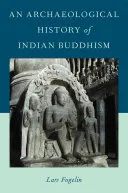
Lars Fogelin’s An Archaeological History of Indian Buddhism provides a much-needed empirical grounding for understanding the Sangha's material existence. By focusing on archaeological findings—from the remains of monastic complexes to the iconography adorning them—Fogelin moves beyond purely textual interpretations. The book excels in its detailed analysis of how physical structures and artifacts reflect the quotidian concerns of Buddhist practitioners. A particular strength lies in the discussion of monastic life, where architectural layouts are linked to the Vinaya. However, the sheer density of archaeological data might prove challenging for readers less familiar with excavation reports or epigraphy, occasionally obscuring the broader narrative flow. The section detailing the evolution of the stupa, for instance, is exhaustive but could benefit from more direct thematic connections to the lived experience of devotees. Fogelin’s work is an essential, if demanding, contribution to the field, offering a tangible history of a tradition too often viewed solely through its philosophical texts.
📝 Description
84
Lars Fogelin's 2008 book traces Indian Buddhism from 6th century BCE origins to its mid-2nd millennium CE decline.
This volume reconstructs the history of Buddhism in South Asia through archaeological evidence, architectural sites, and inscriptions. Fogelin examines the daily lives, philosophical ideas, and community practices of monks, nuns, and their lay supporters. The book grounds its analysis in material culture and textual evidence to understand Buddhism as a lived tradition, not just a set of doctrines. It details the evolution of stupa and vihara architecture, the changing iconography, and the monastic rules (vinaya) as they shaped daily life. The work also considers the factors contributing to Buddhism's eventual diminished presence in India. Scholars of religious history, archaeology, and South Asian studies will find this detailed historical reconstruction particularly valuable.
While not overtly esoteric, this book's focus on the material and social dimensions of a major world religion touches upon the hidden currents of practice and belief. By examining the physical remnants and communal structures of Buddhist monasticism, it offers a glimpse into the lived experience of a tradition often understood primarily through its philosophical texts. The reconstruction of daily routines and communal organization reveals the tangible manifestations of spiritual aspirations, placing the book within a tradition of scholarship that seeks to understand the 'hidden' life of religious communities.
💡 Why Read This Book?
• Gain a granular understanding of Buddhist monastic life by examining architectural layouts of sites like Sanchi and Amaravati, revealing how the Vinaya shaped daily routines in monasteries. • Trace the evolution of Buddhist iconography and its relationship to doctrinal development, exemplified by the transformation of Buddha imagery from aniconic symbols to anthropomorphic figures in the early centuries CE. • Appreciate the role of archaeological evidence, such as inscriptions found at sites like Nagarjunakonda, in reconstructing the patronage networks and community structures that supported Buddhism's expansion.
⭐ Reader Reviews
Honest opinions from readers who have explored this book.
❓ Frequently Asked Questions
What period does An Archaeological History of Indian Buddhism primarily cover?
The book surveys Indian Buddhism from its origins in the 6th century BCE through its ascendance in the first millennium CE, concluding with its decline in mainland South Asia by the mid-second millennium CE.
What types of evidence does Lars Fogelin use to reconstruct Buddhist history?
Fogelin integrates studies of archaeological remains, architecture, iconography, inscriptions, and historical Buddhist texts to provide a comprehensive view.
Does this book focus on the philosophical teachings of Buddhism?
While philosophical context is present, the primary focus is on the material culture, quotidian practices, and lived experience of the Buddhist sangha (monks and nuns) and their lay followers.
Is this book suitable for beginners in Buddhist studies?
It is geared towards serious students and scholars due to its detailed archaeological and epigraphic analysis, though its comprehensive nature offers significant learning opportunities.
What does the book reveal about the daily lives of monks and nuns?
By examining archaeological findings and texts, the book uncovers the everyday concerns, routines, and communal practices of the sangha, offering insights into their material and spiritual world.
What role does architecture play in the book's analysis?
Architecture, including stupas and viharas, is analyzed as a crucial manifestation of Buddhist beliefs and practices, reflecting doctrinal changes and community needs across centuries.
🔮 Key Themes & Symbolism
Materiality of Practice
This work grounds Buddhist history in tangible evidence, moving beyond abstract doctrine. It examines how physical spaces like monasteries (viharas) and sacred monuments (stupas) were constructed and utilized, reflecting the evolving needs and interpretations of the Buddhist community. The book analyzes everything from pottery shards to monumental architecture to illuminate the daily routines and communal life of monks and nuns, demonstrating how material culture directly shaped and was shaped by Buddhist practice from the 6th century BCE onwards.
Sangha's Daily Life
A central aim is to reconstruct the quotidian existence of the Buddhist monastic order (sangha). Fogelin uses archaeological data, including settlement patterns and artifact distribution, alongside monastic rules (Vinaya) and inscriptions, to understand the practicalities of monastic living. This includes insights into diet, shelter, communal organization, and the relationship between the monastic community and its lay supporters, providing a grounded perspective on how Buddhist ideals translated into lived reality across South Asia.
Iconography and Doctrine
The book explores the visual language of Indian Buddhism, analyzing how iconography evolved in tandem with theological and philosophical developments. From early aniconic representations of the Buddha to later anthropomorphic sculptures, changes in artistic conventions are examined for their doctrinal significance. The interpretation of symbols found on stupas, in cave temples, and on votive objects offers a lens into the changing cosmology and devotional practices of Buddhists through the first millennium CE.
Epigraphy and Patronage
Inscriptions found at Buddhist sites serve as crucial historical documents within Fogelin's analysis. These texts, often found on pillars, stone slabs, or monastic artifacts, reveal details about donations, rulers, lineages, and community leaders. By studying these epigraphic records, the book sheds light on the economic and social structures that supported Buddhist institutions, detailing the networks of patronage that enabled the construction of major monastic complexes and sacred art across India.
💬 Memorable Quotes
Direct passages from the work, attributed to the author.
“The archaeological record reveals the sangha's quotidian concerns and practices.”
— This statement highlights the book's core methodology: using material remains to understand the everyday realities and actions of Buddhist monks and nuns, rather than focusing solely on philosophical texts.
“Architecture served not only as shelter but as a pedagogical tool.”
— This interpretation suggests that the design and layout of Buddhist monasteries and stupas were intentionally crafted to instruct practitioners in Buddhist principles and guide their spiritual development.
“Inscriptions offer glimpses into the patronage networks sustaining Buddhist institutions.”
— This points to the significance of epigraphic evidence in understanding the socio-economic support systems, including donations from rulers and laypeople, that were vital for Buddhism's growth and maintenance.
“Iconographic shifts mirror doctrinal evolution.”
— This concept posits a direct correlation between changes in Buddhist art and religious imagery and the development of its philosophical and theological tenets over time.
“Buddhism's decline in South Asia was a gradual, complex process.”
— This interpretation emphasizes that the waning of Buddhism's influence in its homeland was not due to a single cause but a complex interplay of historical, social, and religious factors occurring over centuries.
🌙 Esoteric Significance
Tradition
While An Archaeological History of Indian Buddhism is primarily a work of academic history and archaeology, its detailed examination of the origins and practices of Buddhism offers significant value to esoteric traditions that draw inspiration from Eastern philosophies. Buddhism itself, particularly its meditative and philosophical aspects, has been a foundational influence within esoteric lineages like Theosophy and various forms of Western Buddhism. This book provides a scholarly, evidence-based perspective on the historical context and material reality of the tradition that underpins many esoteric teachings, allowing practitioners to connect their studies to a more concrete historical and cultural foundation.
Symbolism
The book explores the material manifestations of Buddhist symbolism. The stupa, originally a burial mound, evolves into a complex cosmological diagram, representing the enlightened mind and the path to liberation. The Wheel of Dharma (Dharmachakra) symbolizes the Buddha's teachings and the cycle of rebirth, its presence in art and architecture signifying the establishment and spread of the Dharma. The lotus flower, often depicted in Buddhist art, represents purity, spiritual awakening, and detachment from the material world, emerging unstained from muddy waters.
Modern Relevance
Contemporary practitioners of mindfulness, insight meditation (Vipassanā), and Zen Buddhism, all deeply rooted in early Buddhist traditions, find relevance in Fogelin's work. Scholars exploring comparative religion and the history of ideas utilize this book to understand the foundational elements of Buddhism. Furthermore, esoteric students interested in the historical roots of concepts like impermanence (anicca), suffering (dukkha), and non-self (anatta), which permeate various esoteric systems, can gain a clearer historical perspective from this archaeological survey.
👥 Who Should Read This Book
['• Academic researchers in South Asian studies and religious history, seeking detailed archaeological evidence and epigraphic analysis to support their work on Buddhism.', '• Advanced students of Buddhism, wanting to understand the historical development and material culture of the tradition beyond textual studies.', "• Practitioners of Buddhist-derived meditation and esoteric traditions who desire a grounded, scholarly understanding of Buddhism's historical origins and monastic life."]
📜 Historical Context
Published in 2015, Lars Fogelin's An Archaeological History of Indian Buddhism arrived at a time when scholarship on Buddhism increasingly sought to integrate material culture with textual analysis. The preceding decades had seen significant archaeological work at key sites like Sanchi and Amaravati, providing a rich dataset for re-evaluation. Fogelin's work engages with a long tradition of Buddhist historiography, building upon the foundational studies of figures like A.L. Basham and D.D. Kosambi, who also emphasized the importance of socio-economic and material factors. While not directly engaging with contemporary Western esoteric traditions, Fogelin's meticulous reconstruction of early Buddhist material life offers an empirically grounded counterpoint to more speculative or purely philosophical accounts. The reception within academic circles has generally acknowledged its rigorous methodology and comprehensive scope, positioning it as a key reference for the study of ancient Indian religious history.
📔 Journal Prompts
The architectural evolution of the stupa across different periods.
The representation of the Sangha through archaeological findings.
The relationship between inscriptions and patronage in early Buddhism.
The transformation of Buddhist iconography from aniconic to anthropomorphic forms.
The practical implications of the Vinaya as evidenced by monastic site layouts.
🗂️ Glossary
Sangha
The community of Buddhist monks and nuns, traditionally considered one of the Three Jewels of Buddhism, alongside the Buddha and the Dharma.
Stupa
A dome-shaped structure erected over relics or as a memorial, serving as a significant monument in Buddhist art and architecture, often symbolizing the Buddha's parinirvana.
Vihara
A Buddhist monastery, typically featuring living quarters for monks and nuns, meditation halls, and often associated with stupas or temples.
Iconography
The visual images and symbols used in the study or creation of religious art, conveying specific meanings or narratives within a tradition.
Inscriptions
Engraved writings found on stone, metal, or other durable materials, providing historical information about rulers, events, donations, and religious practices.
Vinaya
The monastic discipline code for Buddhist monks and nuns, outlining rules for conduct, lifestyle, and community organization.
Aniconic Representation
Artistic depiction that avoids representing the human form, often using symbols like the lotus, stupa, or an empty throne to symbolize the Buddha.