The gnostic Gospels
 71
71

The gnostic Gospels
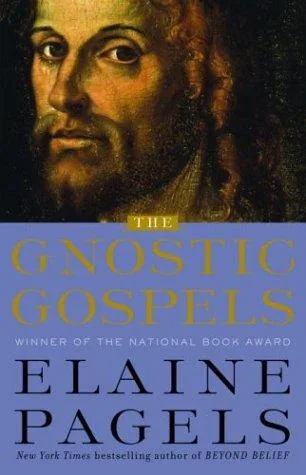
Pagels’s "The Gnostic Gospels" remains a crucial text for understanding the diversity of early Christianity. Her strength lies in synthesizing complex theological arguments from obscure texts, making them accessible without sacrificing scholarly rigor. The book compellingly argues that the "heretical" texts often represented vibrant, alternative visions of Christian faith, particularly those emphasizing women's roles and personal revelation. A limitation, however, is that the sheer volume of academic debate surrounding Gnosticism can sometimes make the narrative dense for the uninitiated. The discussion of the Gospel of Thomas, for instance, highlights the radical departure from orthodox interpretations of Jesus's teachings, presenting him as a revealer of hidden knowledge rather than solely a savior figure. Pagels effectively demonstrates how these suppressed texts reveal a far broader landscape of early Christian thought than previously assumed.
📝 Description
71
Elaine Pagels's 1987 book re-examines Christian texts previously dismissed as heresy.
Published in 1987, Elaine Pagels's work analyzes the Nag Hammadi library, a collection of Gnostic texts found in Egypt in 1945. These writings, excluded from the New Testament, are presented not as deviations but as expressions of varied early Christian communities with their own theological and social outlooks. Pagels contextualizes these discoveries within the Roman Empire and the developing doctrines of what became orthodox Christianity. The book challenges existing views on early Christian history by treating these texts as legitimate voices from the past. It makes these complex ideas accessible to a wider audience interested in religious history.
This book situates Gnosticism within the broader context of early Christianity, moving beyond the traditional narrative of orthodoxy versus heresy. It highlights Gnostic traditions as distinct spiritual paths emphasizing direct personal experience and inner knowledge, contrasting them with the emerging institutional structures. The research draws on the significant discovery of the Nag Hammadi codices, which provided primary source material for understanding these often-marginalized spiritual viewpoints. Pagels's work is a key text for understanding Gnosticism as a vital element within the first few centuries of Christian thought.
💡 Why Read This Book?
• Gain insight into the Gospel of Thomas and its emphasis on secret sayings, offering a different perspective on Jesus's teachings than the canonical Gospels. • Understand the concept of the Demiurge, a flawed creator god often depicted in Gnostic texts, contrasting with the supreme, unknowable God. • Explore the role of Sophia (Wisdom) in Gnostic cosmology, recognizing her significance as a divine emanation and her fall as a catalyst for creation.
⭐ Reader Reviews
Honest opinions from readers who have explored this book.
❓ Frequently Asked Questions
What is the Nag Hammadi library and why is it important for understanding Gnosticism?
The Nag Hammadi library is a collection of thirteen Coptic Gnostic texts discovered near Nag Hammadi, Egypt, in 1945. These texts, mostly dating from the 4th century, provide direct access to Gnostic beliefs and writings that were previously known primarily through the critiques of their opponents.
Who was Elaine Pagels and what is her contribution to the study of Gnosticism?
Elaine Pagels is a distinguished historian of religion. Her seminal work, "The Gnostic Gospels," published in 1987, re-evaluated Gnostic texts, arguing for their significance as authentic expressions of early Christian diversity rather than mere heresies.
What does the term 'Gnosticism' refer to in the context of early Christianity?
Gnosticism refers to a diverse set of religious movements prominent in the early centuries CE, characterized by a belief in salvation through secret knowledge (gnosis). Gnostics often posited a distinction between a transcendent, unknowable God and a lesser, flawed creator of the material world.
How did the canonical Gospels differ from Gnostic Gospels like the Gospel of Thomas?
Canonical Gospels focus on Jesus's public ministry, miracles, death, and resurrection as central to salvation. Gnostic Gospels, such as the Gospel of Thomas, often emphasize Jesus's secret teachings and the importance of individual spiritual insight (gnosis) for achieving liberation.
What is the significance of Sophia in Gnostic thought as discussed by Pagels?
Sophia, meaning Wisdom, is a key figure in Gnostic cosmology, often depicted as a divine emanation who falls from the divine realm. Her story, including her descent and eventual redemption, is central to understanding the Gnostic creation myth and the origins of the material world.
Were Gnostic Christians considered orthodox or heretical by the early Church?
Gnostic Christians were largely considered heretical by the emerging orthodox Christian Church. Their emphasis on esoteric knowledge, a different cosmology, and sometimes different views on Jesus's nature and the material world placed them at odds with developing Church doctrines.
🔮 Key Themes & Symbolism
The Gospel of Thomas
Pagels highlights the Gospel of Thomas as a prime example of Gnostic literature, presenting Jesus not as a divine savior in the traditional sense but as a revealer of hidden truths. Its focus on individual gnosis and secret sayings challenges the communal, salvific narrative found in canonical texts. The work explores how this gospel's interpretation of Jesus’s teachings centers on achieving spiritual liberation through direct insight, rather than through faith in his sacrifice or adherence to Church dogma.
The Demiurge and Creation
A central theme is the Gnostic concept of the Demiurge, a subordinate creator deity responsible for the flawed material world. This contrasts sharply with the orthodox view of a benevolent supreme God as the sole creator. Pagels explains how Gnostics viewed the material realm as inherently imperfect, a prison for the divine spark within humanity, and how their salvation narrative involved escaping this material existence through gnosis.
The Role of Women in Gnosticism
Pagels sheds light on the often-overlooked prominence of women within Gnostic communities. Texts like the Gospel of Mary Magdalene depict women in leadership roles and as recipients of special revelations from Jesus. This challenges the patriarchal structures that became dominant in later orthodox Christianity, suggesting a more egalitarian spiritual landscape in some early Christian movements.
Gnosis as Salvation
The book emphasizes that for Gnostics, salvation was achieved through gnosis – a direct, intuitive knowledge of the divine and one's own true spiritual nature. This personal experience of illumination was paramount, often superseding the need for mediation through clergy or adherence to specific creeds. This focus on inner knowing is presented as a radical alternative to faith-based salvation.
💬 Memorable Quotes
Direct passages from the work, attributed to the author.
“Gnostic writings often distinguish between the supreme God and the creator of the material world.”
— This statement captures the Gnostic dualistic cosmology, where the material universe is seen as the product of a lesser, sometimes flawed, deity (the Demiurge), distinct from the ultimate, transcendent God.
“The Nag Hammadi library offered direct access to suppressed early Christian texts.”
— This highlights the significance of the 1945 discovery, providing scholars with original Gnostic documents that allowed for a re-evaluation of these traditions beyond the interpretations of their adversaries.
“Sophia's fall is central to the Gnostic creation myth.”
— This refers to the Gnostic narrative where the divine emanation Sophia, through a misguided desire or error, initiates the creation of the material world and its flawed ruler, the Demiurge.
“Women played significant roles in some Gnostic communities.”
— Pagels uses evidence from texts like the Gospel of Mary to illustrate the more prominent positions women often held in Gnostic movements compared to the developing orthodox church structures.
💡 Key Ideas
Editorial paraphrase of the work's core concepts — not direct quotes.
The Gospel of Thomas presents Jesus as a revealer of secret knowledge.
This paraphrase captures the essence of Pagels's analysis of the Gospel of Thomas, emphasizing its focus on Jesus's role as a dispenser of esoteric wisdom rather than primarily a messianic figure for communal salvation.
🌙 Esoteric Significance
Tradition
This work is foundational for understanding Gnosticism as a distinct esoteric tradition within the broader range of Western esotericism. While not strictly Hermetic or Kabbalistic, Gnosticism shares with them an emphasis on hidden knowledge (gnosis), a complex cosmology involving divine emanations, and a view of humanity possessing a divine spark trapped within the material world. Pagels’s scholarly approach clarifies these concepts, making them accessible to a wider audience interested in pre-Christian and early Christian mystical paths.
Symbolism
Key symbols explored include Sophia (Wisdom), often depicted as a divine being whose fall precipitates creation, and the Demiurge, the flawed creator of the material universe, symbolizing ignorance or malevolence. The serpent, frequently a positive figure in Gnostic mythos, represents liberating knowledge, contrasting with its adversarial role in the Hebrew Bible. The concept of light and darkness also features prominently, signifying the spiritual realm versus the material illusion.
Modern Relevance
Contemporary esoteric thinkers and practitioners, particularly those interested in alternative spiritualities and the psychology of religion, continue to draw heavily on Pagels's work. Movements exploring Jungian psychology, goddess spirituality, and various forms of modern Gnosticism often cite "The Gnostic Gospels" as a key text. It remains a vital resource for understanding the historical roots of ideas about hidden knowledge, inner divinity, and the critique of rigid religious dogma.
👥 Who Should Read This Book
• Students of comparative religion and early Christianity: To grasp the diversity of beliefs present in the formative centuries of Christianity and understand the historical context of the New Testament canon. • Seekers of alternative spiritual paths: To explore ancient mystical traditions that emphasize inner knowing, direct experience of the divine, and a critical perspective on material existence. • Historians of ideas and philosophy: To examine the intellectual currents and theological debates that shaped Western religious thought and challenged established orthodoxies.
📜 Historical Context
Published in 1987, Elaine Pagels's "The Gnostic Gospels" emerged during a vibrant period of Gnostic studies, significantly amplified by the 1945 discovery of the Nag Hammadi codices. These Egyptian finds provided primary source material for movements previously known mainly through the condemnations of figures like Irenaeus of Lyons in the 2nd century. Pagels’s work challenged the prevailing scholarly consensus that viewed Gnosticism solely as a late, deviant offshoot of Christianity. She argued that many Gnostic texts represented older, diverse traditions that competed with nascent orthodox Christianity for influence in the Roman Empire. Her research engaged with the intellectual currents of the time, including feminist theology and the re-examination of religious authority, positioning Gnostic thought as a significant, alternative expression of early Christian spirituality rather than a simple heresy.
📔 Journal Prompts
The Gnostic concept of Sophia and its implications for understanding divine emanations.
Reflect on the Gospel of Thomas's emphasis on secret sayings and personal gnosis.
Consider the Gnostic view of the material world and its creator, the Demiurge.
Analyze the portrayal of women in Gnostic texts like the Gospel of Mary.
Explore the difference between salvation through faith and salvation through gnosis.
🗂️ Glossary
Gnosis
A Greek term meaning 'knowledge,' central to Gnosticism. It refers to a special, intuitive, and often secret knowledge that allows individuals to understand their divine origins and achieve salvation or liberation from the material world.
Demiurge
In Gnostic cosmology, the Demiurge is a lesser, often ignorant or malevolent, creator deity responsible for fashioning the material universe. This figure is distinct from the supreme, transcendent God.
Sophia
A Greek term for 'Wisdom.' In Gnostic myth, Sophia is a divine emanation who, through a fall or error, plays a central role in the creation of the material world and the Demiurge.
Nag Hammadi Library
A collection of thirteen ancient Coptic Gnostic texts discovered in Egypt in 1945. These writings provided direct access to Gnostic teachings, previously known primarily through hostile accounts.
Canonical Gospels
The four Gospels (Matthew, Mark, Luke, and John) accepted as part of the New Testament canon by the mainstream Christian Church. They focus on Jesus's life, teachings, death, and resurrection.
Coptic
The ancient Egyptian language written using a modified Greek alphabet. Many Gnostic texts, including those found at Nag Hammadi, were written in Coptic.
Emanation
In esoteric and Gnostic thought, the concept that spiritual beings or realities originate from a supreme divine source through a process of unfolding or radiating, rather than direct creation.
🔮 Readers Also Liked
Browse all →








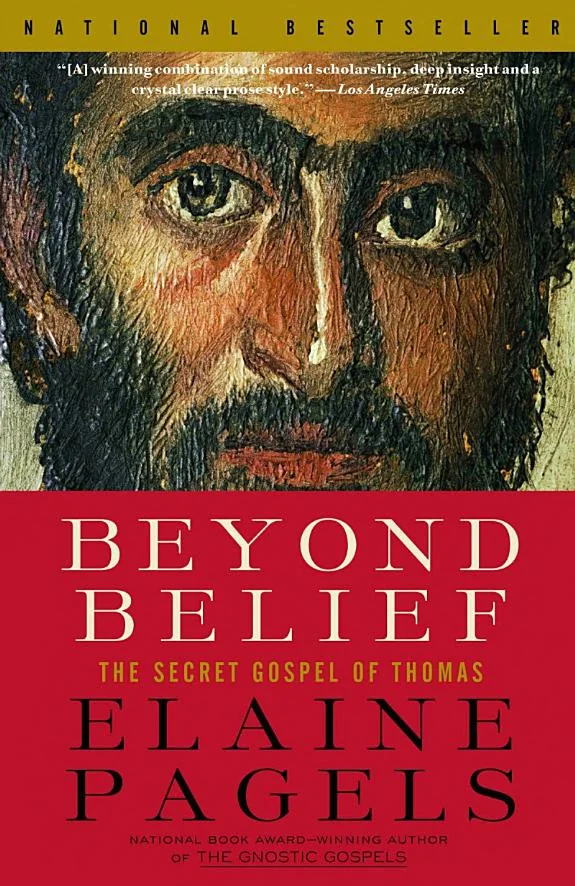
More by Elaine Pagels
All books →




More Free Sacred Texts & Gnosticism Books
View all →