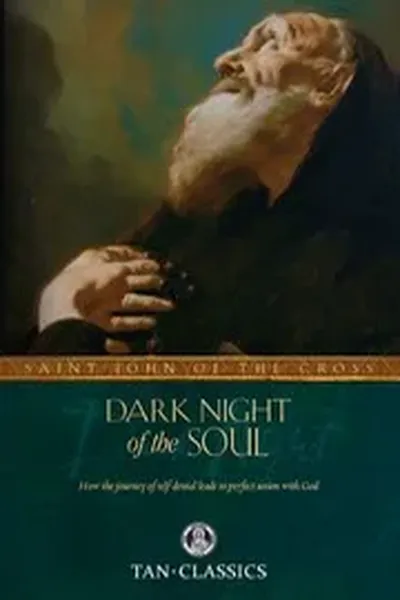
Dark Night of the Soul

 74
74

Dark Night of the Soul
Saint John of the Cross’s *Dark Night of the Soul* offers a starkly honest appraisal of the spiritual path. Unlike devotional texts that promise immediate comfort, John confronts the reader with the necessity of profound, often painful, self-emptying. His description of the "night of the senses"—where familiar spiritual consolations cease—is particularly potent, capturing a common yet often unarticulated experience among dedicated practitioners. The work’s limitation, for a modern audience, lies in its dense theological framework and the specific context of 16th-century Carmelite reform. While the spiritual principles are universal, the language and presuppositions can create a barrier. A passage detailing how pride can manifest even in spiritual aspirations forces a rigorous self-examination that remains unflinching. This is not a book for the spiritually faint-hearted; it is a demanding guide for those seeking absolute surrender.
📝 Description
74
Saint John of the Cross wrote 'Dark Night of the Soul' around 1578-1579, likely during his imprisonment.
This spiritual treatise by Saint John of the Cross describes the soul's difficult path toward divine union. It details a process of purification, often marked by spiritual dryness, as the soul sheds attachments to the material world and personal imperfections. The text aims to guide serious spiritual seekers, mystics, and theologians through stages of detachment necessary for pursuing God. Readers will encounter dense theological and psychological analysis.
Written during the Spanish Counter-Reformation, this work emerged from a turbulent period in the author's life, including his imprisonment in Toledo. John of the Cross collaborated with Teresa of Ávila in reforming the Carmelite Order, and his writings sometimes faced scrutiny. The book's core metaphor is the 'dark night,' representing times when spiritual consolations are withdrawn, leading to a deeper purging of the intellect and will.
As a work of Christian mysticism, 'Dark Night of the Soul' stands within a tradition of seeking direct experience of the divine. It follows in the lineage of contemplative practices aimed at inner transformation, emphasizing a surrender to God's will rather than human effort. The book's focus on the purgative way aligns with earlier mystics who described the soul's ascent through stages of spiritual growth and purification.
💡 Why Read This Book?
• Gain a framework for understanding spiritual dryness from the "night of the senses" concept, a common but often confusing phase in contemplative practice, as described by John of the Cross. • Understand the Carmelite reform's emphasis on active and passive purification, differentiating it from other mystical traditions and providing context for John's radical detachment. • Learn how the theological concept of "union with God" is presented as the ultimate goal, requiring the shedding of all imperfections as detailed in the text.
⭐ Reader Reviews
Honest opinions from readers who have explored this book.
❓ Frequently Asked Questions
What is the 'dark night' in Saint John of the Cross's book?
The 'dark night' refers to a period of spiritual purification where God withdraws sensible consolations, causing the soul to feel abandoned. It's a necessary process for detachment and deeper union with the divine.
When was Dark Night of the Soul written?
Saint John of the Cross likely wrote Dark Night of the Soul between 1578 and 1579, during his imprisonment in Toledo, Spain.
What are the main imperfections Saint John of the Cross addresses?
The work addresses fundamental human imperfections such as pride, avarice, envy, gluttony, wrath, sloth, and lust, detailing how they impede spiritual progress.
Is Dark Night of the Soul a religious text or a psychological one?
It is primarily a theological and mystical text, exploring the spiritual journey through a Christian lens. However, its psychological insights into the soul's struggle resonate widely.
What is the ultimate goal described in Dark Night of the Soul?
The ultimate goal is complete union with God, achieved through a process of purification that strips away attachments to the material world and the self.
Who was Saint John of the Cross?
Saint John of the Cross (1542-1591) was a Spanish mystic and Carmelite friar, a key figure in the Counter-Reformation, and is revered as a Doctor of the Church for his spiritual writings.
🔮 Key Themes & Symbolism
The Two Nights
The text meticulously delineates two phases of divine purgation: the "night of the senses" and the "night of the spirit." The former purges attachment to sensory pleasures and consolations, while the latter involves a more profound stripping of the intellect and will. This dual purification is essential for preparing the soul for its ultimate encounter with the divine, moving beyond superficial spiritual experiences to a deeper, more resilient faith.
Imperfections and Vices
John of the Cross directly confronts human failings, detailing how pride, avarice, envy, and other capital vices act as formidable obstacles to spiritual progress. He argues that these imperfections, even when disguised as virtues or spiritual inclinations, must be recognized and surrendered. The work provides a rigorous analysis of how the ego clings to attachments, hindering the soul's ascent toward God.
Union with God
The central aspiration of the spiritual journey depicted is complete union with God. This is not merely intellectual assent or emotional fervor but a profound existential merging. The 'dark night' serves as the crucible wherein the soul is refined, becoming capable of receiving God's presence fully. This union is presented as a transformative state achieved through passive surrender and divine grace.
Passive Purification
A critical concept is passive purification, where the soul must allow God to work within it without resistance. This contrasts with active, effort-based spiritual exercises. John emphasizes that true progress often involves periods of desolation and emptiness, during which the soul is being divinely reshaped. Surrendering control and accepting the apparent absence of God are key to this process.
💬 Memorable Quotes
Direct passages from the work, attributed to the author.
““In the union of prayer, God transforms the soul… as the fire transforms the wood.””
— This metaphor highlights the radical, alchemical nature of divine union. Just as fire consumes and alters wood, God's presence fundamentally reshapes the soul, burning away imperfections and infusing it with divine substance.
““The soul that wishes to be spiritual must first strip itself of all things, and then of the desire for them.””
— This emphasizes the necessity of detachment not just from external possessions but from internal attachments and desires, including those for spiritual consolations, as a prerequisite for spiritual advancement.
““The greatest perfection a soul can possess is to be imperfect and know it.””
— This paradoxical statement points to humility as the highest virtue. Recognizing one's own profound imperfection is the very condition that opens the soul to God's grace and transformative power.
““The soul that is attached to anything, however much, cannot move toward God.””
— This underscores the absolute requirement of detachment. Even seemingly minor attachments can create significant barriers, preventing the soul from achieving the total surrender necessary for divine union.
““In order to arrive at the union of love, the soul must walk by faith, without knowing what it does.””
— This describes the nature of faith during the dark night: it is blind, without sensible assurance, and requires a complete surrender of the intellect to God's unseen guidance.
🌙 Esoteric Significance
Tradition
While rooted in Catholic mysticism, Dark Night of the Soul is considered a foundational text within Christian esoteric traditions and Western esotericism more broadly. It aligns with Neoplatonic concepts of divine ascent and purification found in figures like Pseudo-Dionysius the Areopagite. Its emphasis on the soul's internal transformation through suffering and detachment appeals to Gnostic themes of spiritual liberation from material limitations.
Symbolism
The primary symbol is the "dark night" itself, representing a state of unknowing and desolation necessary for spiritual clarity. Fire is another key symbol, signifying divine love's transformative power, consuming imperfections and refining the soul. Light, paradoxically, is also present, representing God's ultimate presence that the soul moves toward, even when unable to perceive it directly.
Modern Relevance
Contemporary spiritual thinkers and practitioners across various traditions draw upon John's insights. His concept of the 'dark night' is frequently referenced in discussions of spiritual dryness, burnout, and ego-death within contemplative Christianity, Jungian psychology, and even secular mindfulness practices that explore profound psychological transformation through challenging experiences.
👥 Who Should Read This Book
• Aspiring Christian mystics and contemplatives seeking a rigorous understanding of spiritual purification and divine union, as articulated within the Carmelite tradition. • Students of comparative spirituality interested in the psychological and theological dimensions of asceticism and mystical experience beyond dogma. • Those undergoing periods of spiritual desolation or dryness, seeking theological language and frameworks to comprehend and navigate these challenging phases.
📜 Historical Context
Dark Night of the Soul emerged from the fervent spiritual climate of 16th-century Spain, a period marked by the Counter-Reformation's emphasis on doctrinal purity and mystical experience. Saint John of the Cross, a key figure in the Carmelite reform alongside Teresa of Ávila, wrote this treatise during a period of intense personal hardship, likely while imprisoned in Toledo in 1578. His writings were part of a broader resurgence of mystical thought, yet they also courted controversy. The Spanish Inquisition was active, scrutinizing religious expression for any deviation from orthodoxy. While John's work was eventually accepted, it represented a profound and challenging asceticism that differed from more devotional or scholastic approaches. He engaged with a rich tradition of Christian mysticism but articulated a path of radical purgation that stood apart in its intensity. His contemporary, Teresa of Ávila, championed similar reforms within the Carmelite Order, creating a powerful spiritual partnership.
📔 Journal Prompts
The soul's detachment from sensory consolations during the night of the senses.
Pride's subtle manifestations in spiritual aspirations.
The concept of passive purification and surrender.
The ultimate goal of union with God.
Recognizing imperfections in the context of spiritual growth.
🗂️ Glossary
Dark Night of the Senses
The initial phase of purification where God withdraws sensory consolations, making spiritual practices feel dry and difficult, forcing detachment from worldly pleasures.
Dark Night of the Spirit
A deeper, more profound stage of purification affecting the intellect and will, involving a more severe sense of God's absence and the soul's inadequacy.
Union with God
The ultimate goal of the spiritual journey, a state of profound communion and transformation where the soul becomes united with the divine essence.
Passive Purification
A process wherein the soul allows God to purify it through suffering and detachment, rather than through active human effort alone.
Spiritual Affections
Feelings and sentiments related to spiritual matters; their withdrawal is characteristic of the dark night.
Vices
Habitual patterns of sinful behavior or negative character traits (e.g., pride, avarice) that obstruct spiritual progress.
Detachment
The act or state of being free from worldly concerns, sensory pleasures, and ego-driven desires, essential for spiritual advancement.
This book appears in 1 collection
🔮 Readers Also Liked
Browse all →







From the “Dark Night of the Soul” Collection
View all →






More Free Sacred Texts & Gnosticism Books
View all →