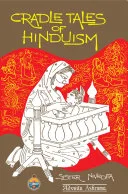
Cradle Tales of Hinduism
 75
75

Cradle Tales of Hinduism
Sister Nivedita’s *Cradle Tales of Hinduism* offers an engaging entry point into the vast narrative ocean of Indian mythology. Her prose possesses a clarity and warmth that successfully bridges the gap between complex philosophical underpinnings and the simple structure of folk tales. The strength lies in her ability to imbue familiar stories with the gravitas of their spiritual import without sacrificing their charm. However, a notable limitation is the inherent subjectivity in her retellings; while Nivedita’s perspective is valuable, it inevitably filters the original tales through her own interpretive lens, which is firmly rooted in the Vedanta tradition as taught by Swami Vivekananda. A passage discussing the divine play of Krishna, for instance, highlights Nivedita's focus on the 'Unmanifest' nature of the divine, a specific theological emphasis. This collection serves as an admirable, if selectively interpreted, introduction to Hindu narrative wisdom.
📝 Description
75
Sister Nivedita retold traditional Indian nursery tales in 1907 to convey Hindu philosophical concepts.
Cradle Tales of Hinduism collects and retells Indian nursery stories, originally published in 1907. Sister Nivedita, an Irish disciple of Swami Vivekananda, presented these narratives not merely as children's entertainment but as accessible vehicles for key Hindu philosophical and metaphysical ideas. The aim was to introduce younger Indian audiences, and a wider readership, to fundamental myths that have shaped Indian culture. This work appeals to parents and educators seeking stories with ethical and philosophical depth. It is also valuable for scholars of comparative mythology and cultural studies. The tales serve as allegories, illustrating core principles like Dharma and Karma through character actions and dialogues. These narratives offered frameworks for understanding the world and fostered moral development.
Published by Advaita Ashrama, associated with the Ramakrishna Mission, this collection emerged during a period of cultural reevaluation in late 19th and early 20th-century India. Sister Nivedita's work engaged with Indian traditions, responding to both Western perspectives and burgeoning Indian nationalism. The retold tales function as allegories, subtly embedding Hindu concepts like Dharma and Karma into accessible narratives. This approach democratized the transmission of spiritual and ethical ideas, making them understandable to a broader audience through familiar storytelling forms.
💡 Why Read This Book?
• Gain an accessible understanding of Hindu philosophical concepts like Dharma and Karma, as illustrated through specific tales such as those concerning Prahlada, which Nivedita uses to demonstrate righteousness against adversity. • Explore the role of mythology in shaping cultural identity and ethical frameworks, evident in how the book presents characters like Savitri as exemplars of devotion and strength. • Appreciate Sister Nivedita's unique stylistic approach to religious literature, exemplified by her retelling of the story of Rama, where she emphasizes the ideal ruler's adherence to duty.
⭐ Reader Reviews
Honest opinions from readers who have explored this book.
❓ Frequently Asked Questions
What is the primary goal of Sister Nivedita's 'Cradle Tales of Hinduism'?
The book aims to present traditional Indian nursery tales in a manner that reveals their underlying philosophical and metaphysical teachings, making ancient wisdom accessible through relatable narratives.
Who was Sister Nivedita and what was her connection to Hinduism?
Sister Nivedita, born Margaret Noble, was an Irish disciple of Swami Vivekananda. She dedicated her life to India, actively engaging with its culture, philosophy, and social issues, and writing extensively on these subjects.
Are these stories suitable for young children?
While the stories are presented in a nursery-tale format, their depth and philosophical nuances are often more suited for older children, young adults, and adults interested in the spiritual dimensions of these myths.
What philosophical concepts are explored in the book?
The book implicitly explores concepts such as Dharma (duty), Karma (action and consequence), the nature of divinity, and the development of character through the heroic examples within the tales.
What is the significance of the Advaita Ashrama publication?
Advaita Ashrama is the publishing arm of the Ramakrishna Math, known for disseminating Vedanta philosophy. Publishing through them indicates the book's alignment with the spiritual and philosophical teachings promoted by the Ramakrishna Mission.
How do these tales differ from secular children's stories?
Unlike secular stories, these tales are deeply rooted in Hindu cosmology and ethics, serving not just for entertainment but as vehicles for transmitting spiritual values and understanding the divine.
🔮 Key Themes & Symbolism
Myth as Metaphysical Vehicle
The collection underscores the Indian tradition of embedding high philosophy within narrative. Sister Nivedita argues that myths and legends are not mere folklore but sophisticated tools for transmitting complex metaphysical ideas about existence, the divine, and the human condition. Stories like those of Prahlada or Savitri are presented as allegories where characters embody cosmic principles and ethical dilemmas, making abstract concepts tangible for the listener or reader.
Character as Cultural Foundation
Nivedita emphasizes the exemplary nature of the heroes and heroines in these tales. Their strength is not solely physical but moral and spiritual, serving as archetypes that have historically molded societal values and individual aspirations in India. The book highlights how these figures, through their adherence to Dharma and their noble conduct, have acted as 'unconscious molders' of the Indian social fabric and ethical landscape.
Transmission of Ancient Wisdom
This work is a deliberate effort to preserve and disseminate India's rich narrative heritage. By retelling these cradle tales, Sister Nivedita aims to ensure that the wisdom embedded within them continues to inform and inspire. The collection speaks to the enduring power of oral traditions and the importance of connecting with ancestral narratives for understanding cultural identity and spiritual lineage.
The Interplay of the Divine and Human
Across the various stories, there is a recurring exploration of the relationship between the human realm and the divine. Whether through the interventions of gods, the manifestation of divine qualities in human form, or the pursuit of spiritual realization, the tales illustrate a worldview where the sacred is intrinsically linked to everyday life and human endeavor.
💬 Memorable Quotes
Direct passages from the work, attributed to the author.
“Myths and legends are the vehicle of high philosophy and metaphysics, especially so in India.”
— This statement captures Nivedita's core thesis: that traditional Indian stories are not simply entertainment but sophisticated conduits for complex spiritual and philosophical truths, designed to be understood intuitively through narrative.
“The characters depicted herein have been the unconscious moulders of the complex Indian social body.”
— This highlights the profound societal impact of these narrative archetypes. Nivedita suggests that the virtues and actions of mythological figures have subtly yet powerfully shaped the ethical norms, social structures, and collective consciousness of India over centuries.
“Heroes and heroines... are not only noted for their valour or beauty, but for their strength of character and nobility.”
— This emphasizes Nivedita's focus on the moral and ethical dimensions of the characters. True greatness, in her telling, lies not in external attributes but in inner fortitude, integrity, and noble conduct, serving as models for emulation.
“Traditional Indian nursery-tales told by Sister Nivedita in her inimitable style.”
— This concise description points to the unique quality of the collection. Nivedita's personal voice and interpretive skill are central to how these ancient stories are presented, offering a specific lens through which to view them.
“The book is published by Advaita Ashrama.”
— This factual detail situates the work within the publishing field of Indian spiritual literature, specifically linking it to the Ramakrishna Mission's efforts to propagate Vedanta philosophy and Indic traditions.
🌙 Esoteric Significance
Tradition
The work aligns strongly with the Theosophical and Vedanta traditions, particularly as interpreted by Swami Vivekananda and the Ramakrishna Mission. Sister Nivedita, influenced by both Helena Blavatsky's broader spiritual inquiries and Vivekananda's specific teachings on Advaita Vedanta, presents these tales as expressions of universal spiritual laws and the underlying unity of existence. It departs from purely devotional or ritualistic interpretations by emphasizing the philosophical and psychological dimensions inherent in the myths.
Symbolism
Key symbols often include the divine child (like Krishna), representing pure consciousness or the soul's innate divinity, and the trials faced by heroes (like Rama or Prahlada), symbolizing the soul's journey through worldly illusions and ethical challenges. The recurring motif of divine intervention or manifestation underscores the interconnectedness of the material and spiritual realms, suggesting that the sacred actively participates in the unfolding of human destiny.
Modern Relevance
Contemporary practitioners of yoga and Vedanta often draw upon these narratives for inspiration and ethical guidance, seeing them as living embodiments of yogic principles and philosophical truths. Thinkers exploring comparative mythology and the psychology of archetypes also find value in Nivedita's interpretations, which connect ancient Indian figures to universal human patterns of development and spiritual aspiration.
👥 Who Should Read This Book
['• Students of comparative mythology: Readers interested in how foundational myths across cultures convey philosophical ideas and shape societal values.', '• Seekers of spiritual wisdom: Individuals drawn to the esoteric and metaphysical dimensions of Hinduism, looking for accessible entry points into its rich narrative tradition.', '• Educators and parents: Those searching for meaningful stories that impart ethical lessons and cultural understanding beyond simple entertainment.']
📜 Historical Context
Sister Nivedita penned *Cradle Tales of Hinduism* during a period of intense cultural and intellectual ferment in India, bridging the late 19th and early 20th centuries. As an Irish disciple of Swami Vivekananda, she was part of a wave of Westerners drawn to Indian spirituality, but crucially, she was also deeply engaged with the Indian Renaissance. Her work, published by Advaita Ashrama around 1900 (exact year often cited as 1907 for a compilation), emerged in parallel with nationalist movements seeking to reclaim and reassert indigenous cultural and spiritual identity. This was a time when figures like Rabindranath Tagore were also exploring and reinterpreting Indian traditions. Nivedita's approach, rooted in the Advaita Vedanta philosophy espoused by Vivekananda, sought to present Hindu narratives not as primitive folklore but as repositories of profound wisdom, often in subtle dialogue with Orientalist scholarship and the prevailing colonial mindset. The work contributed to a growing body of literature aimed at both educating Western audiences and inspiring Indians themselves about their heritage.
📔 Journal Prompts
The strength of character and nobility attributed to the heroes and heroines in these tales.
The function of myths and legends as vehicles for high philosophy and metaphysics.
The concept of 'unconscious moulders' of the Indian social body through narrative.
Sister Nivedita's distinctive style in retelling traditional Indian nursery-tales.
The relationship between the specific tales and the broader Hindu metaphysical framework.
🗂️ Glossary
Dharma
In Hinduism, Dharma refers to one's duty, righteousness, ethical conduct, and the inherent nature of reality. It encompasses moral law and the principles that uphold cosmic and social order.
Metaphysics
A branch of philosophy concerned with the fundamental nature of reality, including the relationship between mind and matter, substance and attribute, and potentiality and actuality.
Advaita Ashrama
A publishing house associated with the Ramakrishna Math, dedicated to propagating the philosophy of Advaita Vedanta and other spiritual and cultural literature of India.
Mahabharata
One of the two major Sanskrit epics of ancient India, containing philosophical and devotional material, including the Bhagavad Gita. It explores themes of dharma, karma, and human conflict.
Ramayana
The other major Sanskrit epic of ancient India, narrating the life of Rama, an avatar of Vishnu. It is central to Hindu tradition and emphasizes dharma, duty, and ideal conduct.
Avatar
In Hinduism, an avatar is the descent of a deity to Earth in a physical form, often to restore dharma or protect the righteous. Vishnu is known to have multiple avatars, such as Rama and Krishna.
Mythology
A collection of myths, especially one belonging to a particular religious or cultural tradition. Myths often explain natural phenomena, origins, or cultural practices through symbolic narratives.