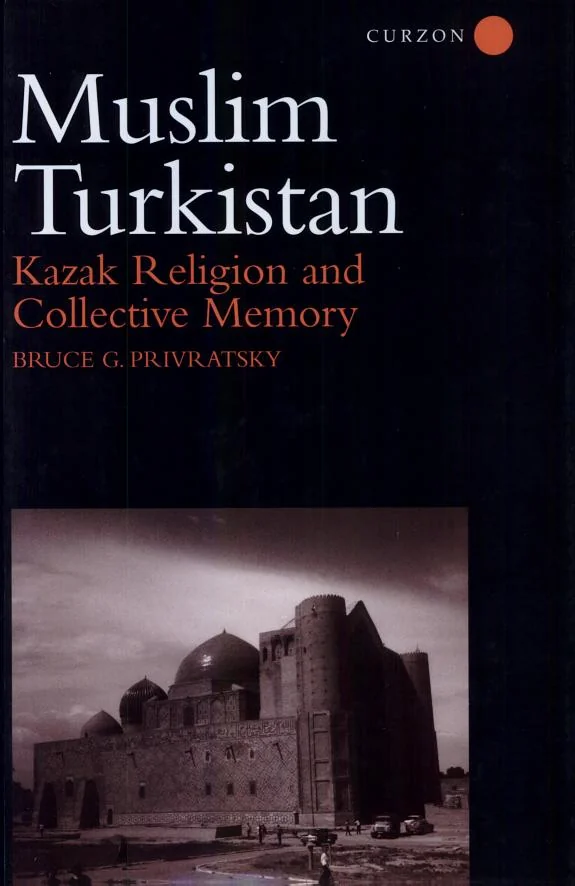
Muslim Turkistan
 79
79

Muslim Turkistan
Bruce G. Privratsky's "Muslim Turkistan" offers a valuable, if at times dense, ethnographic account of Kazakh Islamic practice. The strength of the work lies in its detailed exploration of the sacralization of land and its deep connection to ethnic identity, moving beyond simple religious observance to understand how faith shapes the Kazakh worldview. A particular highlight is the examination of pilgrimage to Sufi saint tombs, which illustrates a living tradition of veneration. However, the book's academic rigor sometimes leads to a less accessible narrative for the general reader. While Privratsky meticulously documents local understandings of Islamic purity and ancestor cults, the sheer volume of detail can occasionally obscure the broader interpretive arc. Despite this, the work provides crucial insights into the syncretic nature of Islam in Central Asia. "Muslim Turkistan" is a significant contribution to the study of lived religion in the region.
📝 Description
79
Bruce G. Privratsky's 2001 study examines Islam's integration with Kazakh traditions in Central Asia.
First published in 2001, Muslim Turkistan is an ethnographic study by Bruce G. Privratsky. It investigates how Islam and local traditions interact among the Kazakh people of Central Asia. The book moves past simple theological study to show how religious ideas and actions are woven into daily life, social customs, and the region's physical surroundings.
Privratsky's research provides insight into a time of major change in Central Asia, following the Soviet Union's dissolution. The study looks at how ethnic identity and religious practice were rebuilt and redefined in the post-Soviet period. It places Kazakh Islam within the larger historical movements of Sufism and the sacredness of land, a process that existed before and alongside more formal Islamic organizations.
The book focuses on several linked subjects: the sacredness of land and its link to ethnic identity, how local groups understand Islamic purity rules, the place of ancestor veneration in home spirituality, and the important custom of visiting the tombs of Sufi saints. These parts reveal a blended form of Islam closely tied to Kazakh cultural history and worldview.
This book engages with the esoteric dimensions of Islam as practiced in Central Asia, particularly within the Kazakh context. It highlights the Sufi traditions and the spiritual significance attributed to landscapes and ancestral figures. The work shows how these elements are not separate from everyday life but are deeply integrated into a lived, often syncretic, religious system. It examines a form of Islamic practice that emphasizes direct spiritual experience and local cosmology, moving beyond purely textual or legalistic understandings.
💡 Why Read This Book?
• Gain insight into the Kazakh concept of the sacralization of land, understanding how geographical space becomes imbued with spiritual significance, a concept explored extensively through local narratives. • Learn about the specific practices surrounding pilgrimage to the tombs of Sufi saints, revealing a vital aspect of Kazakh devotional life and its historical roots. • Comprehend the intricate relationship between ethnic identity and Islamic observance as described by Privratsky, particularly concerning local interpretations of purity and ancestor veneration.
⭐ Reader Reviews
Honest opinions from readers who have explored this book.
❓ Frequently Asked Questions
What is the primary focus of Bruce G. Privratsky's "Muslim Turkistan"?
The book primarily focuses on the ethnography of Muslim life among the Kazakh people of Central Asia, examining the sacralization of land, ethnic identity, local understandings of Islamic purity, ancestor cults, and pilgrimage to Sufi saints' tombs.
When was "Muslim Turkistan" first published?
"Muslim Turkistan" was first published in 2001.
Which Central Asian ethnic group is studied in "Muslim Turkistan"?
The book specifically studies the Kazakh ethnic group residing in Central Asia.
What role do Sufi saints play in the book?
Sufi saints are central to the book's exploration of pilgrimage practices. The work details the significance of visiting their tombs as a form of local Islamic devotion and spiritual connection.
Does the book discuss the impact of Soviet rule on Kazakh Islam?
While the book's primary focus is on the lived experience of Islam, its publication in 2001 situates it within the post-Soviet context, implicitly addressing the re-emergence and reshaping of religious and ethnic identities after decades of Soviet influence.
What is meant by the 'sacralization of land' in the context of this book?
The 'sacralization of land' refers to the process by which specific territories, landscapes, and geographical features become imbued with sacred meaning and spiritual significance within Kazakh culture and identity.
🔮 Key Themes & Symbolism
Sacred Land and Identity
Privratsky meticulously details how the Kazakh people perceive their land not merely as territory but as a sacred entity, intrinsically linked to their ethnic and spiritual identity. This concept goes beyond mere geographical markers, encompassing ancestral connections and cosmological understandings that shape their daily lives and religious practices. The work explores how this sacralization informs their relationship with Islam, blending indigenous beliefs with orthodox tenets.
Local Interpretations of Purity
The book examines the nuanced local understandings of Islamic purity among the Kazakhs, which often diverge from or supplement more standardized interpretations. This includes daily rituals, social customs, and beliefs about cleanliness that are interwoven with their animistic and shamanistic heritage. Privratsky highlights how these interpretations are adapted to a nomadic lifestyle and distinct social structures, demonstrating a dynamic engagement with religious law.
Ancestor Cults and Domestic Spirituality
A significant portion of "Muslim Turkistan" is dedicated to the role of ancestor cults within Kazakh domestic spirituality. This theme reveals how veneration of ancestors is integrated into the fabric of family life and religious practice, often coexisting with Islamic rituals. The book illustrates how these cults provide a framework for understanding lineage, social cohesion, and spiritual continuity within households.
Pilgrimage to Sufi Shrines
The practice of pilgrimage to the tombs of Sufi saints emerges as a vital expression of Kazakh Islam. Privratsky documents the importance of these sacred sites as centers of devotion, healing, and community gathering. This theme underscores the enduring influence of Sufism in Central Asia and its adaptation to local cultural contexts, offering a tangible connection to spiritual heritage.
💬 Memorable Quotes
Direct passages from the work, attributed to the author.
“The sacralization of land is inseparable from Kazakh ethnic identity.”
— This statement expresses a core argument: that the Kazakhs' spiritual connection to their environment is a foundational element of their collective identity, shaping their worldview and religious expression.
“Local purity concepts are adapted to the realities of nomadic life.”
— This highlights the pragmatic and syncretic nature of Kazakh Islam, showing how religious ideas about cleanliness and ritual purity are modified to fit their specific cultural and environmental circumstances.
“Ancestor veneration forms a significant part of domestic spiritual practice.”
— This points to the deep integration of familial ties and reverence for past generations into the everyday religious life of Kazakh households, often alongside Islamic observances.
“Pilgrimage to saint tombs serves as a locus of spiritual connection and community.”
— This interpretation emphasizes the active and communal role of Sufi shrines in Kazakh religious life, functioning as focal points for devotion, social interaction, and maintaining spiritual continuity.
“Kazakh Islam is characterized by a blend of orthodox observance and local traditions.”
— This captures the syncretic essence of the religion as practiced by the Kazakhs, illustrating how formal Islamic tenets interact with and are shaped by pre-existing cultural beliefs and practices.
🌙 Esoteric Significance
Tradition
While not explicitly framed within a single Western esoteric lineage like Hermeticism or Kabbalah, "Muslim Turkistan" deeply explores esoteric dimensions present within Islam, particularly Sufism. It aligns with traditions that emphasize direct spiritual experience, the veneration of saints, and the sacredness of place. The book's focus on pilgrimage and the sacralization of land can be seen as relating to concepts found in earth-centered spiritualities and sacred geography, common in various esoteric traditions that seek connection with the divine through the natural world.
Symbolism
The primary symbols explored are the tombs of Sufi saints, which function as potent focal points for spiritual energy, intercession, and connection to the divine. The concept of the 'sacralization of land' itself acts as a symbol for the deep, spiritual bond between the Kazakh people and their environment, representing a cosmological worldview where the physical and spiritual realms are intimately intertwined. Ancestral figures also serve as symbols of continuity, lineage, and spiritual guidance within the domestic sphere.
Modern Relevance
Contemporary thinkers interested in lived religion, comparative spirituality, and the anthropology of Islam find "Muslim Turkistan" invaluable. Its examination of syncretism and the adaptation of religious traditions to local contexts is highly relevant to current discussions on globalization and cultural hybridity. Practitioners of earth-based spiritualities and those exploring sacred geography may also draw parallels with the Kazakh relationship to the land. The work continues to inform scholars studying the diverse expressions of Islamic practice globally.
👥 Who Should Read This Book
• Anthropologists and religious studies scholars: To gain a detailed understanding of Islamic practice in a specific Central Asian context and the interplay between religion, culture, and identity. • Researchers of Sufism: To explore the historical and contemporary manifestations of Sufi traditions, particularly pilgrimage and saint veneration in the Kazakh cultural sphere. • Students of Eurasian history: To grasp the complex religious and cultural range of Central Asia in the late 20th century and its post-Soviet evolution.
📜 Historical Context
Published in 2001, Bruce G. Privratsky's "Muslim Turkistan" emerged in the post-Soviet era, a period when Central Asian nations were actively redefining their cultural and religious identities. The collapse of the Soviet Union in 1991 allowed for a resurgence of Islamic practices that had been suppressed or significantly altered under decades of atheistic state policy. The work engages with the historical currents of Sufism, a mystical dimension of Islam that had a strong presence in the region, and contrasts it with more orthodox interpretations. It also situates Kazakh Islam within a longer historical arc of nomadic traditions and the sacralization of land, a concept predating Islam's arrival. The reception of such works in the early 2000s contributed to a broader academic and public understanding of Islam's diversity, moving beyond monolithic portrayals and engaging with scholars like Shirin Akiner who also documented Central Asian cultures.
📔 Journal Prompts
The sacralization of land among the Kazakhs: how does this concept inform your own relationship with place?
Reflect on the local interpretations of Islamic purity described in the book; how do they differ from or align with broader Islamic jurisprudence?
Consider the role of ancestor cults in domestic spirituality; what does this reveal about the Kazakh understanding of lineage and spiritual continuity?
The significance of pilgrimage to Sufi saints' tombs: what does this practice illuminate about faith and devotion in Central Asia?
How does the concept of ethnic identity intertwine with religious observance in the context of Muslim Turkistan?
🗂️ Glossary
Sacralization of Land
The process by which geographical areas, landscapes, or natural features are imbued with sacred meaning, spiritual significance, and become central to cultural and religious identity.
Kazakh
A member of a Turkic people native to Central Asia, primarily inhabiting Kazakhstan and surrounding areas. Known for their nomadic heritage and distinct cultural traditions.
Sufism
The mystical or esoteric dimension of Islam, characterized by a focus on direct experience of God, spiritual discipline, and often organized into orders led by spiritual masters.
Ancestor Cult
A religious or social practice involving the veneration of, or belief in the power of, deceased ancestors, often integrated into broader spiritual or religious systems.
Islamic Purity
Concepts within Islam related to ritual cleanliness (tahara) and moral integrity, encompassing physical hygiene, spiritual state, and adherence to religious law, interpreted locally.
Turkistan
A historical and geographical region of Central Asia, encompassing territories historically inhabited by Turkic peoples.
Ethnography
The scientific description of the customs of individual peoples and cultures, typically based on fieldwork and direct observation.
This book appears in 1 collection
🔮 Readers Also Liked
Browse all →








From the “Sufism” Collection
View all →




More Free Sacred Texts & Gnosticism Books
View all →