A Survey of Buddhism
 84
84

A Survey of Buddhism
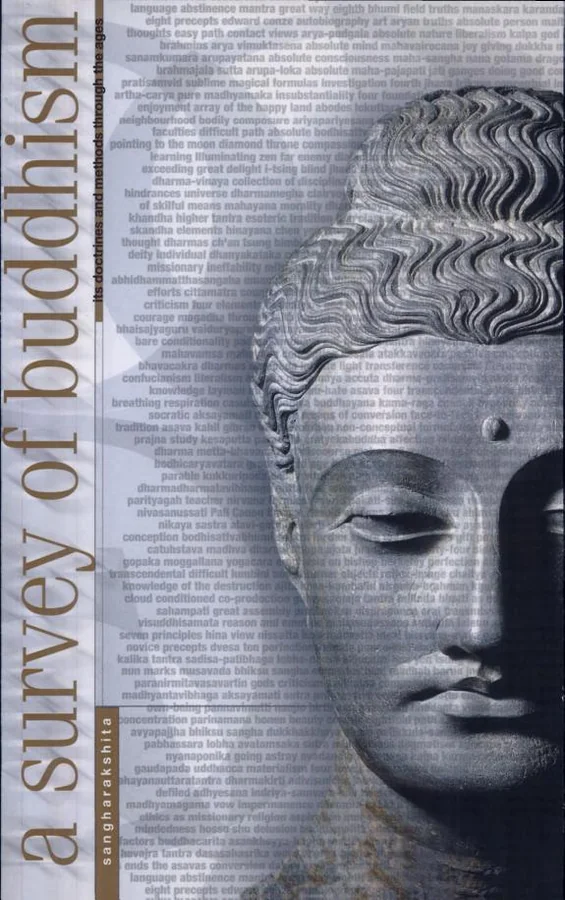
Sangharakshita’s *A Survey of Buddhism* succeeds admirably in its stated goal of demonstrating the underlying unity of Buddhist thought and practice. The author’s extensive knowledge is evident on every page, particularly in his lucid explanations of complex philosophical concepts like *sunyata* and the various *yanas*. A notable strength is the clear charting of doctrinal development, moving from early Indian Buddhism to its later forms. However, the sheer breadth of the survey occasionally leads to a certain compression; some traditions, while mentioned, might warrant deeper exploration for specialists. The section detailing the transition from Indian to East Asian Buddhism is particularly illuminating, offering a coherent narrative arc. Ultimately, this work functions as an essential, if dense, primer for anyone seeking to grasp the comprehensive scope of Buddhist philosophy and its historical currents.
📝 Description
84
Sangharakshita published A Survey of Buddhism in 2001 to unify fragmented academic views of the Dharma.
Sangharakshita's 2001 work offers a thorough account of Buddhist thought and practice. It details how major doctrines and traditions developed across different schools. The book's goal is to show the basic unity beneath these varied expressions of the Dharma, creating a clear picture of Buddhist philosophy and its history.
The text suits students of Buddhism who want a deep grasp of its many aspects. It follows the historical spread of Buddhist ideas, from their start in India to their growth across Asia and elsewhere. Those studying comparative religion and philosophy will also find it a useful reference.
When it first appeared, Buddhist studies were becoming more academic but often disconnected. Sangharakshita's survey aimed to correct this by showing the shared philosophical and ethical roots of Buddhist traditions. The book traces Buddhist thought back to Siddhartha Gautama in the 5th century BCE, following its spread through empires and monastic systems.
Sangharakshita, a Buddhist teacher of the 20th century, wrote this survey to bridge the gap between academic Buddhism and its living practice. He sought to present the Dharma in a way that acknowledged its diverse historical forms, from early Indian Buddhism to its later developments. The book emphasizes the practical application of Buddhist teachings for personal transformation, aligning with a tradition that values direct experience and ethical cultivation as paths to wisdom.
💡 Why Read This Book?
• Understand the historical development of Buddhist doctrines, tracing their evolution from the 5th century BCE origins to their diverse global expressions, as detailed in the historical context sections. • Grasp the core philosophical tenets, such as *karma* and *sunyata*, and how they form the bedrock of Buddhist practice across different schools, providing clarity on soteriological aims. • Appreciate the interconnectedness of Buddhist traditions, moving beyond superficial distinctions to recognize the shared ethical and transformative goals that unite practices from Theravada to Vajrayana.
⭐ Reader Reviews
Honest opinions from readers who have explored this book.
❓ Frequently Asked Questions
What is the historical period covered by A Survey of Buddhism?
The book spans from the earliest teachings of Siddhartha Gautama in the 5th century BCE, through the development of major schools in India, to the spread of Buddhism across Asia and its subsequent global dissemination.
Does A Survey of Buddhism focus on a specific Buddhist tradition?
No, the survey is comprehensive, covering Theravada, Mahayana, and Vajrayana traditions, along with their major philosophical and doctrinal developments, emphasizing their commonalities.
What key philosophical concepts are explained in the book?
Central concepts such as karma, rebirth, emptiness (sunyata), the Four Noble Truths, and the Noble Eightfold Path are systematically explored and explained.
Who is the author, Sangharakshita?
Sangharakshita (born 1925) was a British Buddhist who spent many years in India, becoming a Buddhist monk (Bhikshu) and later an ordained elder (Sthavira). He founded the Friends of the Western Buddhist Order.
Is this book suitable for beginners in Buddhist studies?
While comprehensive, the book's detailed approach makes it particularly valuable for serious students and scholars. Beginners might find it a dense but rewarding introduction to the breadth of Buddhist thought.
When was A Survey of Buddhism first published?
The book was first published in 2001, making it a relatively modern synthesis of historical Buddhist scholarship and practice.
🔮 Key Themes & Symbolism
Unity of Buddhist Schools
Sangharakshita argues forcefully for the fundamental unity beneath the diverse expressions of Buddhism. He posits that despite differences in emphasis or practice among Theravada, Mahayana, and Vajrayana, the core ethical principles and the ultimate goal of liberation remain consistent. This perspective challenges sectarian divisions, encouraging a holistic understanding of the Dharma's vast historical and philosophical landscape. The work meticulously traces doctrinal lineages to demonstrate this shared heritage, moving beyond superficial distinctions to reveal a common spiritual aspiration.
Doctrinal Development
The book provides a detailed account of how Buddhist doctrines evolved over centuries, from their inception with Siddhartha Gautama to their adaptation and transformation in various cultural contexts. It examines the formation of key philosophical concepts, the development of monastic traditions, and the emergence of different schools of thought. Understanding this historical trajectory is crucial for appreciating the richness and adaptability of Buddhist teachings, showing how they responded to intellectual challenges and spiritual needs across different eras.
Soteriological Aims
Central to Sangharakshita's survey is the exploration of the ultimate goal of Buddhist practice: liberation (nirvana) and enlightenment. The book elucidates how various traditions, despite differing methods and philosophical frameworks, are oriented towards this shared aim. Concepts like *karma* and rebirth are presented not merely as theoretical constructs but as integral to the understanding of suffering and the path to its cessation. The focus remains on the transformative potential of the Dharma for the individual.
Philosophical Underpinnings
A deep dive into the philosophical underpinnings of Buddhism is a hallmark of this work. It systematically explains complex concepts such as the Four Noble Truths, the Noble Eightfold Path, dependent origination, and the doctrine of emptiness (*sunyata*). Sangharakshita clarifies these often-misunderstood ideas, demonstrating their logical coherence and their relevance to the practical path of spiritual development. The book aims to provide intellectual clarity alongside spiritual guidance.
💬 Memorable Quotes
Direct passages from the work, attributed to the author.
“The underlying unity of all schools of Buddhism.”
— This concise statement expresses the book's central thesis: that despite apparent doctrinal and practical differences, a common spiritual essence binds together the diverse traditions originating from the Buddha's teachings.
“Development of all the major doctrines and traditions.”
— This highlights the book's comprehensive scope, indicating its commitment to tracing the historical and philosophical evolution of Buddhist thought from its earliest origins to its various manifestations.
“Karma and rebirth as fundamental principles.”
— This refers to the foundational concepts of cause and effect (karma) and the cycle of existence (rebirth), which the work explores in detail as essential to understanding the Buddhist worldview and the path to liberation.
“The concept of emptiness (sunyata).”
— This points to one of the most profound philosophical doctrines discussed, representing the idea that phenomena lack inherent, independent existence, a concept crucial in Mahayana Buddhism.
“The goal of enlightenment or nirvana.”
— This signifies the ultimate spiritual aim presented throughout the book, representing the cessation of suffering and the attainment of ultimate freedom and wisdom.
🌙 Esoteric Significance
Tradition
While not strictly adhering to a single esoteric lineage like Hermeticism or Kabbalah, Sangharakshita's work draws heavily from the broader contemplative and philosophical traditions that inform Western esotericism. His emphasis on inner transformation, the understanding of consciousness, and the practical application of wisdom aligns with perennialist philosophies often found in esoteric circles. The book can be seen as a bridge, interpreting Buddhist concepts through a lens that appeals to those seeking deeper, more personalized spiritual knowledge beyond conventional religious structures.
Symbolism
Key symbols and concepts within Buddhism, such as the lotus flower representing purity and enlightenment arising from muddy waters, or the Dharma wheel symbolizing the Buddha's teachings and the path, are implicitly explored. The concept of *sunyata* (emptiness) itself can be viewed as a profound esoteric symbol, pointing towards a reality beyond conventional conceptualization and dualistic thinking. The structured progression through various *yanas* also acts as a symbolic map of spiritual ascent.
Modern Relevance
Contemporary thinkers and practitioners exploring mindfulness, contemplative practices, and comparative philosophy often find Sangharakshita's synthesis invaluable. His work provides a solid grounding for those engaging with Buddhist psychology, secularized Buddhist ethics, or the integration of Eastern wisdom traditions into Western frameworks. Schools like the Friends of the Western Buddhist Order, which he founded, continue to draw upon this comprehensive understanding of Buddhism for their teachings and practice.
👥 Who Should Read This Book
• Students of comparative religion seeking a unified understanding of Buddhist traditions, moving beyond sectarian divides. • Aspiring practitioners interested in the historical development and core philosophical underpinnings of Buddhism, from its origins to its global spread. • Esoterically inclined readers looking to explore the deeper contemplative and psychological dimensions of Buddhist teachings and their potential for personal transformation.
📜 Historical Context
Published in 2001, Sangharakshita's *A Survey of Buddhism* emerged during a period of burgeoning Western interest in Eastern religions, often filtered through New Age sensibilities or highly academic, specialized studies. The book sought to provide a unifying perspective, counteracting the fragmentation prevalent in both popular and scholarly approaches. It engaged with the long legacy of Buddhist thought, originating with Siddhartha Gautama around the 5th century BCE in ancient India, and traced its subsequent development through influential monastic centers and philosophical schools. Unlike some contemporary analyses that might focus solely on Theravada or Mahayana, Sangharakshita consciously aimed to bridge these perceived divides. His work implicitly engaged with figures like D.T. Suzuki, who popularized Zen Buddhism in the West, but offered a broader, more syncretic historical overview.
📔 Journal Prompts
The concept of *sunyata* and its implications for perceived reality.
The historical development of Buddhist doctrines from the 5th century BCE.
The practical application of the Noble Eightfold Path.
The underlying unity of Theravada, Mahayana, and Vajrayana traditions.
Siddhartha Gautama's initial teachings and their enduring legacy.
🗂️ Glossary
Bhikshu
A Buddhist monk, ordained according to the Vinaya rules. The term implies a commitment to a monastic life of study, meditation, and ethical conduct.
Sthavira
An elder or senior monk in Buddhist monastic communities, often implying significant experience, wisdom, and authority within the Sangha.
Dharma
In Buddhism, this term refers to the teachings of the Buddha, the truth or reality as understood through those teachings, and the cosmic law or order.
Karma
The principle of cause and effect; intentional actions (physical, verbal, or mental) that lead to future consequences, shaping an individual's experiences and rebirths.
Sunyata
Emptiness; the doctrine that all phenomena lack inherent existence or independent self-nature, a key concept, particularly in Mahayana Buddhism.
Nirvana
The ultimate goal of Buddhist practice; the cessation of suffering, craving, and the cycle of rebirth; liberation and enlightenment.
Yana
Literally 'vehicle'; refers to the different paths or traditions within Buddhism, most commonly Theravada (the 'Way of the Elders'), Mahayana (the 'Great Vehicle'), and Vajrayana (the 'Diamond Vehicle').
This book appears in 1 collection
🔮 Readers Also Liked
Browse all →









From the “Buddhism” Collection
View all →








More Free Sacred Texts & Gnosticism Books
View all →