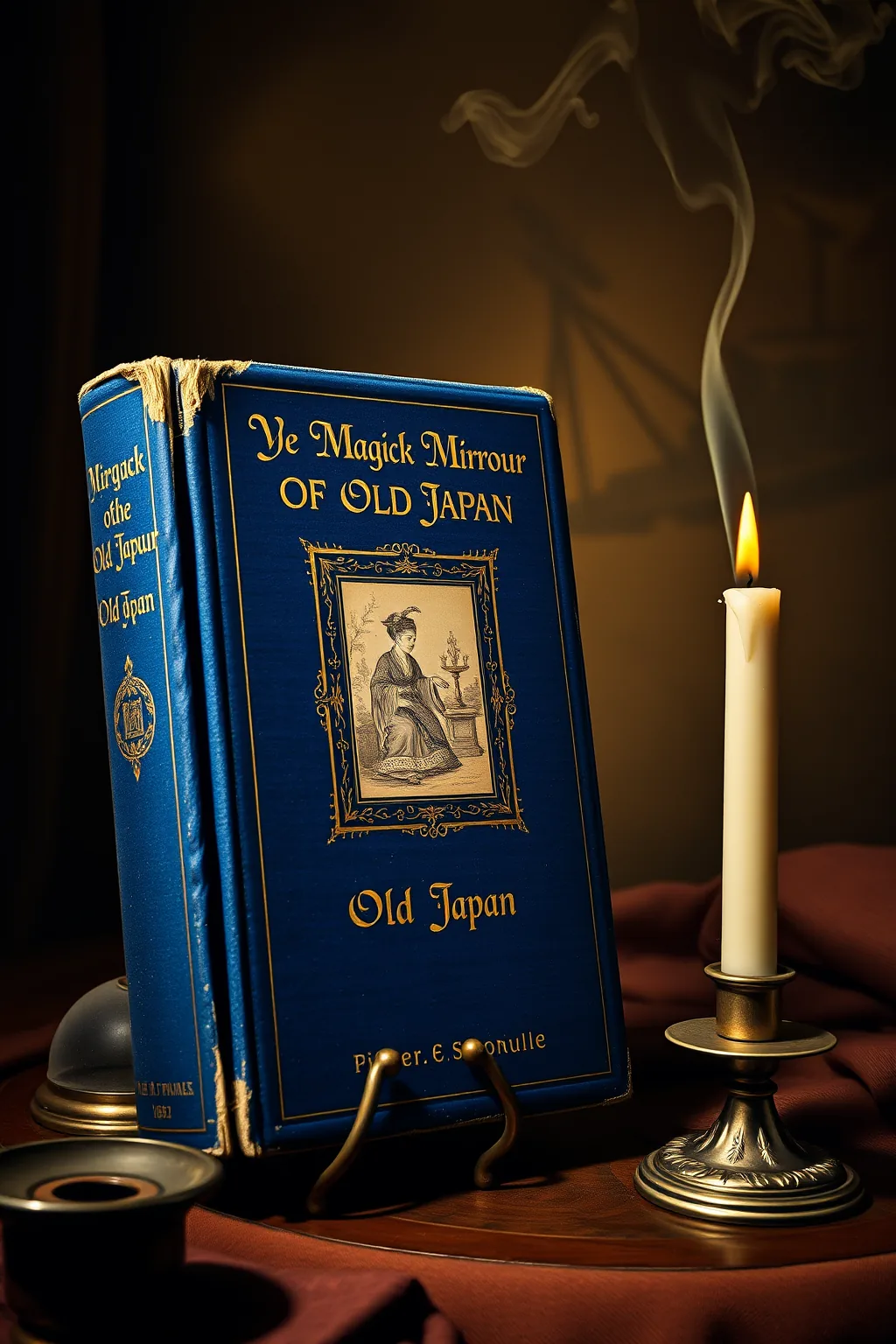
Ye Magick Mirrour of Old Japan
 84
84

Ye Magick Mirrour of Old Japan



Balthazar Finch, Senior Critic, Occult Philosophy: 'Ye Magick Mirrour of Old Japan' is a jewel for any serious student of esoteric traditions. Its scarcity belies its profound insights into a fascinating facet of Japanese spirituality – the sacred mirror. The book masterfully articulates the symbolic weight and ritualistic importance these objects held, moving beyond mere artifact to potent spiritual tools. For those drawn to comparative occultism and the rich tapestry of Eastern mysticism, this work offers a unique and invaluable perspective. Its limited circulation only enhances its allure, presenting a glimpse into a specialized discourse on a truly magical subject. Essential reading for the dedicated practitioner and the curious academic alike.
📝 Description
84
Published in 1892, 'Ye Magick Mirrour of Old Japan' examines the spiritual role of mirrors in ancient Japan.
This privately printed volume, originating from a 1892 discourse, examines the spiritual and societal significance of mirrors in ancient Japan. The text argues that these polished discs were more than simple reflective surfaces. They were believed to hold divine essence, functioning as conduits to the unseen, altars for worship, and representations of cosmic order.
The book details how mirrors, often decorated with floral motifs, transcended their physical form. They became powerful symbols that reflected not only the viewer's face but also their soul and the universe. The work is intended for those interested in hidden knowledge, ancient rites, and the connection between the material and spiritual worlds. It reveals secrets found in reflections, depictions of deities, and ancestral wisdom within the manuscript.
This work touches on Shinto beliefs regarding kami dwelling in objects and the use of ritual implements. It also connects to broader East Asian concepts of mirroring as a metaphor for self-knowledge and cosmic alignment. The book's focus on magical mirrors aligns with traditions that view polished surfaces as portals or scrying devices.
💡 Why Read This Book?
Uncover the mystical power of sacred mirrors in ancient Japan. Explore a unique esoteric tradition, understand the symbolism of reflection, and connect with hidden spiritual knowledge. Ideal for seekers of Eastern occultism, practitioners of meditative arts, and scholars of comparative religion and symbolism.
⭐ Reader Reviews
Honest opinions from readers who have explored this book.
❓ Frequently Asked Questions
What is the primary focus of 'Ye Magick Mirrour of Old Japan'?
The book centers on the profound spiritual, societal, and occult significance of sacred mirrors within ancient Japanese traditions, exploring their use in ritual and as conduits of divine energy.
What is the historical context of this book?
It originates from a discourse delivered in 1892, reflecting late Victorian esoteric interests and the burgeoning fascination with Eastern philosophies and occult practices.
Who is the intended audience for this text?
The text is ideal for occult scholars, practitioners of Eastern mysticism, students of comparative religion, and anyone interested in the esoteric symbolism of everyday objects.
Is this book readily available?
No, 'Ye Magick Mirrour of Old Japan' is a rare, privately printed volume, with only 97 copies originally produced, making it a sought-after item for collectors and enthusiasts.
What kind of knowledge can one expect to gain?
Readers can expect to gain insights into the use of mirrors as spiritual tools, their connection to deities and ancestors, and the philosophical underpinnings of reflection in Japanese occult thought.
🔮 Key Themes & Symbolism
The Sacred Mirror as a Spiritual Conduit
This theme explores the profound belief that mirrors in ancient Japan were not merely reflective surfaces but potent conduits for spiritual energy and divine communication. They served as gateways between the material and ethereal realms, allowing practitioners to commune with deities, ancestors, and elemental forces. The text studies how these polished discs were ritually prepared and utilized to facilitate visionary experiences, scrying, and the reception of hidden knowledge. Understanding this concept is crucial for grasping the depth of Japanese esoteric practices and the integral role of the mirror as a sacred artifact.
Symbolism of Reflection and Self-Knowledge
Beyond their divine connections, mirrors in this tradition represented the profound symbolism of reflection itself – a metaphor for introspection, self-awareness, and the journey towards enlightenment. The act of gazing into a sacred mirror was intended to reveal not just the outward appearance, but the inner range of the soul, exposing hidden truths, desires, and spiritual potentials. This theme highlights how the mirror served as a tool for self-discovery, encouraging a deeper understanding of one's true nature and place within the cosmic order, a central tenet in many esoteric philosophies.
The Mirror as Icon and Altar
This theme examines the veneration of mirrors as sacred icons and devotional altars. Often richly decorated and placed amidst offerings of flowers, these mirrors transcended utilitarian function to become focal points of worship and reverence. The text illustrates how their presence invoked a sense of the sacred, transforming ordinary spaces into places of spiritual communion. This practice underscores the deep-seated animistic beliefs and the intricate relationship between the aesthetic and the spiritual in Japanese culture, where beauty and divinity were inextricably linked.
💬 Memorable Quotes
Direct passages from the work, attributed to the author.
“Within its sheen, the soul's true landscape unfurled.”
— This highlights the introspective power of the mirror, indicating its use as a tool for self-discovery and revealing one's inner spiritual state.
“Adorned with blossoms, they became altars to the unseen.”
— This speaks to the ritualistic decoration of mirrors, transforming them into sacred spaces for worship and communion with spiritual entities.
“The polished surface, a portal to ancestral whispers.”
— This suggests mirrors served as conduits for communicating with or receiving wisdom from past generations and spiritual guides.
“Reflecting the cosmos, they mirrored the divine within.”
— This points to the philosophical concept that the universe and the divine are reflected both externally in the cosmos and internally within the individual, a truth accessible through the mirror.
💡 Key Ideas
Editorial paraphrase of the work's core concepts — not direct quotes.
Mirrors, more than mere glass, held the gaze of the divine.
This quote emphasizes the sacred nature of mirrors, suggesting they were perceived as more than mundane objects, capable of capturing and reflecting divine presence or acting as intermediaries to it.
🌙 Esoteric Significance
Tradition
This work studies a unique facet of Japanese esoteric traditions, specifically Shinto animism and folk magic, intertwined with concepts that resonate with broader Eastern metaphysical philosophies like Taoism and Buddhism regarding interconnectedness and the nature of reality. The sacred mirror, or 'Kagami,' is a fundamental symbol in Shinto, representing purity, truth, and the divine presence of the Kami (spirits/gods). Its use extends to ritual purification, divination, and as a representation of the Sun Goddess Amaterasu. The text bridges these indigenous beliefs with a more universal esoteric language.
Symbolism
The central symbol is the sacred mirror, representing not just reflection but also truth, purity, and the divine. It symbolizes the unblemished mind, capable of reflecting reality without distortion. In a broader sense, it embodies the concept of 'as above, so below,' mirroring the macrocosm of the universe within the microcosm of the individual. The act of decorating mirrors with flowers signifies the transient beauty of life and the offering of earthly beauty to the divine, further imbuing them with sacred meaning and connecting the natural world to the spiritual.
Modern Relevance
In an age saturated with digital distractions and superficial interactions, the principles explored in 'Ye Magick Mirrour of Old Japan' offer a powerful counterpoint. The emphasis on introspection, self-knowledge through reflection, and the sacredness of everyday objects encourages a mindful approach to life. The book's insights into ancient spiritual practices and symbolism can inspire contemporary seekers to find deeper meaning, cultivate inner peace, and connect with unseen dimensions, providing a timeless guide to spiritual awareness and the profound wisdom found in stillness and contemplation.
👥 Who Should Read This Book
This esoteric volume is a treasure for the dedicated scholar of comparative religion and occult philosophy, offering a rare insight into a specific Japanese spiritual practice. Practitioners of meditation, mindfulness, and those interested in Eastern mysticism will find its exploration of reflection and inner truth deeply resonant. Seekers of hidden knowledge and cultural historians will appreciate its historical context and unique subject matter. While its esoteric nature may require some foundational understanding, it is accessible to the earnest reader willing to engage with its profound symbolism and ancient wisdom.
📜 Historical Context
Published in 1892, 'Ye Magick Mirrour of Old Japan' emerges from an era of fervent occult revival and heightened Western interest in Eastern esoteric traditions. The late Victorian period saw a surge in societies dedicated to exploring spiritualism, mysticism, and comparative religion, often seeking wisdom beyond the confines of established Western doctrines. Japan, having recently opened its borders, presented a rich and exotic source of spiritual and philosophical inquiry. This book, born from a private gathering of like-minded individuals at Limmer's Hotel, reflects this intellectual curiosity, offering a glimpse into the specific fascinations of the time concerning ancient rites, symbolism, and the perceived magical practices of distant cultures. Its limited, private printing underscores its niche appeal, catering to an exclusive audience eager to look at the arcane.
📔 Journal Prompts
Reflect on a time when a mirror revealed something unexpected about yourself. What did you learn?
How can the concept of a 'sacred mirror' be applied to your daily life to foster greater self-awareness?
Imagine decorating a mirror for a spiritual purpose. What symbols and elements would you include and why?
What does the idea of 'as above, so below' mean to you, and how can a mirror symbolize this connection?
Consider the Japanese tradition of offering flowers to sacred objects. How does this practice enhance the spiritual significance of an item?
🗂️ Glossary
Kagami
The Japanese word for mirror. In esoteric contexts, it refers specifically to sacred mirrors imbued with spiritual significance and used in rituals.
Kami
A deity, spirit, or divine being in the Shinto religion. Kami are believed to inhabit natural objects and phenomena, including sacred mirrors.
Scrying
The practice of gazing into a reflective surface (like a mirror or crystal ball) to receive visions, omens, or spiritual insights.
Esoteric
Intended for or likely to be understood by only a small number of people with a specialized knowledge or interest, particularly in a mystical or spiritual context.
Metaphysical
Concerning the fundamental nature of reality, including the relationship between mind and matter, substance and attribute, and potential and actuality.
This book appears in 2 collections
🔮 Readers Also Liked
Browse all →









From the “Occultism” Collection
View all →







More Free Occult Philosophy Books
View all →