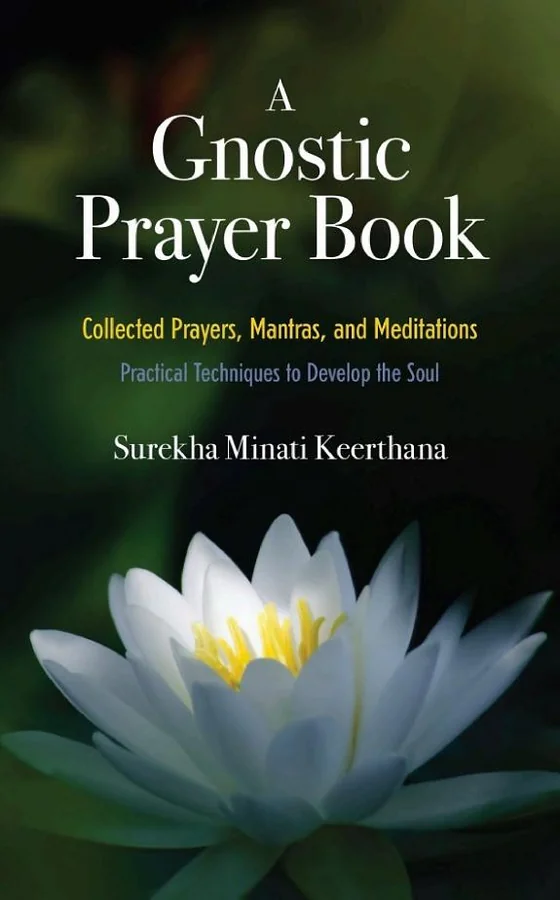
A Gnostic Prayer Book
 73
73

A Gnostic Prayer Book
Surekha Minati Keerthana’s A Gnostic Prayer Book offers a pragmatic approach to Gnostic devotionalism, a welcome departure from purely theoretical texts. The inclusion of practices attributed to diverse figures, from Hermes Trismegistus to Samael Aun Weor, provides a broad spectrum of invocations. Its strength lies in its direct utility; these are not abstract meditations but actionable tools for spiritual work. A notable limitation, however, is the sheer breadth of traditions referenced, which at times feels less like a cohesive Gnostic system and more like a curated anthology. The section on prayers for protection, drawing on imagery of divine light dispelling shadow, is particularly potent. The work’s verdict is clear: it serves as a functional guide for those seeking to actively engage with Gnostic principles through prayer and mantra, rather than a deep theological treatise.
📝 Description
73
A Gnostic Prayer Book (2022) compiles prayers and spiritual exercises for daily use.
This collection gathers prayers, mantras, and spiritual exercises for daily practice, rooted in the Gnostic tradition. The book focuses on practical application, aiming to help readers achieve a direct experience of the Divine. It is intended for individuals looking for structured spiritual practices within esoteric traditions, particularly those interested in the Gnostic path. Practitioners of other mystical disciplines may also find value in using its affirmations and invocations to enrich their daily rituals. The work supports those on a path of self-knowledge and seeking a deeper connection to the sacred.
The Gnostic tradition itself developed in the early centuries CE, emphasizing personal spiritual knowledge, or 'gnosis'. This perspective often saw the material world as a lesser creation. While figures like Valentinus and Basilides are known Gnostics, the lineage referenced here extends back to biblical figures and Hermetic philosophers. The book centers on the Gnostic idea of experiential knowledge of the Divine, using sacred language, mantras, and specific prayer forms. These practices are presented as effective tools for personal transformation and spiritual growth, moving beyond mere belief to lived experience.
A Gnostic Prayer Book draws from the Gnostic tradition, which flourished in the early centuries CE. Gnosticism emphasized personal spiritual insight, known as gnosis, often contrasting it with established religious dogma. The tradition viewed the material world as a flawed creation, distinct from a higher, divine reality. Figures like Valentinus are central to Gnostic studies, but the lineage referenced in this book connects to earlier biblical and later Hermetic traditions. The book's focus on experiential knowledge and the power of sacred language aligns with core Gnostic tenets.
💡 Why Read This Book?
• Gain access to specific Gnostic prayers and mantras, such as those attributed to Moses and Jesus, to integrate into your daily spiritual practice for personal transformation. • Explore the practical application of Gnostic concepts like 'gnosis' through structured exercises, enhancing your understanding beyond academic study, as presented in the 2012 publication. • Discover powerful techniques for spiritual work derived from figures like Hermes Trismegistus and Samael Aun Weor, offering unique methods for healing and protection not commonly found in mainstream spiritual literature.
⭐ Reader Reviews
Honest opinions from readers who have explored this book.
❓ Frequently Asked Questions
What is the primary focus of A Gnostic Prayer Book?
The book focuses on providing a collection of prayers, mantras, and spiritual practices derived from the Gnostic tradition, intended for daily use in spiritual work, healing, and protection.
Which historical and spiritual figures are referenced in the book?
It references figures from the Gnostic tradition such as Moses, Solomon, Jesus and his Apostles, Hermes Trismegistus, and Samael Aun Weor, among others.
What kind of spiritual benefits does the book claim to offer?
The book claims to offer effective spiritual work through powerful words and phrases, leading to personal experience of the Divine, healing, and protection.
When was A Gnostic Prayer Book first published?
A Gnostic Prayer Book was first published on April 11, 2012.
Is this book suitable for beginners in Gnosticism?
Yes, the book provides practical tools and spiritual practices that can be used by anyone seeking to develop their connection to the Divine, including those new to Gnostic teachings.
What is the core philosophy behind the practices in this book?
The core philosophy is based on achieving personal experience of the Divine through structured spiritual practices, emphasizing the power of sacred words and phrases.
🔮 Key Themes & Symbolism
Gnostic Spiritual Practice
The book centers on the Gnostic emphasis on direct, experiential knowledge of the Divine, termed 'gnosis'. It moves beyond dogma to offer practical methods, including prayers, mantras, and specific rituals, designed to facilitate this inner knowing. The work posits that through precise spiritual technology, practitioners can achieve profound personal transformation and connection to the sacred.
Sacred Language and Mantras
A core element is the belief in the inherent power of specific words and phrases. The collection includes potent invocations and affirmations drawn from various Gnostic lineages, intended not merely as recitation but as active tools for spiritual work. These linguistic keys are presented as proven techniques for invoking divine energies and achieving desired spiritual outcomes.
Healing and Protection
Beyond personal gnosis, the book addresses practical needs for spiritual well-being. It offers prayers and practices specifically for healing, both physical and spiritual, and for establishing protective spiritual boundaries. These techniques are framed within the Gnostic worldview, utilizing divine light and spiritual forces to counteract negative influences and promote wholeness.
Personal Experience of the Divine
The overarching aim is to guide the practitioner toward a direct, unmediated experience of the Divine. The prayers and practices are tools designed to bypass intellectual understanding and cultivate intuitive, experiential contact with the sacred. This focus on lived spiritual reality is central to the Gnostic path as presented in the text.
💬 Memorable Quotes
Direct passages from the work, attributed to the author.
“Magical words and phrases are powerful and proven techniques for effective spiritual work.”
— This highlights the book's core premise: that specific linguistic formulations, when used with intent, possess genuine efficacy in spiritual endeavors. It suggests a practical, almost scientific approach to invoking divine forces.
“Based upon and directed towards personal experience of the Divine.”
— This emphasizes the Gnostic ideal of direct, subjective encounter with the sacred, positioning the book's practices as conduits for achieving this ultimate goal, rather than mere intellectual or ritualistic exercises.
“Chosen from the Gnostic tradition taught by Moses, Solomon, Jesus and his Apostles, Hermes Trismegistus, Samael Aun Weor, and many others.”
— This indicates the eclectic yet tradition-rooted nature of the compilation, drawing from a wide historical and spiritual spectrum to offer a comprehensive set of Gnostic-inspired practices.
“Essential prayers, mantras, and spiritual practices for daily use, healing, protection, and more.”
— This succinctly defines the book's scope and utility, presenting it as a practical manual for everyday spiritual life, addressing fundamental human needs for well-being and connection.
“This book provides a comprehensive set of tools anyone can use to develop.”
— This underscores the accessibility and practical nature of the content, suggesting that the techniques are universally applicable for personal spiritual growth and development.
🌙 Esoteric Significance
Tradition
This work is firmly situated within the Gnostic tradition, a diverse set of spiritual movements emphasizing direct experiential knowledge (gnosis) of the Divine. It extends this tradition by incorporating practices from figures like Hermes Trismegistus (Hermeticism) and Samael Aun Weor (modern Gnosticism/esotericism), creating a syncretic approach. The book fits within the lineage of practical Gnosticism, focusing on 'doing' rather than solely 'believing'.
Symbolism
Key symbols likely include divine light, often employed in Gnostic thought to represent the supreme Godhead and its emanations, contrasted with the darkness of the material world. The concept of the 'Pleroma' (divine fullness) and the 'Demiurge' (flawed creator) are foundational Gnostic motifs that inform prayers for transcendence and liberation. Specific invocations might also draw on angelic or aeonic figures central to Gnostic cosmologies.
Modern Relevance
Contemporary esoteric practitioners, particularly those involved in modern Gnostic churches, Hermetic orders, or independent spiritual paths, find value in this book. Thinkers and groups focusing on practical spiritual technology, mantra, and direct experience of the Divine often draw on such synthesized Gnostic resources. It serves as a bridge for individuals seeking tangible methods to achieve spiritual goals articulated in ancient and modern Gnostic texts.
👥 Who Should Read This Book
• Aspiring Gnostics and students of esoteric spirituality seeking practical prayer and mantra techniques to complement their studies. • Individuals interested in comparative mysticism who wish to explore the devotional and practical aspects of Gnosticism beyond its philosophical tenets. • Practitioners of various spiritual disciplines looking for potent tools for healing, protection, and deepening their personal connection to the Divine.
📜 Historical Context
The Gnostic tradition, from which this prayer book draws, emerged prominently in the 2nd century CE during the Hellenistic period, a time of intense philosophical and religious syncretism. Thinkers like Valentinus and his followers developed complex cosmologies and soteriologies, emphasizing the pursuit of spiritual knowledge (gnosis) as the path to liberation from the material world, which they often viewed as a flawed creation. This intellectual current stood in contrast to burgeoning orthodox Christianity and other established mystery traditions. While the specific compilation by Surekha Minati Keerthana was published in 2012, its roots are ancient. The lineage cited, stretching from Moses and Solomon through Jesus, Hermes Trismegistus, and Samael Aun Weor, reflects a modern Gnostic synthesis, attempting to bridge diverse esoteric streams. Reception of Gnostic ideas has historically been varied, often facing censure from mainstream religious authorities due to their esoteric nature and perceived challenges to established doctrines.
📔 Journal Prompts
Reflect on the 'magical words and phrases' mentioned in the book; which Gnostic invocation resonates most with your current spiritual needs?
Consider the lineage from Moses to Samael Aun Weor; how does this broad historical scope influence your understanding of Gnostic prayer?
Analyze the concept of 'personal experience of the Divine' as presented; how can the prayers in this book facilitate that experience for you?
Explore the Gnostic view of the material world versus the spiritual; how do the prayers for protection address this duality?
Meditate on the purpose of mantras in spiritual work; how might the mantras in this collection aid your personal development?
🗂️ Glossary
Gnosis
In Gnosticism, refers to direct, intuitive knowledge of the divine or spiritual realm, often achieved through personal experience rather than intellectual reasoning or faith.
Mantra
A sacred utterance, sound, syllable, word, or group of words believed to possess psychological or spiritual power, used in meditation and ritual.
Hermes Trismegistus
A legendary Hellenistic figure combining the Greek god Hermes and the Egyptian god Thoth, credited with a body of esoteric wisdom known as Hermeticism.
Samael Aun Weor
A 20th-century author and founder of the Universal Gnostic Movement, known for synthesizing various esoteric traditions and promoting practical Gnostic teachings.
Spiritual Work
Refers to practices undertaken with the intention of spiritual growth, transformation, healing, or connection to the Divine, often involving prayer, meditation, or ritual.
Divine
The ultimate reality, sacred source, or supreme being, understood in Gnosticism as the true Godhead beyond the flawed material creation.
AEons
In some Gnostic cosmologies, divine beings or emanations that constitute the fullness of God, existing in the spiritual realm known as the Pleroma.
This book appears in 1 collection
🔮 Readers Also Liked
Browse all →








From the “Dream Yoga” Collection
View all →








More Free Sacred Texts & Gnosticism Books
View all →