Friendship in Doubt
 81
81

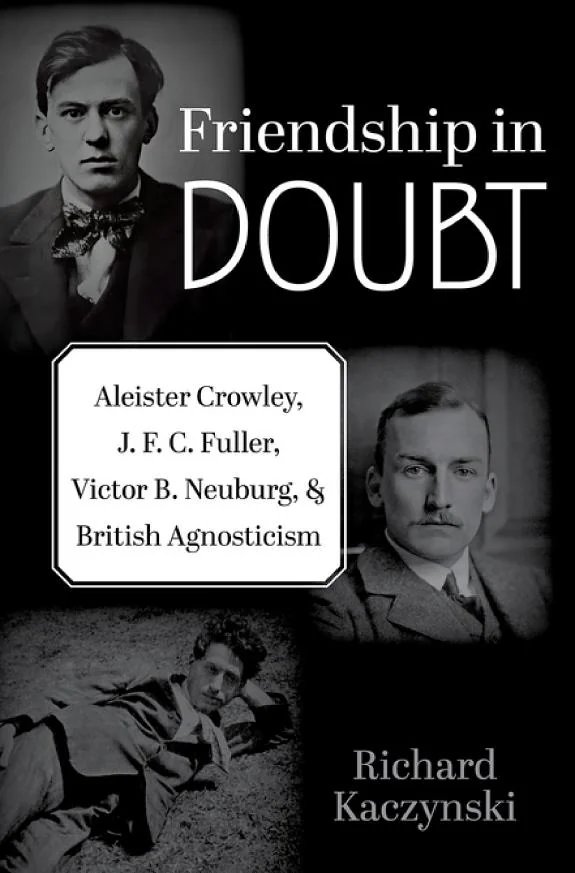
Friendship in Doubt
Richard Kaczynski's "Friendship in Doubt" offers a compelling counter-narrative to the often-mythologized origins of Aleister Crowley and his associates. By grounding their initial collaborations in the decidedly un-mystical soil of British secularism and Agnosticism, Kaczynski presents a refreshingly pragmatic view of how esoteric paths can emerge from radical questioning of the status quo. The detailed examination of the relationship between Crowley, Fuller, and Neuburg, particularly in their early London years, is meticulously researched and illuminating. A notable strength is the precise charting of their connections through secularist organizations before their overt engagement with occultism. While the book excels at historical reconstruction, at times the dense archival detail can slightly overshadow the more immediate emotional or philosophical impact of their evolving beliefs. However, the central argument – that doubt and secular rebellion were potent incubators for Thelema – is powerfully made. Kaczynski's work is a vital corrective, demonstrating that the esoteric is not always born from ancient mystery but can spring from modern dissent.
📝 Description
81
Richard Kaczynski's 2023 book traces the early lives of Aleister Crowley, J. F. C. Fuller, and Victor Neuburg.
Friendship in Doubt reconstructs the formative connections and intellectual environment that shaped Aleister Crowley, J. F. F. Fuller, and Victor Neuburg. Kaczynski's research follows the unlikely origins of these prominent figures within the British secularist and Agnostic movements of the early 20th century. Shared skepticism and a rejection of Victorian dogma fostered the emergence of their esoteric beliefs and the Thelemic current. The book situates their early intellectual development against the backdrop of the late Victorian and Edwardian eras. It highlights the pervasive influence of religious conservatism and the rise of secularist and freethought societies as crucial counter-currents. The period's intellectual ferment, marked by scientific advancements and social reform movements, provided an environment for the exploration of alternative spiritual and philosophical paths. Central to the narrative is how secularist ideals and the critique of traditional religion paradoxically fostered an environment where new religious movements could take root. The book examines friendship not just as a personal bond but as a catalyst for intellectual and spiritual exploration. It also sheds light on the practical application of occult theory in their lives.
This work situates the development of key figures in Western Esotericism within the specific intellectual and social currents of late Victorian and Edwardian Britain. By examining the rise of secularism and freethought societies, Kaczynski demonstrates how a rejection of established religious dogma paradoxically created fertile ground for new spiritual and occult movements. The book focuses on the personal relationships and shared intellectual pursuits that fueled the creation of unique esoteric systems, particularly in the context of what would become the Thelemic current.
💡 Why Read This Book?
• Gain insight into the specific role of the British Agnostic movement in fostering early occult connections, understanding how secular critique in the 1890s directly influenced the formation of Thelema. • Discover the practical organizational methods and intellectual debates shared by Aleister Crowley and J. F. C. Fuller during their formative years, moving beyond abstract theory to concrete shared activities. • Comprehend how the rejection of Victorian religious strictures by figures like Victor Neuburg created fertile ground for unconventional spiritual exploration, revealing the social context for esoteric development.
⭐ Reader Reviews
Honest opinions from readers who have explored this book.
❓ Frequently Asked Questions
What is the primary historical context for "Friendship in Doubt"?
The book is set in late Victorian and Edwardian Britain, focusing on the rise of secularist and Agnostic movements as a counterpoint to prevailing religious dogma and social norms.
Which key individuals are examined in "Friendship in Doubt"?
The central figures are Aleister Crowley, the occultist; J. F. C. Fuller, a soldier and military historian; and Victor Neuburg, a poet. Their early associations are the core focus.
How did the Agnostic movement influence Aleister Crowley?
The work explores how participation in secularist circles introduced Crowley to Fuller and Neuburg, providing a shared intellectual foundation and a rejection of traditional religious authority that later informed his own esoteric system.
What is the significance of "doubt" in the book's title?
The title highlights how questioning established religious and social beliefs, a hallmark of the Agnostic movement, was a critical catalyst for these individuals to explore alternative spiritual and philosophical paths.
Does the book discuss the development of Thelema?
Yes, "Friendship in Doubt" examines how the relationships and shared intellectual explorations forged within secularist circles ultimately became foundational to the emergence of Aleister Crowley's religion, Thelema.
What academic disciplines does "Friendship in Doubt" bridge?
The book connects the fields of religious studies, history of occultism, British social history, and biography, offering an interdisciplinary perspective on a crucial period.
🔮 Key Themes & Symbolism
Secularism's Occult Seeds
The work posits that the anti-clerical and rationalist sentiments prevalent in the British secularist movement of the late 19th and early 20th centuries paradoxically created fertile ground for new religious and occult ideas. By rejecting established dogma, individuals like Crowley, Fuller, and Neuburg were more open to unconventional spiritual exploration, finding common ground in shared skepticism before developing their unique esoteric paths. This challenges the notion that occultism is solely born from ancient traditions, highlighting its potential emergence from modern intellectual dissent.
The Alchemy of Friendship
Beyond mere biographical connections, "Friendship in Doubt" examines how personal relationships acted as crucibles for intellectual and spiritual transformation. The bonds between Crowley, Fuller, and Neuburg were not just social but instrumental in the development and practice of their esoteric beliefs. This theme explores how shared experiences, debates, and collaborative efforts within these friendships catalyzed the formulation of Thelemic principles and practices, demonstrating the power of interpersonal dynamics in shaping esoteric movements.
Rebellion Against Victorianism
The book powerfully illustrates how the rigid social and religious strictures of the Victorian era fueled a spirit of rebellion in its protagonists. Their active participation in secularist and Agnostic societies was a direct challenge to the prevailing orthodoxy. This rejection of societal norms extended into their exploration of occultism, which offered a radical alternative to conventional spirituality and a means to express individuality and challenge perceived hypocrisy, thereby positioning them as foundational figures of a new religious movement.
From Doubt to Thelema
The core narrative arc traces the intellectual journey from profound doubt and questioning of established religious truths to the creation of a new spiritual system. "Friendship in Doubt" details how the critical engagement fostered by secularism provided the necessary intellectual framework for Aleister Crowley and his associates to construct Thelema. It illustrates a progression where skepticism and a desire for authentic spiritual experience led to the synthesis of new doctrines and magical practices, marking a significant departure from inherited religious structures.
💬 Memorable Quotes
Direct passages from the work, attributed to the author.
“Rebelling against Victorian religious and social strictures was a shared impetus.”
— This interpretation emphasizes the common thread of dissent against the prevailing norms of the era, showing how this collective opposition to societal constraints motivated the individuals studied to seek alternative philosophical and spiritual paths.
“Crowley, Fuller, and Neuburg found common ground in freethought before esoteric pursuits.”
— This captures the essence of their initial connection, suggesting that their shared intellectual framework based on secular reasoning and questioning preceded their deeper involvement in occultism and Thelema.
“The early 20th century British secularist movement was an unlikely incubator for Thelema.”
— This statement underscores the surprising origins of Aleister Crowley's system, suggesting that the rationalist and anti-religious environment of the time fostered the personal connections and intellectual climate necessary for its development.
💡 Key Ideas
Editorial paraphrase of the work's core concepts — not direct quotes.
The Agnostic movement provided a crucible for the formation of occult friendships.
This paraphrased concept highlights how shared skepticism and a rejection of traditional religious authority within secularist circles were instrumental in bringing key occult figures together and fostering their early collaborations.
Friendship in Doubt examines the transition from secular critique to religious innovation.
This paraphrase points to the book's central thesis: how the act of questioning and critiquing established religious and social systems ultimately paved the way for the creation of new spiritual movements like Thelema.
🌙 Esoteric Significance
Tradition
This work fits within the study of Western Esotericism, specifically focusing on the lineage leading to Thelema. It departs from traditional narratives by emphasizing the secular and social influences rather than solely mystical or ancient sources. By tracing the origins through Agnosticism and freethought, Kaczynski situates Thelema's emergence within a modern intellectual context, highlighting its roots in rational dissent and social critique as much as in occult tradition.
Symbolism
While not overtly symbolic in its methodology, the book's focus on "doubt" itself functions as a potent symbol. It represents the deconstruction of old certainties, a necessary precursor to building new systems of belief, akin to the alchemical process of dissolution before conjunction. The friendships forged can be seen as symbolic unions, bringing together disparate energies and intellects to create something novel, mirroring the creation of the Philosopher's Stone.
Modern Relevance
Contemporary scholars of Thelema and Crowleyan studies frequently reference Kaczynski's work for its meticulous historical grounding. His approach informs modern discussions on the sociology of religion and the development of new religious movements, demonstrating how esoteric paths can arise from unexpected social and intellectual contexts, influencing current understandings of belief formation in the digital age and post-religious societies.
👥 Who Should Read This Book
• Students of Aleister Crowley and Thelema: Those seeking a deeper, historically grounded understanding of the movement's origins beyond popular mythology will find invaluable context. • Scholars of Secularism and Freethought: Researchers interested in the social and intellectual history of non-religious movements in Britain will discover how these ideas fostered alternative spiritualities. • Readers interested in the intersection of biography and intellectual history: Individuals fascinated by how personal relationships and societal pressures shape the development of radical ideas and movements will find this study compelling.
📜 Historical Context
"Friendship in Doubt" is situated within the intellectual ferment of late Victorian and Edwardian Britain, a period marked by significant challenges to traditional religious authority. The rise of scientific thought, coupled with social reform movements, fueled the growth of secularist and Agnostic societies. These organizations provided a vital platform for individuals questioning established doctrines, offering a space for radical ideas to flourish. Figures like Charles Bradlaugh were prominent leaders in this burgeoning freethought movement. The book specifically examines how this environment, far from being solely anti-religious, acted as a surprisingly fertile ground for the emergence of new spiritual and occult currents, directly influencing the formative years of Aleister Crowley, J. F. C. Fuller, and Victor Neuburg and their eventual association with Thelema.
📔 Journal Prompts
The initial shared skepticism within Agnostic circles.
The role of J. F. C. Fuller's military career in his worldview.
Victor Neuburg's poetic sensibilities and their esoteric expression.
The specific critiques leveled against Victorian religious dogma.
The transition from secular discourse to magical practice.
🗂️ Glossary
Secularism
A social and political movement advocating for the separation of religious institutions from the state and the promotion of non-religious values and reasoning in public life.
Agnosticism
The philosophical position that the existence of God or the divine is unknown or unknowable, emphasizing skepticism towards claims of absolute certainty regarding religious or metaphysical truths.
Thelema
A spiritual philosophy and religion founded by Aleister Crowley, centered on the principle 'Do what thou wilt shall be the whole of the Law,' emphasizing individual will and spiritual development.
Fin-de-siècle
A French term referring to the end of the 19th century (roughly 1880s-1900), a period characterized by artistic and cultural decadence, social upheaval, and a questioning of established norms.
Freethought
A philosophical viewpoint that opinions should be based on logic and reason, independent of tradition, authority, or religious dogma. It often overlaps with secularism and agnosticism.
Victorian Era
The period of Queen Victoria's reign in the United Kingdom (1837–1901), characterized by industrialization, social reforms, and a strong sense of morality, often accompanied by strict religious and social conventions.
Esotericism
Systems of thought and practice characterized by their hidden or secret nature, often involving specialized knowledge, spiritual disciplines, and a focus on inner transformation or mystical experience.
This book appears in 1 collection
🔮 Readers Also Liked
Browse all →




From the “Western Esotericism” Collection
View all →





More Free Sacred Texts & Gnosticism Books
View all →