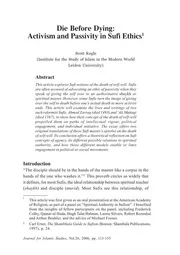
Eroticism, Mysticism, and Desire in Julio Cortázar’s Rayuela

 72
72

Eroticism, Mysticism, and Desire in Julio Cortázar’s Rayuela



'Eroticism, Mysticism, and Desire in Julio Cortázar’s Rayuela' is a must-read for modern esoteric seekers and literature enthusiasts alike. This book masterfully navigates the complex themes of eroticism and mysticism within Cortázar’s seminal work, 'Rayuela'. The author’s deep understanding of George Bataille’s philosophies enriches the analysis, making it a compelling read for those interested in the intersection of literature and esoteric thought. The book’s exploration of how lyrical imagery and orgasmic experiences can liberate human desire from traditional constraints is both thought-provoking and enlightening. It offers a unique perspective on the mystical quest that underlies Cortázar’s works, making it an invaluable resource for anyone seeking to deepen their understanding of these themes.
📝 Description
72
This book examines the mystical and erotic undercurrents in Julio Cortázar's 1963 novel, 'Rayuela'.
This work analyzes the esoteric dimensions of Julio Cortázar's 'Rayuela', focusing on its engagement with mysticism and human desire. It argues that the novel's lyrical prose conceals a spiritual quest that questions conventional religious and social structures. The author connects Cortázar's approach to the ideas of Georges Bataille, highlighting the exploration of taboo subjects and transgressive themes. The book suggests that 'Rayuela' uses orgasmic imagery to represent a form of divine communion, aiming to reveal the hidden esoteric layers within the text. It is aimed at readers interested in the intersection of literature, sexuality, and less conventional spiritual ideas.
This book situates Cortázar's 'Rayuela' within a tradition that sees eroticism and spiritual experience as intertwined, a concept found in various esoteric philosophies. It draws parallels with figures like Georges Bataille, whose work often explored the sacred in transgression and the ecstatic. The analysis suggests that the novel, through its structure and imagery, participates in a broader esoteric dialogue about liberation and transcendence found in ecstatic states. This perspective connects the literary text to historical currents of thought that bridge the carnal and the divine.
💡 Why Read This Book?
Reading 'Eroticism, Mysticism, and Desire in Julio Cortázar’s Rayuela' today provides a fresh and esoteric perspective on one of literature’s most intriguing works. It offers readers a deeper understanding of the mystical and erotic themes that permeate Cortázar’s writing, enriching their appreciation of 'Rayuela'. For modern seekers of esoteric knowledge, this book serves as a guide to exploring the divine communion that can be achieved through the liberation of human desire. It is a valuable addition to any esoteric library and a must-read for those interested in the intersection of literature and mysticism.
⭐ Reader Reviews
Honest opinions from readers who have explored this book.
❓ Frequently Asked Questions
What is the main focus of this book?
The main focus of this book is the exploration of eroticism, mysticism, and desire in Julio Cortázar’s 'Rayuela'. It delves into how lyrical imagery and orgasmic experiences can liberate human sexuality from traditional religious constraints.
Who should read this book?
This book is ideal for literature enthusiasts, esoteric seekers, and scholars interested in the intersection of literature and mysticism. It offers a unique perspective on Cortázar’s works and provides valuable insights into the themes of eroticism and mysticism.
How does this book relate to George Bataille’s philosophies?
The book is informed by George Bataille’s philosophies, which enrich the analysis of eroticism and mysticism in 'Rayuela'. It explores how Bataille’s ideas can be used to understand the mystical quest that underlies Cortázar’s writing.
🔮 Key Themes & Symbolism
Erotic Mysticism
This theme explores how Cortázar's 'Rayuela' uses erotic imagery to transcend religious constraints, liberating human desire into a divine communion.
Taboo and Transgression
The book examines how 'Rayuela' challenges societal norms and religious traditions, using transgressive elements to reveal deeper truths about human sexuality.
Georges Bataille's Influence
This theme explores how Bataille's philosophies on taboo and eroticism shape Cortázar's mystical quest in 'Rayuela.'
💡 Key Ideas
Editorial paraphrase of the work's core concepts — not direct quotes.
The body is the temple of the divine.
This quote underscores the book's theme of liberating human desire through erotic mysticism.
Transgression is the key to unlocking hidden truths.
This line highlights the importance of challenging norms to reveal deeper, esoteric knowledge.
Orgasm is a symphony of divine communion.
This quote emphasizes the mystical experience of human sexuality.
The nude is a sacred vision.
This line underscores the sacredness of the body in Cortázar's mystical quest.
Religion binds; mysticism frees.
This quote captures the book's exploration of liberation from religious constraints.
🌙 Esoteric Significance
Tradition
This book belongs to the Hermetic tradition, focusing on the liberation of the human spirit through the exploration of hidden knowledge and the sacredness of the body.
Symbolism
Key symbols include the nude, orgasm, and transgression, each representing the quest for divine communion and the liberation of human desire.
Modern Relevance
Today, this book remains relevant for those seeking to understand the deeper, esoteric layers of literature and its connection to human sexuality. Modern practitioners use it to explore the mystical dimensions of eroticism and the liberation of desire.
👥 Who Should Read This Book
Beginners may find the depth of philosophical and esoteric content challenging. However, scholars of literature, spiritual seekers, and practitioners of esoteric studies will find this book invaluable. It is particularly suited for those interested in the intersection of eroticism and mysticism, and the liberation of human desire from societal and religious constraints.
📜 Historical Context
Written in the mid-20th century, 'Rayuela' emerged during a time of cultural and social upheaval. Julio Cortázar's work challenged traditional norms and explored the depths of human desire, making it a seminal text in the exploration of eroticism and mysticism. Its influence can be seen in various literary and philosophical movements that followed, emphasizing the liberation of human sexuality from religious and societal constraints.
📔 Journal Prompts
How does 'Rayuela' challenge your understanding of eroticism and mysticism?
What are the key symbols in the book, and how do they represent the quest for divine communion?
How does Georges Bataille's influence shape your interpretation of 'Rayuela'?
In what ways does the book explore the liberation of human desire from religious constraints?
How can the themes in this book be applied to your own spiritual journey?
🗂️ Glossary
Erotic Mysticism
The exploration of divine communion through erotic imagery and experiences.
Transgression
The act of challenging societal norms and religious traditions to reveal deeper truths.
Divine Communion
The mystical experience of union with the divine through human sexuality.
Hermetic Tradition
A mystical and esoteric tradition focused on the liberation of the human spirit through hidden knowledge.
Sacred Nude
The body as a sacred vessel for divine experiences and liberation.
This book appears in 1 collection
🔮 Readers Also Liked
Browse all →




![The Conference Of The Birds Penguin Classics [download]](/img/thumb/the-conference-of-the-birds-penguin-classics-download.webp)
From the “Christian Mysticism” Collection
View all →







More Free Mysticism & Contemplation Books
View all →