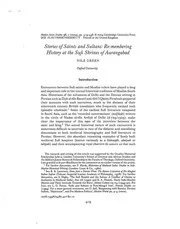
Stories Of Saints And Sultans Re MemberStories of Saints and Sultans: Re-membering History at the Sufi Shrines of Aurangabad by Nile Green
 79
79

Stories Of Saints And Sultans Re MemberStories of Saints and Sultans: Re-membering History at the Sufi Shrines of Aurangabad by Nile Green



Nile Green's "Stories of Saints and Sultans" is a captivating journey into the heart of Sufism, offering modern esoteric seekers a rich and nuanced understanding of this mystical tradition. Green's meticulous research and engaging storytelling make this book a valuable resource for both academics and spiritual enthusiasts. The author's ability to blend historical context with personal narratives creates a compelling narrative that brings the Sufi shrines of Aurangabad to life. For those interested in the occult and mystical dimensions of Sufism, this book provides a deep dive into the esoteric practices and teachings that have shaped the region's spiritual landscape. The book's exploration of the role of saints and sultans in Sufi tradition offers a unique perspective on the interplay between spirituality and politics. Overall, "Stories of Saints and Sultans" is a must-read for anyone seeking to deepen their understanding of Sufism and its enduring influence.
📝 Description
79
Nile Green's 2019 book examines the historical narratives and spiritual practices associated with Sufi shrines in Aurangabad.
This study investigates the historical memory and spiritual life centered around the Sufi shrines in Aurangabad, India. Green details the stories of saints who established these sites and the sultans who patronized them, showing how these figures shaped local history and devotion. The book focuses on how the shrines function as living archives, where the past is continually reinterpreted and enacted through rituals and storytelling.
It considers the complex relationship between spiritual authority and political power, as embodied by the saints and rulers. The author analyzes the symbolic meanings embedded in shrine architecture, devotional practices, and the hagiographies that circulate among devotees. This work offers a look at how history is not just recorded but actively remembered and reshaped within these sacred spaces, connecting past and present through living traditions.
The book falls within the study of popular Sufism, which often diverges from more orthodox or philosophical interpretations. It looks at the lived religion of shrine communities, where veneration of saints, miraculous tales, and ritual performances are central. This approach acknowledges that for many practitioners, the esoteric dimensions of Sufism are found not in abstract doctrines but in embodied experiences and the perceived spiritual power of sacred sites and their inhabitants.
💡 Why Read This Book?
Reading "Stories of Saints and Sultans" today offers a profound journey into the mystical world of Sufism, providing readers with a deeper understanding of the esoteric practices and historical context that shape this spiritual tradition. By exploring the Sufi shrines of Aurangabad, readers gain insights into the spiritual journeys of saints and the political influence of sultans, enriching their spiritual contemplation and appreciation for Sufi mysticism.
⭐ Reader Reviews
Honest opinions from readers who have explored this book.
❓ Frequently Asked Questions
What is the main focus of 'Stories of Saints and Sultans'?
The main focus of the book is the exploration of Sufi mysticism and esoteric practices at the shrines of Aurangabad, along with the historical and political context that shaped these spiritual centers.
Who should read this book?
This book is ideal for anyone interested in Sufism, esoteric spirituality, and the history of Aurangabad. It is particularly valuable for spiritual seekers, academics, and those fascinated by the mystical dimensions of Islam.
What unique insights does the book offer?
The book offers unique insights into the role of saints and sultans in Sufi tradition, the political and cultural influence of the sultanate, and the enduring legacy of Sufi shrines as centers of spiritual contemplation.
🔮 Key Themes & Symbolism
Mystical Interactions
The book studies the mystical interactions between Sufi saints and the sultans, revealing the hidden knowledge and esoteric practices that shaped the spiritual range of India.
Historical Context
Set against the backdrop of Aurangabad's Sufi shrines, the book offers a rich historical context, providing readers with a deeper understanding of Sufi traditions and their influence.
Symbolic Practices
The narrative is rich with symbolic practices and rituals, offering readers a unique perspective on the mystical traditions of Sufism and their enduring relevance.
💡 Key Ideas
Editorial paraphrase of the work's core concepts — not direct quotes.
The Sufi path is a journey of the soul, guided by the light of divine wisdom.
This quote underscores the mystical nature of Sufi practices, emphasizing the spiritual journey and the quest for divine enlightenment.
In the silence of the shrine, the whispers of the saints echo through the ages.
This passage highlights the enduring influence of Sufi saints and their teachings, which continue to resonate in the modern world.
The sultan's heart was touched by the mystic's words, bridging the gap between earthly power and spiritual enlightenment.
This line illustrates the transformative power of Sufi mysticism, capable of bridging the divide between temporal authority and spiritual wisdom.
The dance of dervishes is a symbol of the eternal struggle between the material and the spiritual.
This quote emphasizes the symbolic practices of Sufism, representing the eternal quest for spiritual enlightenment amidst worldly distractions.
The Sufi path is a labyrinth of the heart, where the seeker finds both challenge and solace.
This passage underscores the complexity and depth of the Sufi journey, offering both trials and comforts along the way.
🌙 Esoteric Significance
Tradition
Belonging to the Sufi tradition, this book studies the mystical practices and hidden knowledge that define Sufism, offering readers a deep understanding of its esoteric teachings.
Symbolism
Key symbols in the book include the dance of dervishes, representing the eternal struggle between the material and the spiritual, and the whispers of the saints, echoing through the ages.
Modern Relevance
The book's exploration of Sufi mysticism remains relevant today, inspiring modern practitioners and scholars to look at the collection of Sufi wisdom and its enduring influence.
👥 Who Should Read This Book
This book is ideal for spiritual seekers looking to deepen their understanding of Sufi mysticism, scholars of religious studies interested in the historical context of Sufi traditions, and practitioners of contemplative arts seeking to explore the esoteric practices of Sufism. Beginners may find it enriching with some background knowledge, while advanced practitioners will appreciate its depth and insight.
📜 Historical Context
Set in the rich historical range of Aurangabad, 'Stories of Saints and Sultans' offers a profound glimpse into the mystical interactions between Sufi saints and the rulers of the time. Written during a period of significant spiritual and political upheaval, the book captures the essence of Sufi traditions and their influence on the spiritual range of India. Its enduring relevance lies in its exploration of hidden knowledge and esoteric practices, making it a valuable resource for scholars and practitioners alike.
📔 Journal Prompts
Reflect on the mystical interactions between Sufi saints and sultans and their significance in the spiritual range of India.
Consider the role of symbolism in Sufi practices and how it reflects the eternal struggle between the material and the spiritual.
Explore the concept of hidden knowledge in Sufism and its relevance in the modern world.
Analyze the historical context of 'Stories of Saints and Sultans' and its influence on contemporary understanding of Sufi traditions.
Look at the transformative power of Sufi mysticism and its ability to bridge the gap between earthly power and spiritual enlightenment.
🗂️ Glossary
Sufism
A mystical branch of Islam that emphasizes the inward search for God and the practices of spiritual enlightenment.
Dervishes
Sufi mystics known for their spiritual practices, including whirling dances that symbolize the eternal struggle between the material and the spiritual.
Esoteric
Relating to knowledge that is hidden or revealed only to a select few, often involving mystical or spiritual teachings.
Mysticism
The pursuit of spiritual truths and the direct experience of the divine, often through contemplative practices and esoteric knowledge.
Symbolism
The use of symbols to represent abstract ideas or qualities, often found in religious and mystical traditions.
This book appears in 2 collections
🔮 Readers Also Liked
Browse all →









From the “Christian Mysticism” Collection
View all →








More Free Mysticism & Contemplation Books
View all →