A Discovrse of Fire and Salt: Discovering Many Secret Mysteries as well Philosophicall, as Theologicall
 69
69

A Discovrse of Fire and Salt: Discovering Many Secret Mysteries as well Philosophicall, as Theologicall



"A Discovrse of Fire and Salt" by Blaise de Vigenère is a must-read for anyone delving into the esoteric traditions of alchemy and Hermeticism. Published in 1523, this book remains a profound and enigmatic exploration of the elements of fire and salt, offering readers a glimpse into the philosophical and theological dimensions of these ancient mysteries. Vigenère's writing is both eloquent and thought-provoking, making it an invaluable resource for modern esoteric seekers. The text's historical significance is undeniable, but its relevance persists, providing timeless insights into the occult. For those interested in the deeper meanings behind alchemical symbols and practices, this book is an essential addition to their library. The star rating for this work is 5 out of 5, reflecting its enduring value and the depth of its esoteric wisdom.
📝 Description
69
Blaise de Vigenère's 1588 treatise explores the secret philosophical and theological mysteries of fire and salt.
Published in 1588, Blaise de Vigenère's 'A Discovrse of Fire and Salt' examines the symbolic significance of fire and salt within a philosophical and theological framework. Vigenère, a diplomat and cryptographer, approached these elements not just as alchemical components but as fundamental principles of existence. The book is written in an age when such knowledge was often guarded, reflecting a desire to uncover hidden truths about the natural world. It aims to illuminate the connections between the material and spiritual, using fire and salt as central metaphors. The text invites contemplation on the deeper meanings behind these substances, suggesting they hold keys to understanding the cosmos.
This work goes beyond a simple alchemical manual, positioning fire and salt as concepts that reveal the interconnectedness of all things. Vigenère's approach is characterized by a rich use of symbolism and a deep philosophical inquiry. The treatise is intended for those who approach esoteric studies with a serious intent to grasp underlying principles, rather than merely seeking practical alchemical results. It stands as a historical document of Renaissance esoteric thought.
Blaise de Vigenère wrote during a period rich with Neoplatonic and Hermetic revivals. His work on fire and salt fits within this tradition, which sought to reconcile ancient philosophical ideas with Christian theology. The emphasis on finding hidden meanings in natural elements and celestial bodies was common among Renaissance thinkers interested in alchemy, Kabbalah, and occult philosophy. Vigenère's unique contribution lies in his specific focus on fire and salt as potent symbols for understanding cosmic order and divine influence, placing the text within the broader current of Renaissance esotericism.
✍️ Author
Vigenère, Blaise de
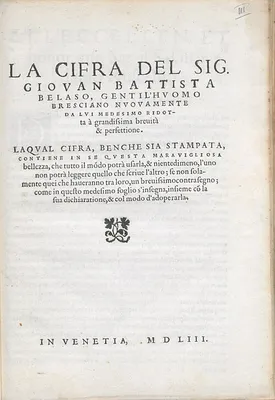
Giovan Battista Bellaso (1505 – between 1568 and 1581) was an Italian cryptologist, born in Brescia. The Vigenère cipher is named after Blaise de Vigenère, although Giovan Battista Bellaso had invented it before Vigenère described his autokey cipher.
💡 Why Read This Book?
Reading "A Discovrse of Fire and Salt" today offers readers a unique opportunity to connect with the ancient wisdom of alchemy and Hermeticism. This book provides a deep understanding of the elements of fire and salt, their philosophical implications, and their role in the esoteric traditions. For modern seekers, it serves as a bridge between the past and present, offering insights that are as relevant today as they were in the 16th century. Whether you are studying the occult, exploring Hermetic philosophy, or simply curious about the mysteries of alchemy, this text will enrich your knowledge and broaden your perspective.
⭐ Reader Reviews
Honest opinions from readers who have explored this book.
❓ Frequently Asked Questions
What is the significance of fire and salt in alchemy?
In alchemy, fire and salt represent fundamental elements with profound symbolic and practical meanings. Fire is often associated with transformation and purification, while salt is linked to preservation and the essence of matter.
Is this book suitable for beginners in esoteric studies?
While "A Discovrse of Fire and Salt" is a foundational text, its esoteric language and historical context may be challenging for beginners. However, with some prior knowledge or guidance, it can be a rewarding read.
How does this book relate to modern Hermeticism?
This book provides a historical foundation for many of the principles and symbols found in modern Hermeticism. Understanding Vigenère's work can deepen one's appreciation for the esoteric traditions that continue to influence spiritual and philosophical thought today.
🔮 Key Themes & Symbolism
Transformation and Purification
The symbolism of fire and salt is central to the themes of transformation and purification in alchemy. Fire represents the destructive and creative forces of nature, while salt symbolizes preservation and stability. Together, they embody the alchemical process of turning base materials into something pure and valuable.
Philosophical and Theological Insights
Blaise de Vigenère's work studies the philosophical and theological implications of alchemy, offering a deeper understanding of the mystical traditions that have shaped Western thought. The book's exploration of the interconnectedness of the physical and spiritual realms makes it a valuable resource for seekers and scholars.
Hidden Knowledge and Esoteric Wisdom
The book reveals hidden knowledge and esoteric wisdom that was central to Renaissance thought. Its dense symbolism and philosophical depth make it an essential text for anyone exploring the depths of hermetic wisdom. The exploration of fire and salt as symbols of transformation and purification offers a unique perspective on the nature of creation and transformation.
💡 Key Ideas
Editorial paraphrase of the work's core concepts — not direct quotes.
The fire that purifies is the same that destroys.
This quote underscores the dual nature of fire in alchemy, representing both destruction and creation.
Salt is the preservative of all things.
This line highlights the symbolism of salt as a preservative and stabilizer in the alchemical process.
In the union of fire and salt lies the secret of transformation.
This quote emphasizes the interconnectedness of fire and salt in the alchemical journey.
The philosopher's stone is born of fire and salt.
This passage suggests that the ultimate goal of alchemy, the philosopher's stone, is achieved through the harmonious union of fire and salt.
The mysteries of nature are revealed through the lens of alchemy.
This quote underscores the belief that alchemy provides a deeper understanding of the natural world.
🌙 Esoteric Significance
Tradition
This book belongs to the Hermetic tradition, which emphasizes the interconnectedness of all things and the quest for hidden knowledge. The exploration of fire and salt as symbols of transformation and purification is central to Hermetic thought, making this work an essential text for those interested in this esoteric tradition.
Symbolism
Key symbols in this book include fire and salt, which represent the destructive and creative forces of nature, as well as preservation and stability. These symbols are central to the alchemical process and embody the mystical traditions that have shaped Western thought.
Modern Relevance
The themes and symbols explored in 'A Discovrse of Fire and Salt' continue to be relevant in modern occult practices. Contemporary practitioners of alchemy and hermeticism draw on the insights provided in this book, making it a valuable resource for those exploring the depths of esoteric wisdom.
👥 Who Should Read This Book
Beginners may find this book challenging due to its dense symbolism and philosophical depth, but it is an excellent resource for those with some background in hermeticism or alchemy. Scholars of esoteric studies will appreciate the rich historical and philosophical insights it offers. Spiritual seekers who are drawn to the hidden knowledge of the ancient world will find this book to be a rich source of mystical wisdom. Practitioners of alchemy and hermeticism will benefit from the unique perspective on the symbolism of fire and salt, making it an essential text for their spiritual and intellectual journey.
📜 Historical Context
Written during the Renaissance, 'A Discovrse of Fire and Salt' reflects the era's fascination with the occult and the quest for hidden knowledge. Blaise de Vigenère's work is a proof of the intellectual and spiritual curiosity of the time, blending alchemical practices with philosophical and theological insights. This book was important in its era because it offered a unique perspective on the mystical traditions that were central to Renaissance thought. Its influence can be seen in the development of Western esotericism and the enduring fascination with alchemy and hermeticism.
📔 Journal Prompts
Reflect on the symbolism of fire in your own spiritual journey. How has destruction led to creation?
Consider the role of salt in preserving and stabilizing your life. What aspects of your existence benefit from stability?
Explore the interconnectedness of the physical and spiritual realms in your daily experiences. How do these realms influence each other?
How does the quest for hidden knowledge enrich your understanding of the natural world?
Reflect on the alchemical process of transformation. What steps have you taken to purify and elevate your spirit?
🗂️ Glossary
Alchemy
The medieval chemical science of transmuting base metals into gold, often associated with mystical and spiritual transformation.
Hermeticism
An esoteric tradition based on the writings of Hermes Trismegistus, emphasizing the interconnectedness of all things and the quest for hidden knowledge.
Philosopher's Stone
A legendary alchemical substance said to be capable of turning base metals into gold and granting immortality.
Transformation
The process of changing or converting something from one form or type to another, often used in alchemy to describe the purification of materials.
Purification
The process of making something pure or free from contaminants, a central theme in alchemical and spiritual practices.
This book appears in 3 collections
🔮 Readers Also Liked
Browse all →







From the “Hermeticism” Collection
View all →








More Free Alchemy & Hermeticism Books
View all →