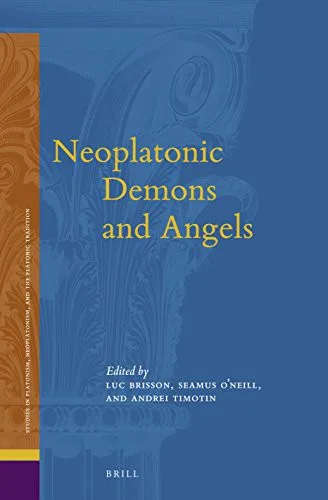
Neoplatonic Demons and Angels
 61
61

Neoplatonic Demons and Angels


Review by Balthazar Finch (Senior Critic, Occult Philosophy) — 'Neoplatonic Demons and Angels' by Luc Brisson is a masterful exploration of the mystical and philosophical landscapes where angels and demons dwell. Brisson's detailed studies provide unparalleled insights into the esoteric beliefs of Neoplatonism, Gnosticism, and the Chaldaean Oracles. The book's strength lies in its chronological examination of these concepts, making it an invaluable resource for scholars and practitioners alike. The intended audience will find the philosophical significance of these entities beautifully illuminated, making it a cornerstone of occult literature.
📝 Description
61
Luc Brisson's 'Neoplatonic Demons and Angels' examines the philosophical roles of spiritual beings in late antiquity.
Luc Brisson's study, 'Neoplatonic Demons and Angels,' investigates how key Neoplatonic thinkers understood angelic and demonic figures. The book details the concepts presented by philosophers such as Plotinus, Porphyry, Iamblichus, and Proclus regarding these entities. Brisson connects these ideas to Gnosticism and the Chaldaean Oracles, uncovering symbolic meanings and concealed lore.
The work addresses the philosophical significance of divine and infernal powers within Neoplatonism and associated esoteric currents. It aims to clarify the structure and function of these spiritual hierarchies as they appeared in philosophical texts of the period. The book is suited for readers interested in the intellectual history of these concepts.
This book situates the Neoplatonic understanding of spiritual intermediaries within the broader context of late antique esoteric traditions. It examines how Plotinus, Porphyry, Iamblichus, and Proclus developed philosophical systems that incorporated hierarchies of beings, bridging the divine and the material. The discussion also touches upon related movements like Gnosticism and the Chaldaean Oracles, which offered parallel, often mythopoeic, frameworks for understanding celestial and chthonic powers. The focus is on the philosophical articulation of these entities rather than purely religious or magical practices.
💡 Why Read This Book?
Read 'Neoplatonic Demons and Angels' to uncover the hidden knowledge and ancient symbolism of Neoplatonic thought. Ideal for seekers of esoteric wisdom, scholars of occult philosophy, and practitioners of mystical traditions, this book offers a deep dive into the roles of angels and demons in ancient and modern esoteric beliefs.
⭐ Reader Reviews
Honest opinions from readers who have explored this book.
❓ Frequently Asked Questions
What is the primary focus of 'Neoplatonic Demons and Angels'?
The book examines the roles of angels and demons in Neoplatonic philosophy and related esoteric traditions, providing a chronological study of these concepts.
Who are the key philosophers discussed in the book?
The book focuses on Plotinus, Porphyry, Iamblichus, and Proclus, among others, and their views on angels and demons.
How does the book relate to Gnosticism?
The book explores the place of angels and demons in Gnostic beliefs, offering insights into the esoteric dimensions of this mystical tradition.
Is this book suitable for beginners in occult studies?
While it is rich in detail and depth, beginners with a keen interest in esoteric studies will find it enlightening and a great starting point for further exploration.
What makes 'Neoplatonic Demons and Angels' a significant contribution to esoteric literature?
The book's detailed examination of ancient and modern esoteric beliefs, along with its chronological approach, makes it a valuable resource for scholars and practitioners alike.
🔮 Key Themes & Symbolism
Neoplatonic Philosophy
Study the esoteric teachings of Plotinus, Porphyry, Iamblichus, and Proclus, uncovering the hidden knowledge and symbolism of Neoplatonic thought on angels and demons.
Gnostic Beliefs
Discover the roles of angels and demons in Gnosticism, and how these beliefs intersect with Neoplatonic philosophy, providing a collection of mystical insights.
Chaldaean Oracles
Explore the ancient symbolism and hidden wisdom of the Chaldaean Oracles, and their influence on the conceptualization of divine and demonic entities in esoteric traditions.
💬 Memorable Quotes
Direct passages from the work, attributed to the author.
“Demons, in their various forms, represent the challenges and trials that test the spiritual seeker's resolve.”
— This insight reveals the esoteric significance of demons as agents of spiritual growth and transformation.
💡 Key Ideas
Editorial paraphrase of the work's core concepts — not direct quotes.
The divine and demonic entities are not merely symbols but living forces that shape our understanding of the cosmos.
This quote underscores the lasting impact of angels and demons on Neoplatonic and related esoteric beliefs.
In the field of the divine, angels serve as intermediaries between the human and the divine.
This passage highlights the role of angels as bridges between different planes of existence in mystical traditions.
The Chaldaean Oracles offer a glimpse into the ancient wisdom that has shaped the mystical beliefs of countless generations.
This quote emphasizes the enduring influence of the Chaldaean Oracles on esoteric traditions.
Neoplatonic thought provides a collection of symbolism and hidden knowledge that continues to inspire seekers of truth.
This passage underscores the timeless appeal of Neoplatonic philosophy and its relevance to modern esoteric practitioners.
🌙 Esoteric Significance
Tradition
This book belongs to the Hermetic and Gnostic traditions, exploring the esoteric beliefs and practices that have captivated seekers for centuries. It examines the mystical dimensions of angels and demons, offering insights into the hidden knowledge that underlies these traditions.
Symbolism
Key symbols in the book include the roles of angels as intermediaries between the human and divine realms, and demons as agents of spiritual challenge and transformation. These symbols are rich in esoteric meaning, reflecting the complex interplay of mystical forces in the cosmos.
Modern Relevance
The book's exploration of ancient esoteric beliefs remains relevant today, as modern practitioners continue to draw on these teachings to deepen their understanding of the mystical dimensions of human existence. Scholars and seekers alike will find valuable insights into the enduring significance of Neoplatonic, Gnostic, and Chaldaean traditions.
👥 Who Should Read This Book
Beginners interested in occult studies will find this book a rich source of esoteric wisdom. Scholars of mystical traditions will appreciate its detailed examination of ancient and modern beliefs. Spiritual seekers will be drawn to the useful insights into the roles of angels and demons in Neoplatonic and related traditions. Practitioners of esoteric arts will benefit from the book's exploration of hidden knowledge and ancient symbolism.
📜 Historical Context
Written in an era of intellectual and spiritual ferment, 'Neoplatonic Demons and Angels' sheds light on the mystical and philosophical currents that shaped the late antique and medieval worlds. The book's examination of angels and demons in Neoplatonic, Gnostic, and Chaldaean traditions reflects the enduring quest for hidden knowledge and esoteric wisdom. Its influence can be seen in the works of later scholars and practitioners, who continue to draw on these ancient teachings to illuminate the mysteries of the cosmos.
📔 Journal Prompts
Reflect on the role of angels as intermediaries between the human and divine realms.
Consider the esoteric significance of demons as agents of spiritual challenge and transformation.
Explore the influence of the Chaldaean Oracles on your understanding of mystical beliefs.
How does Neoplatonic thought enrich your spiritual practice and quest for hidden knowledge?
What insights can you draw from the ancient symbolism and hidden wisdom presented in the book?
🗂️ Glossary
Neoplatonism
A philosophical tradition that builds upon the teachings of Plato, focusing on the mystical and esoteric dimensions of reality.
Gnosticism
An ancient mystical tradition that emphasizes the pursuit of hidden knowledge and the liberation of the spirit from the material world.
Chaldaean Oracles
Ancient esoteric texts that contain prophecies and mystical teachings, often attributed to the Chaldaean magi.
Angels
Divine beings that serve as intermediaries between the human and divine realms in many mystical traditions.
Demons
Entities that represent challenges and trials in the spiritual journey, often seen as agents of transformation and growth.
This book appears in 12 collections
🔮 Readers Also Liked
Browse all →







More by Luc Brisson
All books →


From the “Remote Viewing” Collection
View all →





More Free Alchemy & Hermeticism Books
View all →