100% Free & Public Domain 16,000+ Esoteric Books No Registration Needed
Home Collections I Ching
☯️

Explore the I Ching: Ancient Wisdom for Modern Life

Welcome to the Esoteric Library's dedicated collection for the **I Ching**, often revered as the 'Book of Changes.' This foundational text of Chinese philosophy and divination has guided seekers for millennia, offering profound insights into the nature of change, the ebb and flow of existence, and the intricate dance of Yin and Yang. More than just a tool for fortune-telling, the I Ching is a spiritual compass, a philosophical treatise, and a guide for self-cultivation, inviting users to reflect deeply on their circumstances and find harmony with the universal patterns.

The origins of the I Ching are shrouded in the mists of antiquity, traditionally attributed to mythical figures like Fu Xi, who is said to have conceived the eight trigrams, and later King Wen and the Duke of Zhou, who expanded upon these with judgments and line statements. Confucius and his disciples are also credited with contributing to the 'Ten Wings,' commentaries that further elucidated the text's philosophical depth. Through the centuries, the I Ching has transcended its cultural origins, becoming a global phenomenon, influencing thinkers from Carl Jung to modern spiritual practitioners. Its enduring appeal lies in its ability to offer relevant, nuanced guidance that speaks to the complexities of human experience, making it a timeless resource for anyone navigating life's transformations.

Our extensive collection at the Esoteric Library provides free access to a wealth of I Ching interpretations and studies. You'll find classic translations that brought the I Ching to the Western world, such as the seminal work by Richard Wilhelm, often accompanied by Carl Jung's famous foreword, which highlights its psychological relevance. Another foundational translation is that by James Legge, providing a scholarly and meticulous rendering of the ancient text. These editions, alongside numerous others, allow readers to explore the hexagrams – the 64 six-line figures formed by combinations of solid (Yang) and broken (Yin) lines – and their intricate interpretations. Each hexagram represents a unique situation or state of being, offering a mirror to the inquirer's present moment and potential future.

Engaging with the I Ching is an act of profound introspection. Whether you approach it for personal guidance, philosophical study, or historical interest, the I Ching offers a unique pathway to understanding the interconnectedness of all things. It encourages a meditative state, fostering a deeper connection to intuition and the subtle energies of the cosmos. The process of casting for a hexagram, often using yarrow stalks or coins, is not merely random; it is believed to tap into the collective unconscious, reflecting the inquirer's true state and offering synchronistic insights. This library is proud to present these public domain treasures, enabling you to embark on your own journey with the I Ching, discovering its layers of meaning and applying its ancient wisdom to your contemporary challenges and aspirations.

Dive into these invaluable texts and allow the I Ching to illuminate your path. From detailed commentaries to practical guides on its use, this collection is designed to support both novice and seasoned practitioners in their exploration of this extraordinary oracle. The wisdom of the I Ching awaits your discovery, ready to inspire self-awareness and foster a harmonious existence.

Top I Ching Books

25 I Ching books
I Ching
📖
I Ching
Antonia Beattie
4.0
62
I ching
📖
I ching
Barry R. Trosper
4.0
61
I Ching
📖
I Ching
Edward Hacker
4.0
61
I Ching
📖
I Ching
Edward L. Shaughnessy
4.0
61
I-Ching
📖
I-Ching
Gary G. Melyan
4.0
62
Change
📖
Change
Hellmut Wilhelm
4.1
63
I Ching
📖
I Ching
James Legge
4.3
70
Yi jing
📖
Yi jing
Jing-Nuan Wu
4.0
62
I Ching
📖
I Ching
John Blofeld
4.1
64
I Ching
📖
I Ching
M- Ho Kwok
4.0
61
I Ching
📖
I Ching
Mary Clark
4.0
62
SCHOLAR'S PICK
I Ching
📖
I Ching
Peden, Lauren David.
4.0
61
I Ching
📖
I Ching
Raymond Van Over
4.0
62
I Ching
📖
I Ching
Richard Wilhelm
4.4
74
I Ching
📖
I Ching
Rudolf and Stephen Karcher (transla
4.0
61
I Ching
📖
I Ching
Samvado Gunnar Kossatz
4.0
61
Shi ji
📖
Shi ji
Sima Qian
4.3
69
I Ching
📖
I Ching
Thomas Cleary
4.0
62

Reading Order

Three paths · pick by your level

🌱

Beginner

  1. I Ching The classic Western translation, offering profound philosophical and psychological insights into the I Ching.
  2. I Ching An accessible and intuitive translation, focusing on the mystical and practical aspects of the I Ching for personal guidance.
  3. I Ching A foundational scholarly translation, providing a clear and historically significant entry point to the I Ching's ancient text.
🌿

Intermediate

  1. Change Explores the philosophical underpinnings and historical context of the I Ching, deepening understanding beyond divination.
  2. Yi jing Offers cultural insights and a fresh perspective on the Yi Jing, bridging ancient Chinese thought with modern interpretation.
  3. I Ching Presents a clear, concise translation often favored for its directness and focus on the Taoist perspective of the I Ching.
🌳

Advanced

  1. I Ching A highly regarded translation emphasizing the original Chinese characters and their etymological significance in the I Ching.
  2. I Ching An academic and historical exploration of early I Ching texts, providing deep scholarly insights into its origins and development.
  3. Shi ji While not directly an I Ching text, this foundational historical work offers crucial context for understanding the ancient Chinese world from which the I Ching emerged.

Why Each Book Matters

I Ching

I Ching

This 'I Ching' by an Unknown author often represents an early or alternative translation, potentially focusing on the symbolic imagery of the hexagrams. Such editions can offer unique insights into the interplay of the eight trigrams and their elemental associations, providing a fresh perspective on the ancient text.

I Ching

I Ching

by Andy Baggott

Andy Baggott's 'I Ching' likely presents a modern, accessible take on the ancient oracle, perhaps focusing on its utility for personal development and contemporary problem-solving. Such editions often aim to make the I Ching's wisdom applicable to diverse life situations, offering clear, concise interpretations.

I Ching

I Ching

by Anonymous

This 'I Ching' by an Anonymous author could represent a very early, perhaps folk, translation or a compilation of traditional interpretations. Such texts often provide raw, unadorned insights into the hexagrams, reflecting how the I Ching was understood and used in various historical contexts, sometimes focusing on its practical divinatory aspects.

I Ching

I Ching

by Antonia Beattie

Antonia Beattie's 'I Ching' likely offers a contemporary and perhaps more personal interpretation of the ancient text. Such editions often aim to connect the universal principles of the I Ching to individual experiences, providing guidance for navigating life's challenges and fostering self-awareness through the hexagrams.

I ching

I ching

by Barry R. Trosper

Barry R. Trosper's 'I ching' is likely an accessible modern translation, aiming to demystify the ancient oracle for new learners. Such editions often include clear instructions for casting hexagrams and straightforward interpretations of the moving lines, making the I Ching practical for daily use.

I Ching

I Ching

by Blythe Lasley

Blythe Lasley's 'I Ching' explores the oracle through a lens of personal transformation and spiritual development. This interpretation often emphasizes the psychological aspects of the hexagrams, guiding readers to use the I Ching for self-reflection and understanding their inner landscape, focusing on the dynamic nature of change.

I ching

I ching

by Clae Waltham

Clae Waltham's 'I ching' is recognized for its unique approach, often focusing on the mathematical and cosmological aspects underlying the hexagrams. Waltham's work frequently explores the ancient Chinese numerology embedded within the I Ching, offering a different lens through which to understand its structure and symbolism.

I Ching

I Ching

by Edward Hacker

Edward Hacker's 'I Ching' offers a scholarly yet accessible approach, often including detailed analysis of the text's linguistic structure and historical layers. His work frequently explores the evolution of the I Ching from a simple divination manual to a profound philosophical classic, providing insight into its textual development.

I Ching

I Ching

by Edward L. Shaughnessy

Edward L. Shaughnessy's 'I Ching' is a significant academic work, particularly his translation of the Mawangdui Silk Manuscripts of the Yi Jing, published in 1996. His research provides invaluable insights into the earliest known versions of the I Ching, offering a critical and historical perspective on its development and textual variations.

I-Ching

I-Ching

by Gary G. Melyan

Gary G. Melyan's 'I-Ching' provides a contemporary interpretation aimed at making the ancient oracle relevant for modern life. This edition often focuses on practical applications of the hexagrams for personal growth and decision-making, emphasizing the interplay of Yin and Yang in everyday situations.

Change

Change

by Hellmut Wilhelm

Hellmut Wilhelm's 'Change' offers a profound exploration of the philosophical and psychological dimensions of the I Ching. Published in 1960, this work delves into the historical development of the text, examining its impact on Chinese thought and its relevance for modern understanding of human nature and transformation.

I Ching

I Ching

by James Legge

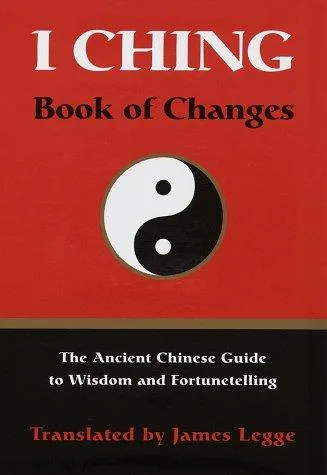
James Legge's 'I Ching' is a pioneering English translation, originally published in 1882 as part of 'The Sacred Books of China.' Legge's meticulous scholarship provides extensive notes and commentaries, offering a rigorous academic approach to understanding the ancient text and its historical interpretations.

Yi jing

Yi jing

by Jing-Nuan Wu

Jing-Nuan Wu's 'Yi jing' offers a unique perspective on the I Ching, focusing on its cultural and historical context within traditional Chinese medicine and cosmology. Her work, first published in 1991, provides detailed explanations of the trigrams and hexagrams through the lens of ancient Chinese scientific thought, including numerology and symbolism.

I Ching

I Ching

by John Blofeld

John Blofeld's 'I Ching' translation, published in 1965, is celebrated for its poetic language and intuitive approach, making the oracle accessible to a broad audience. Blofeld, an expert in Taoist and Buddhist philosophy, emphasizes the mystical and spiritual dimensions of the I Ching, offering a more experiential guide to its wisdom.

I Ching

I Ching

by Lo Scarabeo

Lo Scarabeo's 'I Ching' typically comes from a publisher known for its visually rich esoteric tools, suggesting an edition that might integrate artistic interpretations or visual aids with the traditional text. This version often provides a unique aesthetic and intuitive connection to the hexagrams and their symbolic power.

I Ching

I Ching

by M- Ho Kwok

M- Ho Kwok's 'I Ching' likely offers a translation deeply informed by traditional Chinese understanding and linguistic nuances. These editions often provide a scholarly yet culturally authentic perspective on the hexagrams, delving into the subtle meanings of the Chinese characters and their historical interpretations.

I Ching

I Ching

by Mary Clark

Mary Clark's 'I Ching' may provide a user-friendly introduction to the oracle, simplifying complex concepts for beginners. These interpretations often focus on the core messages of the hexagrams and their practical application in daily decision-making, making the I Ching approachable for those new to divination.

I Ching

I Ching

by Nizan Weisman

Nizan Weisman's 'I Ching' might offer a unique blend of traditional wisdom and modern psychological insight. These interpretations often explore the archetypal patterns within the hexagrams, helping readers to understand their inner dynamics and apply the I Ching's guidance for emotional and spiritual growth.

I Ching

I Ching

by Peden, Lauren David.

Peden, Lauren David.'s 'I Ching' likely offers a modern, perhaps more streamlined, approach to the ancient text. These interpretations often focus on practical advice and clear explanations of the hexagrams' meanings, making the profound wisdom of the I Ching accessible to contemporary readers seeking direct guidance.

I Ching

I Ching

by Raymond Van Over

Raymond Van Over's 'I Ching' often provides a comprehensive overview, blending historical context with practical application. This work frequently delves into the philosophical roots of the I Ching, exploring its connections to Taoism and Confucianism while offering clear interpretations of the 64 hexagrams for contemporary life.

I Ching

I Ching

by Richard Wilhelm

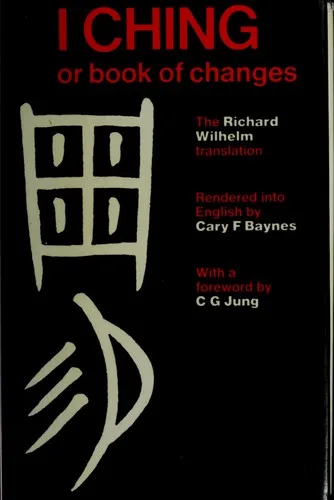
Richard Wilhelm's 'I Ching' is arguably the most influential Western translation, first published in German in 1923. It features a renowned foreword by Carl Jung, highlighting the I Ching's psychological depth and its connection to the collective unconscious, making it a cornerstone for modern esoteric study.

I Ching

I Ching

by Rudolf and Stephen Karcher (translated by) Ritsema

Rudolf Ritsema and Stephen Karcher's 'I Ching' is highly regarded for its radical approach, focusing on a literal translation of the Chinese characters and their etymological roots. First published in 1994, this work aims to strip away layers of interpretation to present the raw, evocative power of the original I Ching text.

I Ching

I Ching

by Samvado Gunnar Kossatz

Samvado Gunnar Kossatz's 'I Ching' probably offers a contemporary and meditative approach to the oracle, potentially incorporating elements of Eastern spirituality or mindfulness. Such interpretations often guide readers to use the I Ching for introspection and connecting with their inner wisdom, focusing on the journey of self-discovery.

Shi ji

Shi ji

by Sima Qian

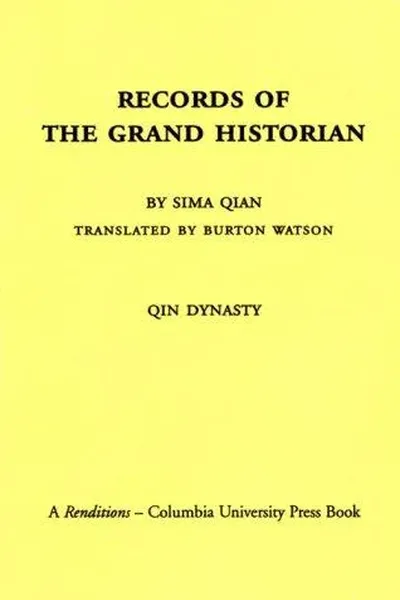
Sima Qian's 'Shi ji' (Records of the Grand Historian) is a monumental work of ancient Chinese historiography, completed around 94 BC. While not an I Ching translation, it provides invaluable historical and cultural context for the period in which the I Ching was developed and revered, detailing the lives of emperors, philosophers, and events that shaped early Chinese thought.

I Ching

I Ching

by Thomas Cleary

Thomas Cleary's 'I Ching' offers a translation rooted in Taoist and Buddhist scholarship, providing a distinct spiritual perspective. Cleary, known for his translations of classical Asian texts, often emphasizes the I Ching's role as a guide for spiritual cultivation and enlightenment, presenting the hexagrams as meditations on change.

Glossary

I Ching
Also known as the 'Book of Changes,' it is an ancient Chinese divination text and philosophical treatise, offering insights into the nature of change and universal patterns.
Hexagrams
The 64 six-line figures that form the core of the I Ching. Each hexagram is composed of two trigrams and represents a unique state of change or situation.
Trigrams
The eight fundamental three-line figures from which hexagrams are built. Each trigram symbolizes a basic force of nature, such as Heaven, Earth, Water, or Fire.
Yin and Yang
The two fundamental opposing and complementary forces in Chinese philosophy. Yin represents the feminine, dark, passive, while Yang represents the masculine, light, active.
Divination
The practice of seeking knowledge of the future or the unknown by supernatural means. In the I Ching, this involves casting methods to consult the hexagrams for guidance.

FAQ

What is I Ching?

The I Ching is an ancient Chinese divination text and philosophical system, offering profound insights into the nature of change and universal patterns. It uses 64 hexagrams to provide guidance for life's situations, reflecting the interplay of Yin and Yang, and encouraging self-reflection and adaptability.

How do I start with I Ching?

Beginners can start by reading an accessible translation of the I Ching, like Richard Wilhelm's, to understand its basic philosophy and structure. Then, learn a simple casting method, such as the coin method, to consult the I Ching for personal questions, focusing on understanding the hexagram's core message and its moving lines.

What's the best book on I Ching?

While subjective, Richard Wilhelm's 'I Ching' is widely considered the most influential and comprehensive Western translation, making it an excellent starting point. For a more intuitive approach, John Blofeld's 'I Ching' is highly recommended, offering spiritual depth and poetic language.

Is I Ching difficult to learn?

The basic mechanics of casting a hexagram for the I Ching are simple, but truly understanding its nuanced philosophical depth and applying its wisdom takes time and contemplation. It's a lifelong study, rewarding patience and an open mind, as the I Ching's insights deepen with personal experience.

Can I download I Ching books for free?

Yes, on Esoteric Library, you can download numerous public domain I Ching books for free. Our collection includes classic translations and interpretations, providing a rich resource for anyone wishing to explore the ancient wisdom of the I Ching without cost.

Esoteric Library
Browse Esoteric Library
📚 All 16,000+ Books 🜍 Alchemy & Hermeticism 🔮 Magic & Ritual 🌙 Witchcraft & Paganism Astrology & Cosmology 🃏 Divination & Tarot 📜 Occult Philosophy ✡️ Kabbalah & Jewish Mysticism 🕉️ Mysticism & Contemplation 🕊️ Theosophy & Anthroposophy 🏛️ Freemasonry & Secret Societies 👻 Spiritualism & Afterlife 📖 Sacred Texts & Gnosticism 👁️ Supernatural & Occult Fiction 🧘 Spiritual Development 📚 Esoteric History & Biography
Esoteric Library
📑 Collections 📤 Upload Your Book
Account
🔑 Sign In Create Account
Info
About Esoteric Library