Clae Waltham
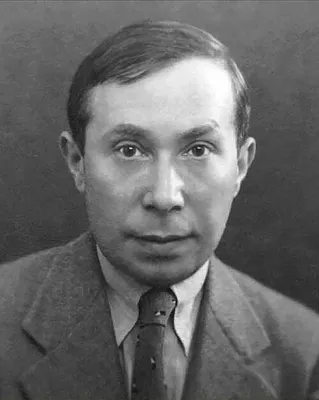
Leo Strauss was a political philosopher known for critiquing modernity and recovering classical thought, emphasizing esoteric writing.
Leo Strauss was a German-American political philosopher and historian of philosophy who significantly impacted 20th-century political theory and the study of classical political thought. Born in Germany to Jewish parents, he emigrated to the United States in 1937. Strauss is recognized for his interpretations of ancient and medieval philosophy, his theories on natural right, and his concept that philosophers often employed esoteric writing, conveying different messages to general and specialized audiences.
His work argued that the shift in philosophy, starting with Machiavelli and leading to historicism and relativism, represented a departure from classical understandings of politics and the good life. Strauss aimed to revive the questions and methods of ancient political philosophy to address a perceived crisis in modern thought. He taught at institutions like the New School for Social Research and the University of Chicago, influencing many students who became prominent scholars. His major works include "Natural Right and History" and "Persecution and the Art of Writing."
Critique of Modernity and Recovery of Classical Philosophy
Strauss's intellectual project centered on two core themes: a critique of modernity and the revival of classical political philosophy. He contended that modernity, initiated by figures like Niccolò Machiavelli around the 15th century, marked a profound break from Western civilization's established traditions. This shift, he argued, resulted in a crisis characterized by nihilism, relativism, historicism, and scientism. Strauss criticized modern political and social sciences for their empirical focus, asserting they neglected fundamental questions about human nature, morality, and justice, reducing individuals to mere subjects for manipulation. He also found modern liberalism lacking in moral and spiritual grounding, prone to undermining religious authority, tradition, and natural law.
Esoteric Writing and Philosophical Method
To counter the crisis of modernity, Strauss advocated for a return to the political philosophies of ancient Greece and medieval thinkers, whom he believed possessed a more profound grasp of human nature and society. He emphasized the importance of carefully studying classical texts, positing that their authors often wrote esoterically, a practice he termed "the art of writing." According to Strauss, these philosophers concealed their most profound insights behind conventional discourse to protect themselves from persecution and to educate only those intellectually equipped to understand them. This approach involved a subtle dialogue between the surface meaning and the hidden message, demanding rigorous textual analysis from the reader.
Intellectual Engagement and Influence
Strauss's academic career included positions at the New School for Social Research and the University of Chicago, where his seminars profoundly shaped political theorists for generations. His intellectual engagements spanned a wide range of thinkers from antiquity, the Middle Ages, and modernity, including Plato, Aristotle, Hobbes, Spinoza, Nietzsche, Al-Farabi, and Maimonides. Central to his writings were the interplay between reason and revelation, the nature of political prudence, and the complex relationship between philosophy and political power. His emphasis on close textual reading and the pedagogical value of classical texts formed the basis of what became known as "Straussian" approaches to political theory.
Key Ideas
- Critique of modernity as a break from classical thought
- Esoteric writing as a method of philosophical communication
- Recovery of classical political philosophy to address modern crisis
- The tension between reason and revelation
- The nature of political prudence
Books by Clae Waltham
1 free public domain book · Read online or download