I Ching
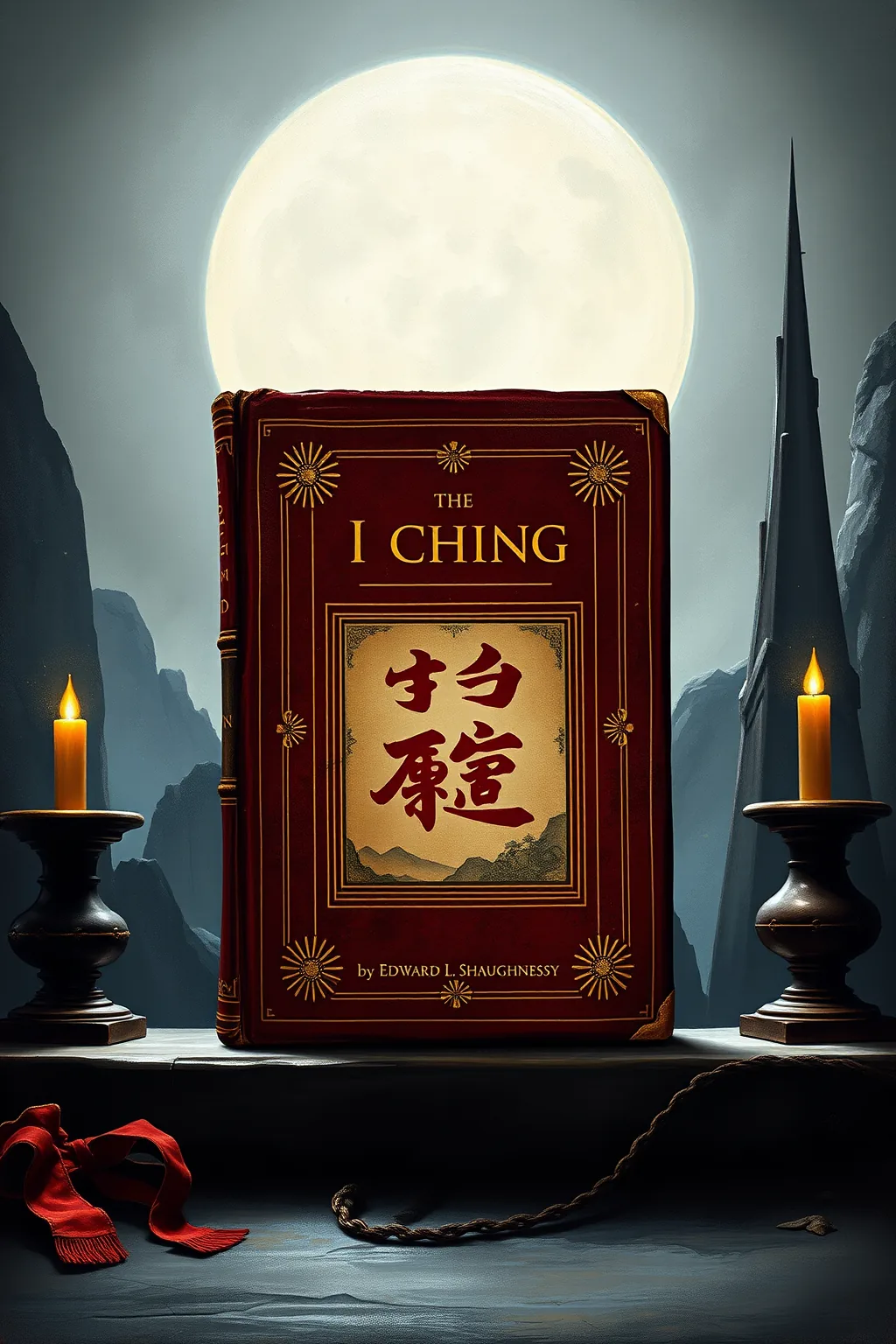
 61
61

I Ching



Aurelia Blackwood, Occult Philosophy Critic: Shaughnessy's 'I Ching' is an indispensable cornerstone for any serious student of esoteric traditions. His translation breathes life into the ancient text, rendering its profound philosophical and divinatory insights with unparalleled clarity and scholarly rigor. This edition transcends mere translation; it is an illuminated guide, revealing the intricate symbolic language and the profound cyclical nature of existence. For practitioners and scholars alike, it offers a robust framework for understanding cosmic order and personal transformation. It stands as a testament to the enduring power of this sacred text, making its profound wisdom accessible to a new generation of seekers.
📝 Description
61
Edward L. Shaughnessy's 1996 translation of the I Ching makes its ancient oracle accessible.
Edward L. Shaughnessy's translation of the I Ching, known as the 'Book of Changes,' presents a foundational text of Chinese thought. This edition focuses on the 64 hexagrams, treating each as a symbolic representation of universal principles. Shaughnessy's work aims to clarify the text's role as a system of divination, a philosophical text, and a guide for living in accord with natural processes.
The translation is suited for those interested in Chinese philosophy, divination practices, and the historical context of this ancient oracle. It allows readers to engage directly with the text's layered meanings and its potential for introspection and understanding life's dynamics. The book offers a way to consider cosmic patterns and human experience through the lens of this venerable tradition.
The I Ching is a central text in East Asian esoteric traditions, particularly Taoism and Confucianism. Its origins trace back to ancient Chinese divination practices, evolving over centuries into a complex philosophical and cosmological system. The text is believed to map the fundamental forces of change in the universe, offering guidance through its symbolic structure and divinatory methods. Its influence extends to various forms of folk religion, meditation, and ethical thought across East Asia.
💡 Why Read This Book?
Uncover the ancient Chinese oracle of wisdom and foresight. Explore profound philosophical insights into cosmic order and human destiny. Master a system of divination for guidance and self-discovery. Ideal for seekers of esoteric knowledge, students of philosophy, and practitioners of ancient wisdom traditions.
⭐ Reader Reviews
Honest opinions from readers who have explored this book.
❓ Frequently Asked Questions
What is the I Ching?
The I Ching, or 'Book of Changes,' is an ancient Chinese text used for divination and as a source of philosophical wisdom. It comprises 64 hexagrams, each formed by six lines representing Yin (broken) or Yang (solid).
How is the I Ching used for divination?
Divination involves casting yarrow stalks or coins to generate hexagrams, which are then interpreted using the text's commentary and associated imagery to provide guidance on a specific question or situation.
What are the core philosophical concepts of the I Ching?
Key concepts include the interplay of Yin and Yang, the cyclical nature of change, balance, harmony, and the importance of adapting to circumstances with wisdom and integrity.
Is this translation suitable for beginners?
Yes, Edward L. Shaughnessy's translation is renowned for its clarity and scholarly approach, making it accessible to both newcomers and experienced practitioners seeking a deeper understanding.
What is the significance of the hexagrams?
Each hexagram represents a specific situation or stage of change, offering insights into potential outcomes, challenges, and the most auspicious course of action. They are symbolic representations of universal patterns.
🔮 Key Themes & Symbolism
The Dynamics of Change
The I Ching fundamentally explores the ceaseless nature of transformation. It teaches that change is the only constant, and understanding its patterns allows one to navigate life's vicissitudes with grace. This theme emphasizes the importance of adaptability, recognizing that rigidity leads to stagnation and eventual decay. Each hexagram represents a specific phase or dynamic of change, offering guidance on how to respond to evolving circumstances, from periods of growth and prosperity to times of difficulty and decline. It’s a profound lesson in embracing impermanence and finding stability within flux.
Cosmic Harmony and Balance
Fundamentally, the I Ching is a guide to achieving harmony with the cosmic order. It illustrates the fundamental duality of Yin and Yang, the complementary forces that drive all creation. By understanding their interplay, one can strive for balance in their own life and in their interactions with the world. This theme encourages individuals to seek equilibrium, to avoid extremes, and to act in accordance with natural principles. Achieving this balance is presented not as a static state, but as a dynamic process of continuous adjustment and alignment with the universe's inherent rhythms.
Symbolic Language of the Universe
The hexagrams and their associated imagery form a rich symbolic language that mirrors the patterns of the cosmos and human experience. This theme looks at the profound meaning embedded within each of the 64 archetypal formations. It suggests that the universe communicates through symbols, and by learning to decipher them, we gain access to deeper truths. The I Ching acts as a Rosetta Stone for this cosmic script, offering clear insights into the underlying forces at play in our lives and the world around us, encouraging a more intuitive and symbolic understanding of reality.
💬 Memorable Quotes
Direct passages from the work, attributed to the author.
“The superior man acts before he speaks, and afterwards speaks according to his action.”
— This highlights the virtue of integrity and mindful action. True character is revealed not in pronouncements, but in deeds that align with one's words and intentions.
“When you are in harmony with the times, you will have success.”
— Emphasizes the importance of adaptability and synchronicity. Aligning one's actions with the prevailing energies and circumstances leads to favorable outcomes.
“To know the changes is to know the will of Heaven.”
— Suggests that understanding the natural cycles and transformations of the universe reveals a divine or cosmic blueprint.
“The superior man, when he finds a man who has made a mistake, does not hide it.”
— Advocates for transparency and accountability. Openness about errors allows for learning and collective growth, rather than perpetuating ignorance.
“What is done in the light of the sun is not hidden.”
— A reminder of the consequences of actions and the interconnectedness of all things. Deeds, whether good or bad, have repercussions that will eventually manifest.
🌙 Esoteric Significance
Tradition
The I Ching is a central to Taoist and Confucian thought, deeply intertwined with Chinese esoteric traditions. It embodies principles of natural philosophy, cosmology, and ethical conduct. Its esoteric nature lies in its symbolic representation of universal forces and its application as a tool for divination and spiritual guidance, offering a path towards understanding the Tao – the fundamental principle of the universe.
Symbolism
Key symbols include the Yin (broken line, feminine, passive) and Yang (solid line, masculine, active) which combine to form trigrams and hexagrams. These 64 hexagrams are potent archetypes representing all possible situations and transformations in the universe, from the creative and receptive to the difficult and the joyous. The imagery associated with each hexagram further enriches its symbolic meaning.
Modern Relevance
In the modern era, the I Ching continues to offer profound guidance for navigating complex challenges, fostering self-awareness, and promoting ethical decision-making. Its emphasis on adaptability, balance, and understanding the cyclical nature of life resonates deeply in a rapidly changing world. It serves as a timeless oracle for personal growth, strategic thinking, and finding meaning amidst uncertainty.
👥 Who Should Read This Book
This edition of the I Ching is essential for a diverse audience. **Beginners** seeking an accessible yet profound introduction to ancient divination and philosophy will find Shaughnessy's clear prose invaluable. **Scholars** of East Asian studies, comparative religion, and philosophy will appreciate the meticulous scholarship and insightful commentary. **Spiritual seekers** yearning for a deeper connection to universal wisdom and guidance will discover a powerful oracle. **Practitioners** of esoteric arts, meditation, and mindfulness will find it a rich resource for self-reflection and intuitive development.
📜 Historical Context
The I Ching originated in China during the Shang Dynasty (c. 1600–1046 BCE) and was further developed and interpreted throughout subsequent dynasties, notably the Zhou Dynasty. Its early forms likely involved rudimentary divination practices, evolving into a complex philosophical and ethical system. Confucius and his disciples significantly contributed to its textual commentary, embedding it deeply within Chinese philosophical thought. The text’s influence extended beyond China, impacting Korean, Japanese, and Vietnamese cultures, and later finding a global audience through translations. Its enduring relevance lies in its ability to address timeless questions of human existence, change, and destiny, bridging ancient wisdom with contemporary concerns.
📔 Journal Prompts
Reflect on a recent situation where you felt out of balance. How could the principles of Yin and Yang guide you towards equilibrium?
Consider the concept of 'change' as presented in the I Ching. Identify one area in your life that requires adaptation and outline a potential course of action.
Choose a hexagram that speaks to your current life circumstances. What symbolic message or guidance does it offer you?
How can understanding the 'will of Heaven,' as interpreted through the I Ching's cycles, inform your personal goals and aspirations?
Explore the relationship between action and speech as described in the I Ching. How can you align your words with your deeds more effectively?
🗂️ Glossary
Hexagram
A symbol composed of six stacked horizontal lines, each either solid (Yang) or broken (Yin). There are 64 unique hexagrams in the I Ching, representing fundamental archetypes and situations.
Trigram
A symbol composed of three stacked lines, either solid or broken. The eight trigrams (Pa Kua) are fundamental building blocks of the hexagrams and have their own distinct symbolic meanings.
Yin
The feminine, passive, dark, and yielding principle in Chinese philosophy, represented by a broken line (--) in the I Ching.
Yang
The masculine, active, light, and assertive principle in Chinese philosophy, represented by a solid line (—) in the I Ching.
Oracle
A source of divine or prophetic guidance. In the context of the I Ching, it refers to the text and the process of divination used to seek advice or insight.
This book appears in 3 collections
🔮 Readers Also Liked
Browse all →

![the collection - gallery of digital art [2015-2023] Volume 5](/img/thumb/the-collection-gallery-of-digital-art-2015-2023-volume-5-rodrigo-granda.webp)





From the “Tarot” Collection
View all →









More Free Divination & Tarot Books
View all →