I Ching
 61
61

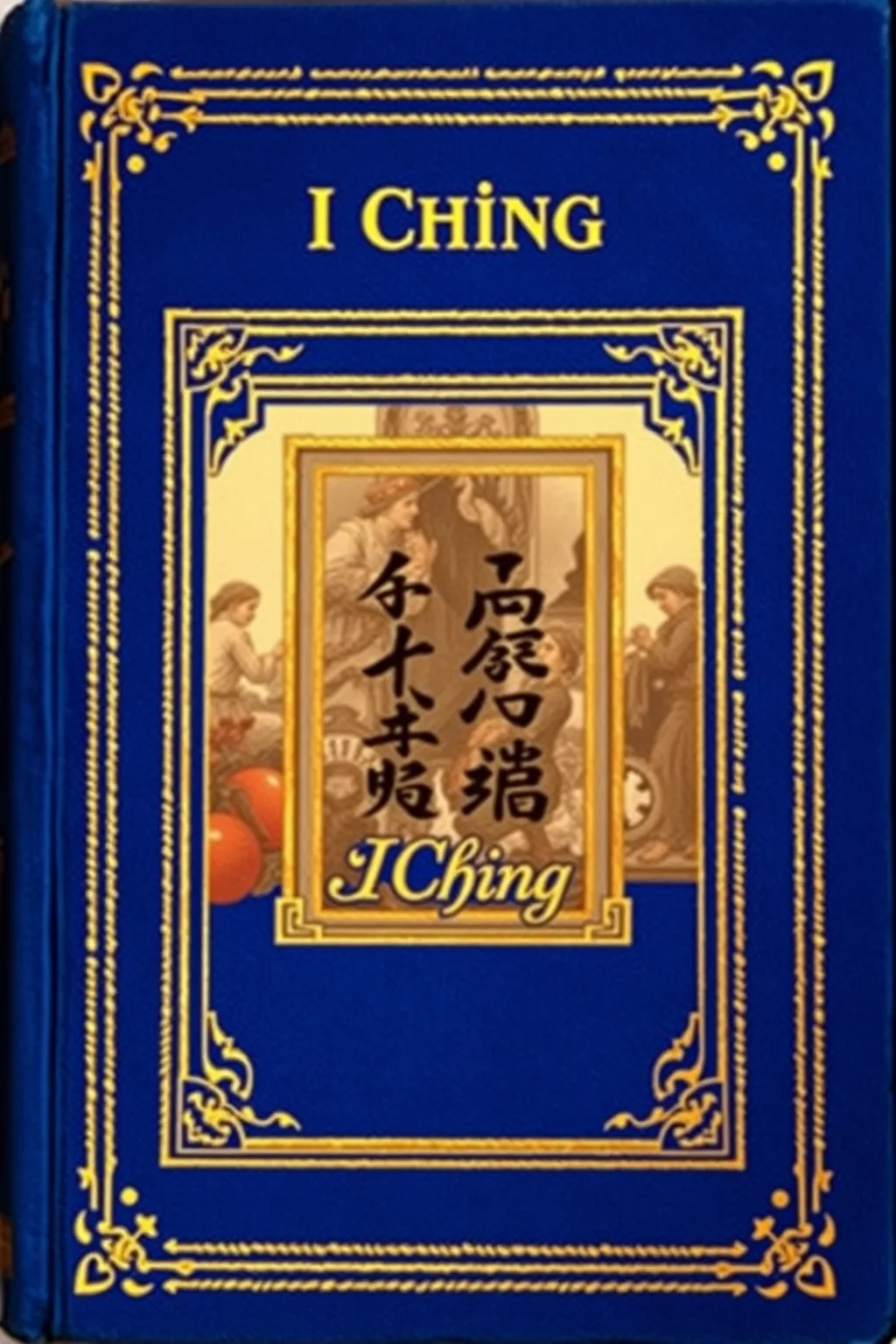
I Ching



Lorelei Sage (Contemplative Literature Editor) — The Karcher translation of the *I Ching* stands as a monumental achievement in bringing this ancient oracle to the modern esoteric reader. Its clarity and fidelity to the original texts unlock layers of meaning previously obscured by dense scholarship. The accompanying commentaries are insightful, offering a nuanced understanding of the hexagrams' philosophical and divinatory applications. This edition is indispensable for anyone seeking to engage with the *I Ching* not just as a predictive device, but as a profound spiritual and philosophical guide. It serves practitioners, scholars, and the intellectually curious alike, offering a richly rewarding journey into the heart of Chinese wisdom.
📝 Description
61
The Karchers' 1994 translation of the I Ching offers a fresh rendering of this ancient Chinese text.
This translation of the I Ching, the Chinese Book of Changes, presents the sixty-four hexagrams and their associated commentaries. It is understood as a system that maps cosmic principles and the flow of existence. The translation aims to clarify the symbolic language within the text, focusing on the interplay of yin and yang, and the cyclical nature of transformation.
It is intended for those interested in philosophical inquiry, divination, and the symbolic structures that underpin Eastern thought. The text invites contemplation on universal patterns and their application to personal challenges and opportunities. The Karchers' work seeks to make the subtle meanings of the original verses accessible to contemporary readers.
The I Ching belongs to a long tradition of Chinese divination and philosophical thought, dating back over 3,000 years. It is considered a foundational text within Taoism and a significant influence on East Asian philosophy and cosmology. Its use as an oracle involves consulting its hexagrams for guidance on present circumstances and future possibilities. The text's structure, based on binary principles, has also made it a subject of interest in fields beyond traditional esotericism, including mathematics and systems theory.
💡 Why Read This Book?
Embark on a transformative journey with the *I Ching*, a timeless oracle offering profound insights into the patterns of change. This translation unlocks ancient wisdom for modern seekers, guiding you through life's complexities with clarity and depth. Ideal for those drawn to divination, philosophical exploration, and the pursuit of self-awareness.
⭐ Reader Reviews
Honest opinions from readers who have explored this book.
❓ Frequently Asked Questions
What is the I Ching?
The I Ching, or Book of Changes, is an ancient Chinese divination text and philosophical classic. It comprises 64 hexagrams, each representing a fundamental situation or principle, offering guidance and insight into the dynamics of change.
Who were Rudolf and Stephen Karcher?
Rudolf and Stephen Karcher are the translators of this esteemed edition of the I Ching. Their work is celebrated for its scholarly rigor and insightful presentation, making the complex text accessible to a wider audience.
How is the I Ching used for divination?
Divination with the I Ching typically involves casting yarrow stalks or coins to generate a hexagram. The resulting hexagram, along with its changing lines, is then interpreted using the text's commentary to gain insight into a question or situation.
What is the philosophical significance of the I Ching?
Philosophically, the I Ching emphasizes the constant nature of change, the balance of opposing forces (yin and yang), and the importance of aligning oneself with the natural order of the universe. It promotes self-reflection and ethical conduct.
Is this translation suitable for beginners?
Yes, the Karcher translation is highly regarded for its clarity and comprehensive explanations, making it an excellent starting point for those new to the I Ching, while still offering depth for experienced practitioners.
🔮 Key Themes & Symbolism
The Cosmic Dance of Change
The I Ching posits that change is the only constant in the universe, a dynamic interplay of opposing yet complementary forces – yin and yang. This concept is not one of chaos but of an ordered, cyclical transformation. Understanding this ceaseless flux is key to navigating life's currents with wisdom and adaptability. The hexagrams are not static pronouncements but snapshots of ongoing processes, revealing the inherent potential within every situation to evolve and transform. Embracing this principle allows one to move with, rather than against, the tides of destiny, fostering resilience and inner peace.
The Language of Symbols and Archetypes
At its heart, the I Ching is a profound system of symbolic language. Each of the 64 hexagrams, formed by combinations of six yin (broken) and yang (solid) lines, represents a primal archetype or situation. These archetypes, from the creative power of Heaven to the receptive nature of Earth, resonate with universal human experiences. The accompanying commentaries explore the nuanced meanings of these symbols, offering a body of imagery and metaphor. Learning to read this symbolic language is akin to deciphering the very code of existence, revealing hidden patterns and connections that inform our choices and understanding.
Navigating Life's Crossroads with Wisdom
The I Ching serves as an outstanding guide for introspection and decision-making. By consulting its wisdom, individuals can gain clarity on complex situations, understand underlying dynamics, and discern the most opportune course of action. It encourages a mindful approach to life, prompting reflection on one's intentions, motivations, and potential outcomes. The oracle doesn't dictate fate but illuminates possibilities, empowering the user to make conscious choices that align with their highest good and the natural flow of events. It fosters a sense of agency within the grand cosmic unfolding.
💬 Memorable Quotes
Direct passages from the work, attributed to the author.
“Stillness leads to clarity.”
— Emphasizes the importance of inner calm and quietude for achieving true understanding and insight, often a prerequisite for accurate divination or wise decision-making.
“When you know others and know yourself, you need not fear the result of a hundred battles.”
— A powerful statement on the value of self-awareness and understanding one's opponent or situation. It speaks to the strategic advantage gained from deep knowledge.
“The superior man is not the one who is always right, but the one who is always learning.”
— This emphasizes growth and continuous learning as the mark of true wisdom, rather than an unyielding adherence to one's own opinions or past successes.
“To know the origin is to know the end.”
— Suggests that understanding the root cause or initial conditions of a situation is crucial for predicting or comprehending its ultimate outcome.
💡 Key Ideas
Editorial paraphrase of the work's core concepts — not direct quotes.
The superior man acts but does not rely on his own merit.
This quote highlights the virtue of humility and detachment, suggesting that true accomplishment stems from acting in accordance with universal principles rather than personal ego or ambition.
🌙 Esoteric Significance
Tradition
The *I Ching* is deeply rooted in ancient Chinese esoteric traditions, primarily Taoism and Confucianism, though it transcends strict categorization. Within Taoism, it reflects the principles of the Tao, the natural flow of the universe, and the interplay of yin and yang. Esoterically, it's viewed as a cosmic blueprint, a map of universal energies and patterns that govern both the macrocosm and the microcosm. Practitioners engage with it to understand the subtle forces at play in their lives and to align themselves with the 'Way' (Tao) for harmonious existence and spiritual growth.
Symbolism
The core symbolism of the *I Ching* lies in its 64 hexagrams, each composed of six lines, either solid (yang) or broken (yin). These lines and their combinations represent fundamental archetypes and states of being, such as heaven, earth, water, fire, and the dynamic relationship between them. The trigrams (three-line combinations) are foundational, with their eight primary forms representing elemental forces and cosmic principles. The changing lines within a hexagram signify moments of transition and transformation, offering specific guidance for navigating evolving circumstances. This rich visual language provides a profound symbolic grammar for understanding existence.
Modern Relevance
In the modern era, the *I Ching* offers a powerful antidote to the fragmentation and materialism of contemporary life. Its emphasis on cyclical change, balance, and interconnectedness provides a framework for navigating uncertainty and fostering resilience. Esoteric practitioners and seekers of wisdom find its symbolic depth and divinatory insights useful for self-discovery, ethical guidance, and spiritual development. It encourages mindful living, urging individuals to observe patterns, understand consequences, and act with intention, making it a timeless tool for personal growth and finding harmony in a complex world.
👥 Who Should Read This Book
This edition of the *I Ching* is a treasure for a diverse readership. For the absolute beginner curious about ancient wisdom traditions, its clarity offers an accessible entry point. Scholars of philosophy, religion, and East Asian studies will find its authoritative translation and commentary useful for deep academic engagement. Spiritual seekers and practitioners of divination will discover a profound tool for introspection, guidance, and understanding the subtle energies of life. Anyone grappling with life's transitions, seeking deeper self-awareness, or yearning for a philosophical framework to understand the universe's ceaseless flux will find profound resonance and practical wisdom within its pages.
📜 Historical Context
The *I Ching*, or Book of Changes, is one of the oldest Chinese classic texts, with its origins tracing back to the Western Zhou Dynasty (c. 1046–771 BCE), though its foundational elements are likely even older. Initially, it was primarily a divinatory manual used by rulers and shamans to interpret omens and guide state affairs. Over centuries, particularly during the Spring and Autumn period (771–476 BCE) and the Warring States period (475–221 BCE), it evolved into a profound philosophical and cosmological text, heavily influenced by Confucian and Taoist thought. The commentaries, particularly the 'Ten Wings' attributed to Confucius, transformed it from a simple oracle into a complex system of ethics, metaphysics, and cosmology. Its influence spread throughout East Asia, shaping the intellectual, spiritual, and cultural landscapes of China, Korea, Japan, and Vietnam for over two millennia, remaining a core part of Eastern philosophy.
📔 Journal Prompts
Reflect on a recent significant change in your life. How does the concept of flux, as presented in the I Ching, help you understand this transition?
Consider the balance of yin and yang in your daily life. Where do you feel an imbalance, and what small adjustments could you make?
Choose a hexagram that speaks to you today. What archetypal energy or situation does it represent, and how does it apply to your current circumstances?
The I Ching often emphasizes foresight and preparation. What is one area where you could benefit from more mindful planning or anticipation?
How can understanding the 'language of symbols' in the I Ching enhance your perception of the world around you and your inner landscape?
🗂️ Glossary
Hexagram
A symbol composed of six stacked horizontal lines, each being either solid (yang) or broken (yin). There are 64 unique hexagrams in the I Ching, representing fundamental archetypes and situations.
Trigram
A symbol composed of three stacked horizontal lines, either solid (yang) or broken (yin). There are eight basic trigrams, representing elemental forces and cosmic principles.
Yin
In the I Ching, yin represents the passive, receptive, dark, feminine, and yielding principle. It is symbolized by a broken line (--).
Yang
In the I Ching, yang represents the active, creative, light, masculine, and assertive principle. It is symbolized by a solid line (—).
Tao (or Dao)
The fundamental principle of the universe in Taoism, often translated as 'the Way.' It represents the natural order, the source of all things, and the path of harmonious existence.
This book appears in 3 collections
🔮 Readers Also Liked
Browse all →









From the “Tarot” Collection
View all →






More Free Divination & Tarot Books
View all →