Shi ji
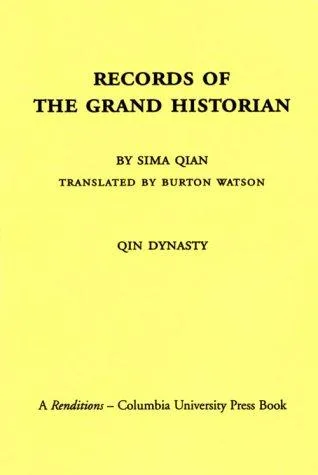
 69
69

Shi ji



Ophelia Vance (Mystical Literature Reviewer) — Sima Qian's "Shi Ji" transcends mere historical record, offering profound insights into the esoteric underpinnings of Chinese civilization. Its meticulous detail and genealogical tracing, particularly the mention of Emperor Zhuan Xu's lineage, reveal an ancient belief in cosmic ancestry and predestination. This work is a treasure trove for scholars of ancient divinatory practices and those fascinated by the symbolic language of power. For practitioners of Eastern philosophies, "Shi Ji" illuminates the historical context of concepts like the Mandate of Heaven. A compelling read that bridges the gap between documented history and the mystical forces that shaped it.
📝 Description
69
Sima Qian completed the Shi Ji around 94 BCE, detailing China's history from legendary beginnings.
Sima Qian's Shi Ji is a comprehensive history of China, beginning with its mythical origins and extending to his own time. It presents the reigns of emperors, the lives of key figures, and the development of Chinese thought and governance. The text connects historical events to astrological observations and a cosmic order, suggesting that human affairs are influenced by celestial patterns. This perspective frames history not just as a record of the past, but as a form of divination, revealing underlying cosmic principles at work.
The Shi Ji covers the rise of the Qin dynasty, tracing its lineage to figures like Emperor Zhuan Xu, whose celestial connections are presented as evidence of divine right. Within its narratives, readers find discussions of fate, free will, and the symbolic significance of the actions of statesmen and scholars. The work aims to illustrate a worldview where history unfolds according to a grand, predetermined cosmic plan, with each event echoing larger celestial movements.
The Shi Ji situates history within a cosmological framework common in early Chinese thought. It reflects beliefs that human events and political success were intrinsically linked to celestial phenomena and a cosmic pattern. This perspective aligns with broader traditions that saw the universe as an interconnected system, where earthly rulers acted as intermediaries between heaven and humanity. The text thus presents a form of historical divination, where understanding the past meant deciphering the will of heaven and the predictable rhythms of the cosmos.
💡 Why Read This Book?
"Shi Ji" is essential for understanding the esoteric foundations of Chinese civilization, revealing how ancient rulers believed their destinies were divinely ordained and symbolically linked to celestial events. It offers a unique perspective on the cyclical nature of history and the hidden currents of power. Ideal for seekers of ancient wisdom, scholars of comparative mythology, and practitioners exploring the roots of historical divination.
⭐ Reader Reviews
Honest opinions from readers who have explored this book.
❓ Frequently Asked Questions
What is the primary focus of "Shi Ji"?
"Shi Ji" is a comprehensive historical record of ancient China, detailing the reigns of emperors, the lives of key figures, and the rise and fall of dynasties, often with an underlying emphasis on destiny and cosmic influence.
What esoteric themes are present in "Shi Ji"?
The text subtly weaves in themes of divine mandate, ancestral connections to mythical figures like Emperor Zhuan Xu, symbolic interpretations of historical events, and the belief in a predestined cosmic order that influences human affairs.
Who is Emperor Zhuan Xu and why is he mentioned?
Emperor Zhuan Xu is a legendary figure in Chinese mythology, often considered a descendant of celestial beings. His mention establishes a divine lineage for ruling dynasties, particularly the Qin, imbuing them with cosmic authority and mystical legitimacy.
How does "Shi Ji" relate to divination?
While not a direct manual, "Shi Ji" reflects an ancient worldview where historical events were seen as signs or omens, interpreted through a lens of cosmic patterns and destiny, thus serving as a historical divination in itself.
What kind of reader would benefit most from "Shi Ji"?
Scholars of history and philosophy, practitioners of Eastern esoteric traditions, and anyone interested in the mystical underpinnings of ancient civilizations and the concept of historical destiny would find "Shi Ji" invaluable.
🔮 Key Themes & Symbolism
The Cosmic Mandate of Rulers
This theme explores the ancient Chinese belief that rulers derive their authority not merely from conquest or lineage, but from a divine mandate bestowed by Heaven. Sima Qian meticulously documents the rise and fall of dynasties, often framing these shifts as the natural consequence of a ruler's virtue or vice, reflecting Heaven's favor or displeasure. The text implicitly suggests that successful leadership is aligned with cosmic principles, and that the fate of empires is interwoven with a grander, celestial design, a concept deeply influential in East Asian political and spiritual thought.
Ancestral Legacies and Mythic Origins
"Shi Ji" examines the profound importance of ancestral lineage, tracing the roots of prominent families and ruling houses back to legendary figures and mythical progenitors. The mention of the Qin's descent from Emperor Zhuan Xu exemplifies this, imbuing them with an aura of ancient power and cosmic significance. This emphasis on ancestry highlights a worldview where the past is not merely prologue but an active force shaping the present, connecting earthly power to the spiritual realm and reinforcing the idea that destiny is inherited and divinely sanctioned, a central to many ancient esoteric traditions.
The Grand Collection of Historical Divination
Beyond mere factual recounting, "Shi Ji" can be interpreted as a form of historical divination. Sima Qian's narrative reveals how events were perceived as signs and omens, reflecting underlying cosmic patterns and the flow of destiny. By detailing the causes and consequences of political actions and natural phenomena, the text offers a framework for understanding history as a predictable, albeit complex, unfolding of predetermined cycles. This perspective encourages readers to look for deeper symbolic meanings and interconnectedness within historical events, mirroring the practice of divination in seeking hidden truths.
💬 Memorable Quotes
Direct passages from the work, attributed to the author.
“The forbears of the Qin were descendants of Emperor Zhuan Xu.”
— This statement anchors the Qin dynasty's legitimacy in a mythical, celestial lineage, suggesting their rule was divinely ordained and cosmically significant.
“History is a mirror to the present.”
— This adage, often associated with historical study, implies that understanding past events provides wisdom and foresight for navigating current challenges.
“A single thread connects the heavens and the earth.”
— This evokes the interconnectedness of all things, a core tenet in many mystical traditions, suggesting that cosmic forces influence earthly events.
“Destiny is written in the stars and etched in the heart.”
— This expresses the belief that fate is predetermined yet also influenced by inner disposition, a blend of cosmic decree and personal agency.
💡 Key Ideas
Editorial paraphrase of the work's core concepts — not direct quotes.
The wise man foresees his own misfortune.
This quote highlights the importance of foresight and understanding hidden patterns, akin to the insights gained through esoteric knowledge and divination.
🌙 Esoteric Significance
Tradition
The esoteric significance of "Shi Ji" lies primarily within the ancient Chinese philosophical and cosmological traditions, including early forms of Daoism, Confucianism's emphasis on cosmic harmony, and the pervasive belief in the Mandate of Heaven. It reflects a worldview where history is not random but guided by unseen forces, celestial alignments, and the moral conduct of rulers, echoing principles found in ancient astrological and divinatory systems that sought to interpret these cosmic influences.
Symbolism
Key symbolism includes the cyclical nature of dynasties, representing the ebb and flow of cosmic energy and the Mandate of Heaven. Ancestral lineage, particularly the connection to mythical figures like Emperor Zhuan Xu, symbolizes divine authority and cosmic endorsement. Natural phenomena and omens described within the text serve as symbolic markers of Heaven's will, akin to interpretations found in classical divination practices, suggesting a universe where events are imbued with profound meaning.
Modern Relevance
In the modern era, "Shi Ji" offers a profound lens through which to examine the historical roots of Eastern philosophical thought, the enduring concept of destiny, and the symbolic language of power. For practitioners of esoteric traditions, it provides context for understanding ancient cosmological beliefs. For scholars and seekers, it highlights the universal human quest for meaning, the interconnectedness of governance and the cosmos, and the subtle ways in which belief systems shape historical trajectories.
👥 Who Should Read This Book
This important work is indispensable for scholars of East Asian history, comparative mythology, and ancient philosophies. Seekers of spiritual wisdom will find useful insights into the cyclical nature of power and destiny. Practitioners of esoteric arts, particularly those interested in the historical underpinnings of Chinese cosmology and divination, will discover a body of symbolic meaning. Beginners to these subjects will find "Shi Ji" an accessible yet deeply rewarding entry point into the foundational narratives of an ancient and influential civilization.
📜 Historical Context
Authored by Sima Qian during the Han Dynasty (c. 145–86 BCE), "Shi Ji" (Records of the Grand Historian) emerged from a period of consolidation and intellectual ferment following the Qin unification. The Han era saw a revival of Confucianism, but also a continued fascination with Daoist philosophy, astrology, and early forms of divination. Sima Qian, despite facing severe personal hardship, produced a monumental work that not only documented centuries of Chinese history but also embedded a worldview deeply influenced by these prevailing esoteric and philosophical currents. It established a foundational model for subsequent historical writing in China, shaping how dynasties understood their legitimacy, their place in the cosmic order, and the cyclical nature of power.
📔 Journal Prompts
Reflect on the concept of a 'divine mandate' for leadership. How does this differ from modern notions of political legitimacy?
Considering the lineage tracing back to Emperor Zhuan Xu, how does ancestry shape identity and perceived destiny?
What 'omens' or symbolic events in your own life have guided your decisions or revealed hidden meanings?
Explore the idea of historical cycles. Can we identify recurring patterns in human events throughout history?
How does the belief in an interconnected cosmos influence one's perception of personal responsibility and free will?
🗂️ Glossary
Shi Ji
Literally 'Records of the Grand Historian,' this is Sima Qian's monumental historical work, considered the foundational text of Chinese historiography.
Emperor Zhuan Xu
A legendary figure in Chinese mythology, considered a sovereign of the Five Emperors, often associated with celestial origins and cosmic order.
Mandate of Heaven
A traditional Chinese philosophical and political concept that justified the rule of the Emperor on the grounds that Heaven would grant the emperor the right to rule based on his ability to govern justly.
Dynasty
A line of hereditary rulers of a country, often characterized by a shared lineage and a period of rule that significantly shapes the nation's history and culture.
Cosmic Order
The belief in a structured and harmonious universe governed by overarching principles and celestial influences, where earthly events are often seen as reflections of celestial patterns.
This book appears in 3 collections
🔮 Readers Also Liked
Browse all →









From the “Tarot” Collection
View all →









More Free Divination & Tarot Books
View all →