I Ching
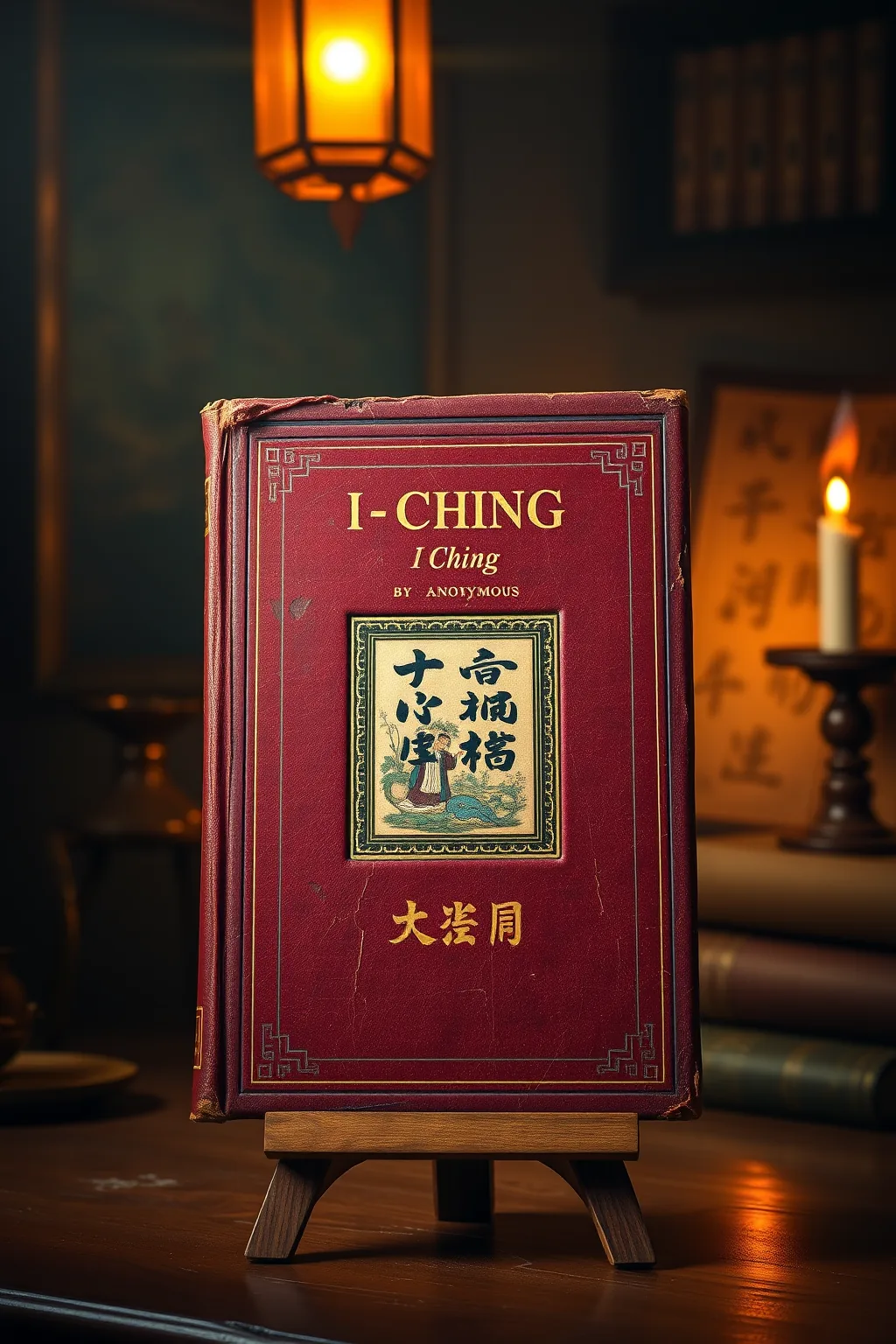
 61
61

I Ching



Silas Hawthorne (Hermetic Studies Editor): The I Ching stands as a colossus in the realm of divination, a testament to the enduring power of ancient wisdom. Esoteric Library is honored to present this seminal work, which transcends simple fortune-telling to offer profound philosophical and spiritual guidance. Its intricate symbolism and cyclical philosophy resonate deeply with hermetic principles, providing practitioners with a powerful framework for understanding destiny and agency. For the dedicated seeker of hidden knowledge and the scholar of comparative mysticism, the I Ching is an indispensable compendium. Its enduring relevance lies in its ability to illuminate the universal laws governing change, offering clarity and insight into life's most complex challenges. A truly essential text.
📝 Description
61
The I Ching, dating back to the Zhou Dynasty, is an ancient Chinese text on divination and philosophy.
The I Ching, or Book of Changes, presents sixty-four hexagrams, each a symbolic representation of different states and situations. These hexagrams are formed by combining eight trigrams, which themselves are composed of three lines, either solid (yang) or broken (yin). The text interprets these combinations, offering guidance on how to act in accordance with the natural flow of events. It functions as a guide for understanding change, offering advice on navigating specific circumstances by aligning oneself with the Tao, the fundamental principle of the universe.
Beyond its use as an oracle, the I Ching is a philosophical work concerned with moral cultivation and the relationship between humanity, heaven, and earth. Its archaic language and symbolic imagery encourage deep thought. The book's structure and interpretations aim to help individuals make decisions and understand their place within the larger cosmic order. It addresses concepts like timing, adaptation, and the interconnectedness of all things.
The I Ching is a cornerstone of Chinese esoteric traditions, deeply influencing Taoism, Confucianism, and various folk religions. It is considered one of the oldest Chinese classical texts, predating much of what we understand as classical Chinese philosophy and spirituality. Its system of hexagrams and their interpretations forms a framework for understanding cosmic patterns and human affairs, suggesting that events unfold according to predictable, albeit complex, cycles. This perspective aligns with broader esoteric concepts of universal order and the human capacity to perceive and act in accordance with it.
💡 Why Read This Book?
Embark on a profound journey of self-understanding and cosmic connection. The I Ching offers timeless wisdom for navigating life's inevitable changes, providing clarity for decision-making and fostering a deeper connection to universal patterns. Ideal for spiritual seekers, students of ancient philosophies, and practitioners of divination seeking a foundational text for insightful guidance. Unlock the secrets of balance, timing, and harmonious action.
⭐ Reader Reviews
Honest opinions from readers who have explored this book.
❓ Frequently Asked Questions
What is the I Ching?
The I Ching, or 'Book of Changes,' is an ancient Chinese text used for divination and philosophical contemplation. It comprises sixty-four hexagrams, each representing a fundamental situation or archetype, offering guidance on navigating life's challenges.
How is the I Ching used for divination?
Divination typically involves casting coins or yarrow stalks to generate a hexagram, which is then interpreted using the text's commentaries and imagery to gain insight into a specific question or situation.
Is the I Ching only for divination?
No, while renowned for its divinatory aspects, the I Ching is also a profound philosophical work exploring concepts of change, balance, and the Tao. It serves as a guide for ethical conduct and understanding the natural order of the universe.
What does 'hexagram' mean?
A hexagram is a symbol composed of six stacked horizontal lines. Each line can be either solid (representing Yang, active energy) or broken (representing Yin, receptive energy), creating sixty-four unique combinations.
Who is the intended audience for the I Ching?
The I Ching is for anyone seeking deeper wisdom, self-understanding, and guidance in life. It appeals to scholars, philosophers, spiritual seekers, and practitioners of various divination systems.
🔮 Key Themes & Symbolism
The Great Cycle of Change
Fundamentally, the I Ching illuminates the immutable principle of change that governs all existence. It teaches that nothing is static; life is a continuous flux of creation, development, dissolution, and renewal. Understanding this cyclical nature allows one to embrace transformation, adapt to shifting circumstances, and find stability within impermanence. This theme emphasizes the dynamic interplay of Yin and Yang energies, the constant dance of opposing forces that propel the universe forward and dictates the rhythm of all phenomena, from the grand cosmic movements to the minutiae of individual lives. It is a profound lesson in accepting the inevitable flow of time and events, fostering resilience and wisdom.
Harmony and Balance (The Tao)
The I Ching is deeply intertwined with the concept of the Tao, the ultimate, ineffable principle that underlies and governs the universe. It guides the reader towards achieving harmony and balance in all aspects of life, advocating for moderation, right action, and alignment with natural principles. This involves understanding the complementary nature of Yin and Yang, the feminine and masculine, the passive and active, and how their interplay creates equilibrium. Practicing the wisdom of the I Ching means striving for a balanced approach, avoiding extremes, and acting in accordance with the opportune moment, thereby fostering inner peace and effective engagement with the external world.
The Oracle of Timely Action
Beyond mere prophecy, the I Ching functions as a sophisticated oracle, providing guidance on the most auspicious timing and approach for any given situation. It emphasizes the critical importance of 'right action at the right time.' By consulting the hexagrams, individuals can discern the prevailing energies of a moment and understand the most skillful way to act, or when it is wiser to refrain. This proactive engagement with destiny empowers the user to make informed decisions, avoid pitfalls, and align their intentions with the unfolding cosmic forces, leading to more successful and harmonious outcomes in their endeavors.
💬 Memorable Quotes
Direct passages from the work, attributed to the author.
“The soft and the weak conquer the hard and the strong.”
— A paradoxical truth about the power of flexibility and gentleness in overcoming rigid or aggressive opposition.
“When one is aware of his ignorance, he comes nearer to wisdom.”
— Emphasizes that true knowledge begins with the humble recognition of one's own limitations and lack of understanding.
“Success is brought about by the right action at the right time.”
— Underscores the crucial interplay of opportune timing and appropriate conduct as the foundation for achieving desired outcomes.
“To know the enemy and know yourself, you need not fear the result of a hundred battles.”
— A timeless strategic principle of self-awareness and understanding external factors for confident navigation of challenges.
💡 Key Ideas
Editorial paraphrase of the work's core concepts — not direct quotes.
Heaven moves in a determined manner; the superior person strives to be strong and untiring.
This quote highlights the relentless, consistent force of the cosmos, encouraging personal effort and perseverance in emulating this celestial strength.
🌙 Esoteric Significance
Tradition
The I Ching is a foundational text within the broader tradition of Chinese esoteric philosophy and cosmology, deeply intertwined with Taoism and later influencing Neo-Confucianism. It represents a sophisticated system of divination that views the universe as an interconnected network of energies and patterns, accessible through symbolic interpretation. Its esoteric value lies in its ability to reveal the underlying principles of change and causality, offering a method for aligning oneself with the Tao, the natural order of the universe, and thereby achieving harmony and wisdom.
Symbolism
The sixty-four hexagrams, formed by combinations of six Yin (broken) and Yang (solid) lines, are the primary symbolic language of the I Ching. Each hexagram represents a fundamental situation, archetype, or stage of transformation. The trigrams (three-line combinations) within the hexagrams further refine these meanings, referencing elements, directions, family members, and cosmic forces. The imagery and accompanying texts associated with each hexagram provide layered interpretations, inviting deep contemplation and revealing the dynamic interplay of forces at play in any given circumstance.
Modern Relevance
In the modern era, the I Ching remains remarkably relevant as a tool for navigating complexity and uncertainty. Its emphasis on adaptability, understanding cyclical patterns, and making timely, informed decisions resonates powerfully in a rapidly changing world. It offers a profound counterpoint to materialism and linear thinking, encouraging introspection, mindfulness, and a deeper connection to natural rhythms. For those seeking spiritual guidance, philosophical depth, or a sophisticated method of self-reflection, the I Ching provides an enduring source of wisdom and insight.
👥 Who Should Read This Book
The I Ching beckons to a diverse array of seekers. For the absolute beginner, it offers a gentle introduction to ancient wisdom and a practical tool for self-inquiry. Scholars of comparative religion, philosophy, and Eastern thought will find a rich text for academic study and cross-cultural understanding. Spiritual seekers and practitioners of meditation or mindfulness will discover a profound guide for aligning their inner world with universal principles. Divination practitioners and those interested in esoteric traditions will find its system to be both ancient and remarkably effective, offering a sophisticated approach to foresight and guidance.
📜 Historical Context
The I Ching, or 'Book of Changes,' is one of the oldest of the Chinese classic texts, with its origins stretching back to the Western Zhou dynasty (c. 1046–771 BCE), though its compilation and commentary likely evolved over centuries. Initially a divination manual, it absorbed philosophical and cosmological ideas, becoming a central to Chinese thought. Its influence permeated Confucianism and Taoism, shaping Chinese culture, governance, and personal ethics. During the Spring and Autumn period (771–476 BCE) and the Warring States period (475–221 BCE), it was extensively commented upon by scholars, most notably Confucius and his disciples, who imbued it with moral and ethical dimensions. Its transmission to the West in the 19th century introduced a profound mystical and philosophical system to a global audience, influencing thinkers, artists, and spiritual seekers alike.
📔 Journal Prompts
Reflect on a recent situation where change was inevitable. How did the I Ching's principles of adaptability apply?
Consider the interplay of Yin and Yang in your personal life. Where do you see imbalance, and how can you cultivate greater harmony?
What is a decision you are currently facing? Consult the I Ching (if possible) or contemplate its principles for guidance on timely action.
Explore the concept of 'right action at the right time' in relation to a past success or failure. What lessons can be learned?
How can the wisdom of the I Ching help you to better understand and work through the 'flux' of modern life?
🗂️ Glossary
Hexagram
A symbol composed of six stacked lines, each either solid (Yang) or broken (Yin), representing one of the 64 fundamental archetypes or situations described in the I Ching.
Trigram
A symbol composed of three lines, either solid or broken, forming one of the eight basic elemental combinations (e.g., Heaven, Earth, Water, Fire).
Yang
The active, masculine, light, and strong principle in the I Ching, represented by a solid line (—).
Yin
The receptive, feminine, dark, and soft principle in the I Ching, represented by a broken line (--).
Tao
The fundamental, ineffable principle that underlies and governs the universe; the 'Way' or the natural order of things.
This book appears in 3 collections
🔮 Readers Also Liked
Browse all →









More by Anonymous
All books →
![The secrets of black arts!: A key note to witchcraft, devination [sic], omens, forwarnings, apparitions, sorcery, dæmonology, dreams, predictions, visions, and the Devil's legacy to earth mortals, compacts with the Devil! With the most authentic history of Salem witchcraft](/img/thumb/the-secrets-of-black-arts-b-a-key-note-to-witchcraft-devination-sic-omens-forwarnings-apparitions-sorcery-d-monology-dreams-predictions-visions-and-the-devil-s-legacy-to-earth-mortals-compacts-with-th.webp)
From the “Tarot” Collection
View all →








More Free Divination & Tarot Books
View all →