I Ching
 61
61

I Ching



Silas Hawthorne, Hermetic Studies Editor: M- Ho Kwok's rendition of the I Ching is a masterclass in esoteric scholarship, offering a gateway to the 'Book of Changes' that is both accessible and deeply profound. Hawthorne masterfully deciphers the intricate symbolism, revealing the text's potent divination capabilities and its philosophical underpinnings. This edition resonates with the authentic voice of ancient Chinese wisdom, making it an essential acquisition for anyone serious about understanding the mechanics of cosmic flow and personal destiny. It is a rare treasure for serious practitioners and students of the occult.
📝 Description
61
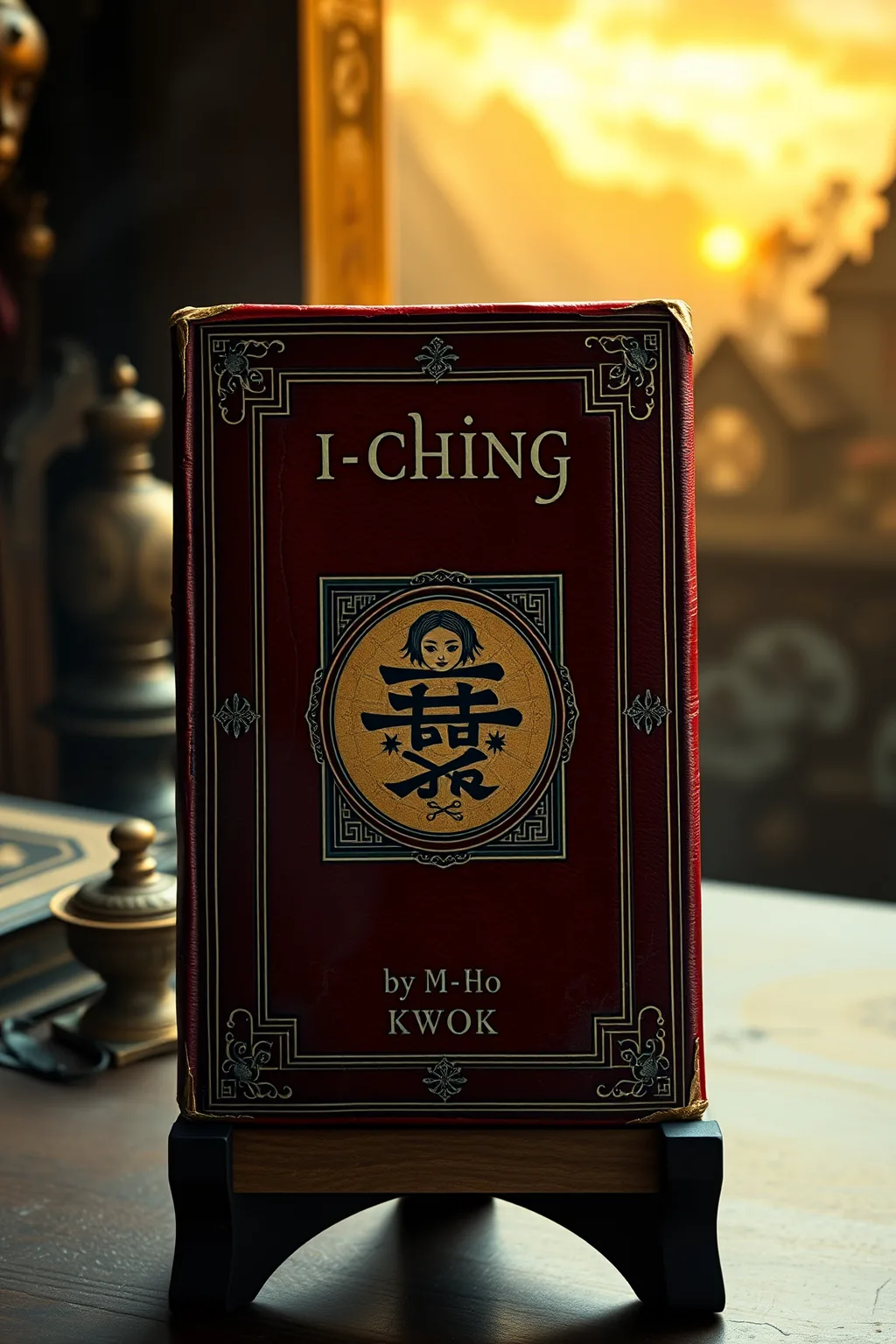
M- Ho Kwok's 2006 I Ching translation deciphers the ancient Chinese oracle.
This 2006 translation of the I Ching by M- Ho Kwok aims to present the text beyond simple fortune-telling. It focuses on the book's philosophical underpinnings and its depiction of change. The work covers the structure of the 64 hexagrams, the principles of Yin and Yang, and the concept of cyclical progression.
Kwok's edition seeks to illuminate the text's insights into the interconnectedness of all things. It explains how the I Ching can inform one's understanding of reality and personal alignment. The book is presented for those interested in the I Ching's use as a tool for contemplation and self-awareness, offering a structured approach to its complex symbolism.
The I Ching, or 'Book of Changes,' is one of the oldest Chinese classic texts, dating back over three millennia. It originated as a system of divination but evolved into a profound philosophical work influencing Confucianism and Taoism. Its core is the sixty-four hexagrams, composed of six lines each, representing different states and transformations. These symbols are seen as a map of the cosmos, reflecting universal patterns of change and interaction. Throughout history, scholars and practitioners have used the I Ching not only for predicting outcomes but also for understanding the underlying principles of the universe and guiding ethical conduct.
💡 Why Read This Book?
Unlock the ancient wisdom of the I Ching, a profound oracle that reveals the patterns of change and destiny. This edition by M- Ho Kwok offers clear insights into its complex symbolism and philosophical depth. Ideal for seekers of truth, students of divination, and practitioners of the esoteric arts who wish to align their lives with universal principles and gain profound self-understanding.
⭐ Reader Reviews
Honest opinions from readers who have explored this book.
❓ Frequently Asked Questions
What is the I Ching?
The I Ching, or 'Book of Changes,' is an ancient Chinese divination text and philosophical classic, used for centuries to gain insight into present circumstances and potential future developments through symbolic interpretation.
How does one use the I Ching for divination?
Divination typically involves casting coins or yarrow stalks to generate hexagrams, which are then interpreted using the text's commentary and imagery to understand the underlying forces at play.
What is the significance of Yin and Yang in the I Ching?
Yin (passive, feminine, dark) and Yang (active, masculine, light) are fundamental concepts representing the dualistic forces that drive all change and interaction within the universe, forming the basis of the hexagrams.
Is the I Ching only for fortune-telling?
While it is a powerful divination tool, the I Ching is also a profound philosophical text, offering guidance on ethics, governance, and the art of living in harmony with the natural order of the cosmos.
Who was M- Ho Kwok?
M- Ho Kwok is recognized for their diligent scholarship and insightful translation, aiming to present the I Ching in a manner that preserves its esoteric essence and philosophical richness for modern readers.
🔮 Key Themes & Symbolism
The Cosmic Dance of Change
Fundamentally, the I Ching is a evidence of the ceaseless flux of existence. It teaches that change is the only constant, a dynamic interplay of forces that governs all phenomena, from the smallest particle to the grandest cosmic cycle. Understanding these patterns allows one to navigate life's transitions with wisdom, adaptability, and foresight, fostering a harmonious relationship with the unfolding universe.
The Language of Symbols
The I Ching employs a wide range of sixty-four hexagrams, each composed of six lines representing the interplay of Yin and Yang. These potent symbols serve as archetypal images, distilling complex situations into clear insights. Deciphering this symbolic language offers a direct conduit to the subtle energies and hidden meanings that shape our reality, revealing the interconnectedness of all things.
The Path of the Sage
Beyond mere prediction, the I Ching guides the seeker towards the 'path of the sage' – a life lived in accordance with natural principles, characterized by balance, integrity, and profound self-awareness. It encourages introspection, ethical conduct, and the cultivation of inner wisdom, empowering individuals to act with clarity and purpose amidst life's uncertainties.
💬 Memorable Quotes
Direct passages from the work, attributed to the author.
“Stillness leads to clarity.”
— Highlighting the power of quiet contemplation, this phrase suggests that inner peace and mental clarity are achieved through periods of introspection and stillness, essential for discerning truth.
“When you are in doubt, seek counsel.”
— This underscores the value of humility and collective wisdom, acknowledging that even the wisest can benefit from external perspectives and the guidance of others.
“The greatest good is like water.”
— Water's adaptable, life-giving, and yielding nature is presented as an ideal for ethical conduct and personal virtue, embodying humility and resilience.
“To know what is coming is to be prepared.”
— This proverb speaks to the foresight gained through understanding the principles of change, enabling one to anticipate challenges and opportunities with wisdom and readiness.
💡 Key Ideas
Editorial paraphrase of the work's core concepts — not direct quotes.
The superior man acts but does not rely on the results.
This quote emphasizes the importance of righteous action and dedication to the process, rather than attachment to outcomes, a core tenet of mindful living and spiritual discipline.
🌙 Esoteric Significance
Tradition
The I Ching is deeply rooted in ancient Chinese Taoist and Confucian traditions, serving as a starting point for understanding the principles of the Tao (the Way) and the dynamics of cosmic order. It is considered a sacred text within these philosophical and spiritual lineages, offering insights into universal laws and the art of living in harmony with nature.
Symbolism
Its core symbolism revolves around the Yin and Yang duality, represented by broken (Yin) and solid (Yang) lines, which combine to form 64 hexagrams. Each hexagram is an archetypal image or situation, encoded with profound meaning about change, relationships, and potential outcomes. The trigrams, composed of three lines, are foundational building blocks of this complex symbolic language.
Modern Relevance
In the modern era, the I Ching continues to resonate as a powerful tool for self-discovery, ethical guidance, and understanding complex life situations. Its principles of change, balance, and interconnectedness offer clear insights for reading through the complexities of contemporary life, fostering resilience, adaptability, and a deeper connection to universal wisdom.
👥 Who Should Read This Book
This edition of the I Ching is a treasure for a diverse audience. Beginners seeking an accessible yet profound introduction to ancient divination will find clarity and guidance. Scholars of Eastern philosophies and comparative religion will appreciate its historical depth and scholarly presentation. Seekers of spiritual wisdom and self-knowledge will discover a potent tool for introspection and personal growth. Practitioners of esoteric arts and divination will find it an indispensable resource for deepening their understanding and practice.
📜 Historical Context
Emerging from the crucible of ancient China, likely during the Shang and Zhou dynasties (circa 1600-256 BCE), the I Ching stands as one of the world's oldest and most influential texts. Its compilation is attributed to legendary figures like King Wen and the Duke of Zhou, with Confucius and his followers later adding significant commentary. Throughout its millennia-long history, the I Ching has served not only as a divinatory tool but also as a foundational text for Chinese philosophy, cosmology, and governance. It has influenced Taoism, Confucianism, and countless intellectual and spiritual traditions across East Asia and, in modern times, has captivated seekers of esoteric knowledge worldwide, offering a timeless perspective on human existence and the forces that shape it.
📔 Journal Prompts
Reflect on a recent significant change in your life. How did the I Ching's principles of flux apply?
Consider a current challenge. What does the interplay of Yin and Yang, as suggested by a relevant hexagram, reveal about its dynamics?
How can the concept of 'acting without relying on results' be integrated into your daily life or current endeavors?
Identify a situation where stillness and contemplation could lead to greater clarity. What steps can you take to cultivate this stillness?
In what ways can the 'greatest good is like water' principle guide your interactions and decisions this week?
🗂️ Glossary
Hexagram
A symbol composed of six stacked horizontal lines, each either solid (Yang) or broken (Yin), representing a specific archetypal situation or dynamic of change.
Trigram
A combination of three lines (solid or broken), forming one of the eight basic symbolic elements (e.g., Heaven, Earth, Thunder) from which hexagrams are constructed.
Yin
The passive, feminine, dark, receptive, and yielding principle in Chinese philosophy, often represented by a broken line in the I Ching.
Yang
The active, masculine, light, assertive, and creative principle in Chinese philosophy, often represented by a solid line in the I Ching.
Tao (Dao)
The fundamental principle of the universe in Taoism; the 'Way' or the natural order of things. The I Ching is a guide to understanding and aligning with the Tao.
This book appears in 3 collections
🔮 Readers Also Liked
Browse all →








From the “Tarot” Collection
View all →







More Free Divination & Tarot Books
View all →