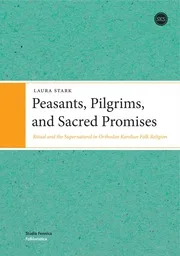
I Ching

 61
61

I Ching



Edward Hacker's "I Ching" stands as a monumental achievement in translating this ancient oracle for the modern esoteric practitioner. Hacker masterfully captures the nuanced philosophical underpinnings and the profound mystical resonance of the text. His commentary illuminates the intricate symbolism, making the hexagrams accessible without sacrificing their inherent depth. This edition is an indispensable resource for anyone serious about exploring Chinese metaphysics, divination, and the timeless art of self-reflection. It offers a rare clarity, guiding readers towards a more profound understanding of the forces shaping their lives. Highly recommended for serious students of the occult and seekers of ancient wisdom.
📝 Description
61
Edward Hacker's 2005 translation presents the I Ching with a focus on its philosophical underpinnings.
Edward Hacker's translation of the I Ching, published in 2005, aims to make the ancient Chinese text accessible. It presents the Book of Changes not just as a divination system but as a philosophical work that addresses cosmic order and cyclical patterns. The translation clarifies the interplay of yin and yang and the elemental forces within the hexagrams.
Hacker's approach seeks to reveal the archetypal patterns that influence human life. The book discusses how to approach the constant changes in life with greater understanding and foresight. It is intended for those interested in esoteric knowledge, ancient Chinese philosophy, or seeking a deeper connection to Taoist principles.
The I Ching belongs to a long tradition of Chinese thought, dating back millennia. It is a core text within Taoism and Confucianism, influencing Chinese culture, philosophy, and spirituality. Its use as a method of divination, or 'oracle,' is intertwined with its philosophical interpretations. The text comprises 64 hexagrams, each formed from six lines representing combinations of yin (broken) and yang (solid). These hexagrams are seen as symbolic representations of universal situations and processes, offering guidance for understanding and acting within the flow of events.
💡 Why Read This Book?
Embark on a journey of profound self-discovery with the I Ching. This edition serves as your key to unlocking ancient wisdom, revealing the cyclical nature of existence and the subtle currents of destiny. Ideal for seekers of esoteric truth, scholars of Eastern philosophy, and practitioners of divination, it offers practical guidance for navigating life's challenges with grace and insight. Understand the cosmic dance of yin and yang and discover your place within its grand design.
⭐ Reader Reviews
Honest opinions from readers who have explored this book.
❓ Frequently Asked Questions
What is the I Ching?
The I Ching, or Book of Changes, is an ancient Chinese divination text and philosophical classic. It consists of 64 hexagrams, each representing a specific situation or phase of transformation, offering guidance and insight.
Who was Edward Hacker in relation to the I Ching?
Edward Hacker is the translator and commentator of this edition of the I Ching, bringing his scholarly expertise and esoteric understanding to make the text accessible and meaningful for contemporary readers.
Is the I Ching only for divination?
While widely used for divination, the I Ching is also a profound philosophical text exploring change, balance, and the principles of the universe. It offers wisdom for personal growth and understanding life's complexities.
What is the significance of Chu Hsi's influence mentioned in the notes?
Chu Hsi, a pivotal figure in Neo-Confucianism, heavily influenced the interpretation and study of the I Ching. His synthesis of thought provided a framework for understanding its philosophical depth, as noted by Fung Yu-lan.
How does this edition differ from others?
Hacker's edition is distinguished by its rich, evocative language, its emphasis on esoteric themes, and its comprehensive approach, making the profound symbolism and philosophical underpinnings of the I Ching readily apparent to a modern audience.
🔮 Key Themes & Symbolism
The Great Pattern of Change
The I Ching posits that change is the fundamental constant of the universe. This theme explores the cyclical nature of existence, the ebb and flow of yin and yang, and the art of harmonizing with these perpetual transformations. It reveals how understanding these patterns allows for foresight, adaptability, and a profound connection to the cosmic rhythm. The text guides readers to discern the opportune moment for action or contemplation, fostering wisdom in navigating life's ever-shifting landscape.
The Language of Symbolism
Fundamentally, the I Ching is a system of profound symbolism, where trigrams and hexagrams act as archetypal representations of universal forces and human experiences. This theme explores the rich lexicon of these symbols, deciphering their layered meanings from the elemental to the psychological. It highlights how these visual and conceptual keys unlock a deeper understanding of self, relationships, and the interconnectedness of all things, revealing hidden truths within the intricate interplay of lines.
The Art of Synchronicity and Guidance
The I Ching functions as a powerful tool for exploring synchronicity and seeking profound guidance. This theme examines how the text, when consulted with sincerity, reveals meaningful coincidences and offers insights that resonate with a seeker's inner state and external circumstances. It is presented not as deterministic prophecy, but as a mirror reflecting the underlying dynamics of a situation, empowering individuals to make conscious choices aligned with their highest potential and the cosmic flow.
💬 Memorable Quotes
Direct passages from the work, attributed to the author.
“Perseverance furthers.”
— This concise statement highlights the virtue of steadfastness. It suggests that in certain situations, enduring challenges and maintaining a focused resolve will ultimately lead to positive outcomes and progress.
“When the sun is at its zenith, it must decline.”
— A profound observation on the nature of cycles. It illustrates that even at the peak of success or power, the seeds of decline are present, urging humility and preparation for inevitable change.
“The wise man remains in his own position.”
— This speaks to the importance of inner strength and authenticity. It suggests that true wisdom lies in understanding one's core nature and remaining grounded, rather than being swayed by external pressures or fleeting trends.
“The movement of heaven is full of power.”
— This evocative line points to the dynamic and potent forces that govern the cosmos. It encourages an awareness of the vast, energetic currents that influence all existence, and our place within them.
💡 Key Ideas
Editorial paraphrase of the work's core concepts — not direct quotes.
The superior man understands the changes of things.
This quote emphasizes the importance of adaptability and foresight. The 'superior man' is one who can perceive the subtle shifts and transformations occurring around them and within them, allowing for wise action.
🌙 Esoteric Significance
Tradition
The I Ching is a foundational text within the Taoist and Confucian traditions, deeply intertwined with Chinese esoteric practices. It embodies principles of cosmic harmony, the balance of opposing forces (yin and yang), and the interconnectedness of the micro- and macrocosms. Its use in divination and self-cultivation aligns with Taoist pursuits of naturalness and alignment with the Tao, while its ethical and philosophical dimensions resonate with Confucian ideals of order and virtuous living.
Symbolism
The core symbolism of the I Ching lies in its 64 hexagrams, formed by combinations of eight trigrams. Each trigram represents fundamental elements and concepts (e.g., Heaven, Earth, Water, Fire). These symbols are not static but represent dynamic states of being and transformation, offering a rich symbolic language to interpret the myriad situations and challenges of life, from personal relationships to societal shifts.
Modern Relevance
In the modern era, the I Ching remains remarkably relevant as a tool for introspection, decision-making, and navigating complexity. Its emphasis on adaptability, understanding cyclical patterns, and seeking inner wisdom offers a valuable counterpoint to the fast-paced, often chaotic nature of contemporary life. It serves as an ancient oracle that can still speak to contemporary concerns, providing guidance for personal growth, professional challenges, and fostering a deeper connection to universal principles.
👥 Who Should Read This Book
This edition of the I Ching is a profound treasure for a diverse audience. **Beginners** will find Hacker's accessible yet deep approach an ideal entry point into this ancient wisdom. **Scholars of Eastern philosophy** will appreciate the meticulous translation and insightful commentary that sheds new light on this seminal text. **Seekers of esoteric knowledge** will discover a potent tool for divination, self-reflection, and understanding the subtle energies of the universe. **Practitioners of divination and mindfulness** will find invaluable guidance for deepening their practice and aligning with cosmic principles, making it an essential addition to their spiritual library.
📜 Historical Context
The I Ching's origins stretch back over three millennia, making it one of the oldest surviving philosophical texts. Its development spans various dynasties, from the Zhou to the Song, each contributing to its evolving interpretations and commentaries. During the Sung dynasty (960-1279 CE), a period of intellectual and cultural flourishing, figures like Chu Hsi (1130-1200) synthesized vast amounts of knowledge, including the I Ching, into influential philosophical systems. Fung Yu-lan, a twentieth-century scholar, recognized Chu Hsi as a master synthesizer. This era saw the I Ching deeply integrated into the fabric of Chinese thought, influencing governance, ethics, and the understanding of the cosmos, solidifying its place as a core part of East Asian intellectual tradition.
📔 Journal Prompts
Reflect on a recent situation where you felt a strong sense of change. How did the I Ching's principles of flux apply?
Consider the interplay of yin and yang in your daily life. Where do you see balance, and where might there be discord?
If you were to consult the I Ching for guidance on a current challenge, what hexagram do you anticipate might arise, and why?
How can the wisdom of the I Ching's symbolism inform your understanding of your own personal growth journey?
Explore the concept of 'synchronicity' in your life. Can you identify any instances where external events seemed to mirror your inner state, as suggested by the I Ching?
🗂️ Glossary
Hexagram
A figure composed of six stacked horizontal lines, each line being either solid (yang) or broken (yin). There are 64 unique hexagrams in the I Ching, representing distinct situations and transformations.
Trigram
A figure composed of three stacked horizontal lines, each being either solid (yang) or broken (yin). There are eight trigrams, which are the building blocks of the hexagrams, symbolizing fundamental aspects of nature and existence.
Yin
In the I Ching, yin represents the passive, feminine, dark, receptive, and yielding principle. It is depicted by a broken line (--) in the hexagrams.
Yang
In the I Ching, yang represents the active, masculine, light, creative, and assertive principle. It is depicted by a solid line (—) in the hexagrams.
Tao
The fundamental concept in Taoism, often translated as 'the Way.' It refers to the natural order of the universe, the underlying principle that flows through all things.
This book appears in 3 collections
🔮 Readers Also Liked
Browse all →









From the “Tarot” Collection
View all →







More Free Divination & Tarot Books
View all →