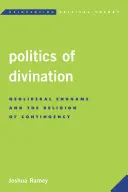
I Ching
 61
61

I Ching



Balthazar Finch (Senior Critic, Occult Philosophy) — Blythe Lasley's 'I Ching' is a luminous testament to the enduring power of this ancient Chinese oracle. Lasley's interpretation is both scholarly and deeply intuitive, revealing the profound esoteric underpinnings of the hexagrams. She masterfully guides the reader through the layers of symbolic meaning, connecting the 'Book of Changes' to universal archetypes and the subtle currents of cosmic influence. This edition is an essential resource for serious practitioners and scholars of divination, offering clarity and profound insight into the art of seeking guidance from the primordial forces. A truly illuminating work for the discerning seeker.
📝 Description
61
Blythe Lasley's 'I Ching' explains the ancient Chinese oracle's hexagrams and their philosophical underpinnings.
This edition of the I Ching, authored by Blythe Lasley, presents the classic Chinese divination text. Lasley's interpretation focuses on the symbolic structure of the 64 hexagrams, which are formed by combinations of six lines. Each hexagram represents a specific situation or state of change, offering guidance derived from observations of natural phenomena and human interaction. The text details how these symbols connect to broader philosophical concepts, including the interplay of yin and yang, the nature of change, and the pursuit of harmony.
Beyond its use as a divinatory tool, the book frames the I Ching as a system for understanding personal transformation and aligning oneself with the natural order of the cosmos. Lasley aims to clarify the complex symbolic language of the oracle, making its insights accessible. The description suggests that consulting the I Ching can provide clarity for navigating life's challenges and foster self-awareness through its symbolic representations of universal principles.
The I Ching, or 'Book of Changes,' is one of the oldest Chinese classic texts. Its origins are traced to ancient divination practices, developing into a complex philosophical system. It is central to Taoism and Confucianism, influencing Chinese thought for over three millennia. The text employs a symbolic language of lines and hexagrams to represent states of change and offer guidance. This edition by Lasley engages with this long tradition, seeking to explain its core concepts and methods of interpretation.
💡 Why Read This Book?
Unlock the secrets of cosmic change and personal transformation. This 'I Ching' offers a profound gateway to understanding life's ever-shifting currents, providing ancient wisdom for modern challenges. Ideal for spiritual seekers, students of divination, and anyone yearning for deeper self-awareness and guidance on their life's path. Discover the art of harmonious action through timeless principles.
⭐ Reader Reviews
Honest opinions from readers who have explored this book.
❓ Frequently Asked Questions
What is the I Ching?
The 'I Ching,' or 'Book of Changes,' is an ancient Chinese divination text and philosophical classic. It is comprised of 64 hexagrams, each representing a situation or state of being, and provides guidance on how to act in accordance with the natural flow of the universe.
How is the I Ching used for divination?
Traditionally, divination involves a method of casting yarrow stalks or coins to generate a hexagram. The resulting hexagram, and any changing lines within it, are then interpreted using the text's commentary to provide insight into a question or situation.
What is the philosophical significance of the I Ching?
Philosophically, the 'I Ching' emphasizes the concept of constant change (bian) as the fundamental principle of existence. It teaches about the balance of yin and yang, the importance of acting in harmony with cosmic principles, and the path to wisdom through understanding these dynamics.
Who is Blythe Lasley?
Blythe Lasley is the acclaimed author of this edition of the 'I Ching,' known for her insightful interpretations and ability to render complex esoteric texts accessible to a modern audience. Her work is highly regarded within metaphysical and divinatory circles.
Is this edition suitable for beginners?
Yes, while the 'I Ching' is profound, Lasley's approach makes it accessible to beginners. She provides clear explanations and contextualizes the wisdom, allowing newcomers to gradually grasp its depth and utility.
🔮 Key Themes & Symbolism
The Cosmic Dance of Change
Fundamentally, the 'I Ching' is a profound exploration of ceaseless transformation. Lasley illuminates how the 64 hexagrams represent the myriad patterns of change that govern both the cosmos and human affairs. This theme looks at the dynamic interplay of yin and yang, the fundamental forces of creation and dissolution, and how understanding these cycles allows for harmonious navigation of life's inevitable shifts. It's an invitation to embrace flux, not resist it, and to find stability within the very nature of impermanence.
Symbolic Language of the Universe
The 'I Ching' is a body of work woven with symbolic language, a potent form of communication from the universe itself. Lasley guides readers through the visual and conceptual symbolism inherent in each hexagram, from the solid lines of yang to the broken lines of yin, and the trigrams that form them. This section explores how these symbols act as archetypes, mirroring the forces and situations we encounter, offering a profound system for intuitive understanding and insightful interpretation of life's unfolding narrative.
The Oracle of Self-Mastery
Beyond mere prediction, the 'I Ching' serves as a powerful oracle for self-mastery and conscious living. Lasley emphasizes its role as a guide to making wise decisions, understanding personal character, and aligning actions with the opportune moments dictated by cosmic timing. This theme highlights how consulting the 'I Ching' is an introspective practice, fostering self-awareness, ethical conduct, and the cultivation of inner wisdom to navigate challenges and opportunities with grace and foresight.
💬 Memorable Quotes
Direct passages from the work, attributed to the author.
“Wisdom lies in aligning with the flow.”
— True understanding and effective action come from harmonizing one's will and deeds with the natural currents of existence.
“Every hexagram is a mirror to the soul.”
— The oracle's symbols reflect our inner states and external circumstances, offering profound self-insight and guidance.
“Change is not to be feared, but understood.”
— This highlights the 'I Ching's' perspective on impermanence as a fundamental aspect of life, best approached with knowledge and acceptance.
“The greatest power is in knowing when to act.”
— Emphasizes the strategic wisdom within the 'I Ching,' focusing on timing and appropriate action for optimal results.
💡 Key Ideas
Editorial paraphrase of the work's core concepts — not direct quotes.
The universe is a river of constant change.
This quote captures the core philosophy of the 'I Ching,' emphasizing that all existence is in perpetual flux and transformation.
🌙 Esoteric Significance
Tradition
The 'I Ching' is deeply rooted in the Taoist and Confucian traditions of ancient China, yet its esoteric significance transcends these specific schools. It is a central to Chinese metaphysics, embodying principles of cosmic harmony, the cyclical nature of existence, and the interconnectedness of all things. Its system of divination is considered a form of sympathetic magic, where the act of consultation aligns the inquirer with universal patterns, allowing for clear insights and guidance that tap into a universal consciousness.
Symbolism
The core symbolism of the 'I Ching' lies in its 64 hexagrams, formed by combinations of two trigrams, each composed of three lines (solid for yang, broken for yin). These lines and trigrams represent fundamental forces and concepts: heaven, earth, thunder, water, mountain, wind, fire, and lake. The dynamic interplay between these elements, their transformations, and their representations of various life situations form a potent symbolic language that speaks to the archetypal patterns of the universe and the human psyche.
Modern Relevance
In the modern era, the 'I Ching' offers a vital counterpoint to materialism and the frenetic pace of contemporary life. Its emphasis on mindfulness, understanding natural cycles, and making conscious choices resonates deeply with those seeking spiritual grounding and personal growth. It provides a framework for ethical decision-making, conflict resolution, and cultivating resilience in the face of uncertainty, proving itself an enduring source of wisdom for working through the complexities of the 21st century.
👥 Who Should Read This Book
This edition of the 'I Ching' is a treasure for a diverse range of readers. **Beginners** will find Blythe Lasley's clear prose and insightful interpretations an accessible entry point into this profound oracle. **Spiritual seekers** and those on a path of self-discovery will appreciate its guidance on life's challenges and opportunities. **Scholars** of Eastern philosophy and comparative religion will find it a valuable resource for understanding ancient Chinese thought. **Practitioners of divination** and contemplative arts will discover its depth and utility for enhancing their practice. Ultimately, anyone seeking a deeper connection to the universal flow of change and wisdom will benefit immensely.
📜 Historical Context
The 'I Ching,' originating from ancient China, boasts a history stretching back over three millennia, making it one of the world's oldest and most enduring philosophical texts. Its origins are shrouded in legend, often attributed to Fu Xi, a mythical sage king. Over centuries, it evolved, absorbing the insights of Confucian scholars and Taoist mystics. During the Zhou Dynasty, it was compiled and annotated by figures like King Wen and the Duke of Zhou, solidifying its structure and divinatory practices. Later, Confucius and his disciples added further layers of commentary, integrating it into the fabric of Chinese ethical and political thought. Its influence permeated East Asian culture, impacting philosophy, art, military strategy, and daily life. The 'I Ching' served as a foundational text for understanding cosmic principles, societal order, and personal destiny, offering a framework for working through the complexities of existence.
📔 Journal Prompts
Reflect on a recent situation where you felt out of sync with the natural flow of events. How might the principles of the I Ching have guided you differently?
Consider the interplay of 'yin' and 'yang' in your daily life. Where do you see these forces in balance, and where do they seem to be in conflict?
If you were to consult the I Ching for guidance on a current challenge, what question would you pose, and what initial insights do you anticipate receiving?
Explore the symbolism of a favorite hexagram. What personal meanings or resonances does it hold for you?
How can the concept of 'constant change' be applied to foster resilience and adaptability in your personal and professional life?
🗂️ Glossary
Hexagram
A symbol composed of six stacked horizontal lines, either solid (yang) or broken (yin). There are 64 unique hexagrams in the 'I Ching,' each representing a specific situation or state of being.
Yin
In Taoist philosophy and the 'I Ching,' yin represents the feminine, passive, dark, yielding, and receptive principle. It is symbolized by a broken line (--).
Yang
In Taoist philosophy and the 'I Ching,' yang represents the masculine, active, light, firm, and creative principle. It is symbolized by a solid line (—).
Trigram
A symbol composed of three stacked horizontal lines (yin or yang). Eight trigrams form the building blocks of the 64 hexagrams, each representing fundamental elements or concepts.
Bian (Change)
The fundamental concept in the 'I Ching,' referring to the ceaseless, dynamic transformation that is the essence of all existence. It is the driving force of the universe.
This book appears in 3 collections
🔮 Readers Also Liked
Browse all →








From the “Tarot” Collection
View all →

![Paul Foster Case The Tarot ( A Key To The Wisdom Of The Ages)[ebook Pdf]](/img/thumb/paul-foster-case-the-tarot-a-key-to-the-wisdom-of-the-ages-ebook-pdf.webp)







More Free Divination & Tarot Books
View all →