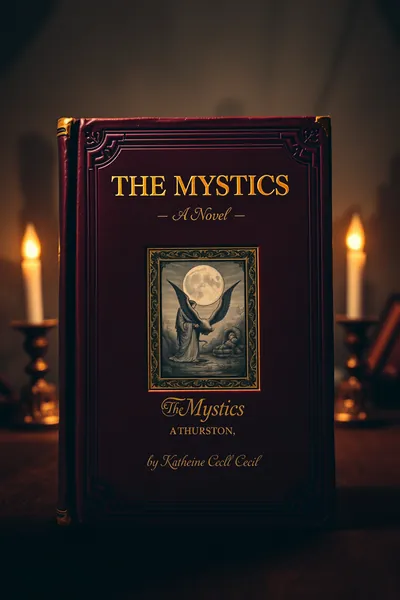
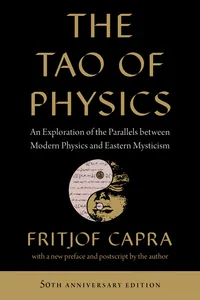
The Tao of Physics

 81
81

The Tao of Physics
Fritjof Capra's "The Tao of Physics" offers a compelling argument for the congruence between quantum physics and Eastern spiritual traditions. The strength of the book lies in its meticulous, almost poetic, detailing of parallels between the language of physics and that of mysticism. Capra's ability to translate complex scientific ideas like the uncertainty principle and the concept of the unified field into accessible metaphors is admirable. However, a notable limitation is the potential for oversimplification; the intricate mathematical and philosophical underpinnings of both physics and mysticism are necessarily condensed, which may leave specialists in either field wanting more rigor. The exploration of the 'cosmic dance' of subatomic particles as a reflection of the interconnectedness found in traditions like Buddhism is particularly memorable. Ultimately, "The Tao of Physics" serves as an important bridge, inviting readers to see the universe through a more integrated lens.
📝 Description
81
Fritjof Capra's 1992 book connects modern physics with Eastern mysticism.
Fritjof Capra's "The Tao of Physics" proposes that the philosophical and spiritual ideas in traditions such as Hinduism, Buddhism, and Taoism strongly resemble quantum mechanics and relativity theories. The book details how descriptions of reality from these older traditions align with 20th-century physics discoveries. It speaks to readers interested in comparing philosophies and the history of science, particularly those looking to bridge scientific thought with spiritual perspectives. Capra builds a case for a unified view of reality that incorporates both empirical findings and contemplative insights. The work is structured around specific conceptual parallels, making its arguments accessible to those with a background in either science or Eastern thought.
Published in the early 1990s, "The Tao of Physics" emerged during a time of increased Western engagement with Eastern thought. It positioned itself within the growing interest in holistic worldviews, often associated with the New Age movement. Capra's work provided a framework to interpret the countercultural and academic fascination with mysticism through the lens of contemporary scientific paradigms. The book suggested that scientific advancements were not displacing ancient spiritual wisdom but were, in fact, corroborating its core tenets, thereby validating a more integrated understanding of existence.
💡 Why Read This Book?
• Gain an understanding of how quantum mechanics, particularly the concept of subatomic particles as dynamic energy patterns, aligns with the Buddhist notion of 'emptiness' (sunyata), as explored in Chapter 4. • Appreciate the 'cosmic dance' metaphor described by Capra, which connects the constant flux of subatomic interactions to the dynamic universe depicted in ancient Hindu cosmology. • Grasp the historical significance of the book's publication in 1975, a period when integrating scientific discovery with Eastern philosophy gained cultural traction.
⭐ Reader Reviews
Honest opinions from readers who have explored this book.
❓ Frequently Asked Questions
When was Fritjof Capra's "The Tao of Physics" first published?
Fritjof Capra's "The Tao of Physics" was first published in 1975, marking a significant moment in the popularization of connections between modern physics and Eastern spirituality.
What primary scientific theories does "The Tao of Physics" relate to Eastern mysticism?
The book primarily relates quantum mechanics (including concepts like wave-particle duality and the uncertainty principle) and Einstein's theory of relativity to Eastern mystical traditions.
Which Eastern traditions are most discussed in "The Tao of Physics"?
The book most extensively discusses Hinduism, Buddhism (particularly Zen and Mahayana), and Taoism, drawing parallels between their philosophical tenets and modern physics.
What is the central metaphor used to describe subatomic particles in the book?
The central metaphor is the 'cosmic dance,' which Capra uses to illustrate the dynamic, energetic, and interconnected nature of subatomic particles as described by quantum field theory.
Is "The Tao of Physics" considered a scientific textbook or a philosophical exploration?
It is best characterized as a philosophical exploration that uses scientific concepts to bridge into spiritual and metaphysical discussions, rather than a rigorous scientific textbook.
What impact did "The Tao of Physics" have upon its release?
Upon its release in 1975, the book had a considerable cultural impact, becoming a bestseller and popularizing the idea that modern physics supported a more holistic, interconnected view of reality akin to Eastern philosophies.
🔮 Key Themes & Symbolism
Quantum Physics and Mystical Parallels
The work meticulously details how quantum mechanics, with its concepts of wave-particle duality, non-locality, and the observer effect, mirrors ideas found in Eastern traditions. Capra argues that the subatomic realm, far from being solid and deterministic, is a dynamic, interconnected 'web of life' or 'cosmic dance.' This perspective challenges the reductionist materialism of classical physics, suggesting that the observer and the observed are intrinsically linked, a concept echoed in Buddhist notions of consciousness and reality.
The Unity of Matter and Energy
A central theme is the unification of matter and energy, as famously expressed by Einstein's E=mc². Capra connects this to the Hindu concept of Brahman as the underlying substance of the universe, from which all phenomena manifest. The idea that particles are not fundamental building blocks but rather excitations of underlying fields aligns with the mystical understanding of a singular, unified source from which the diverse world arises. The book emphasizes that the apparent solidity of matter dissolves at the quantum level.
Holism and Interconnectedness
The book champions a holistic worldview, asserting that the universe is an indivisible whole, and all its parts are interconnected. This resonates strongly with the Taoist principle of the Tao, which describes an all-pervading, interconnected flow. Capra critiques the fragmentation inherent in Western scientific methodology, advocating for a systems view where phenomena can only be understood within their larger context. This interconnectedness is seen as fundamental, a core tenet shared by various mystical paths and increasingly acknowledged in ecological science.
The Limits of Language and Rationality
Capra touches upon the limitations of language and rational thought in describing ultimate reality. He points to the paradoxical nature of quantum phenomena and the ineffable quality of mystical experiences. The use of metaphors and analogies, like the 'cosmic dance' or the 'web of life,' becomes essential to convey these complex ideas. This parallels the emphasis in many Eastern traditions on experiential understanding and the recognition that direct realization often transcends intellectual comprehension.
💬 Memorable Quotes
Direct passages from the work, attributed to the author.
“The cosmic dance of creation and destruction... is the basis of all existence.”
— This phrase captures Capra's central thesis: the universe, at its most fundamental level, is not static but a ceaseless, dynamic process of change and interaction, mirroring the energetic dance of subatomic particles described by physics and the cyclical nature of reality in Eastern thought.
“The observer and the observed are inseparable.”
— This concept, derived from quantum mechanics, suggests that the act of measurement or observation inherently influences the outcome, implying a fundamental interconnectedness between consciousness and the physical world, a notion deeply embedded in many mystical traditions.
“Particles are not fundamental building blocks but patterns of energy.”
— This interpretation of quantum field theory challenges classical notions of matter, proposing instead that subatomic entities are transient manifestations of underlying energy fields, aligning with mystical ideas of reality as an energetic continuum rather than discrete objects.
“The spiritual traditions of the East describe the universe as an inseparable web of relationships.”
— This statement highlights the theme of interconnectedness, suggesting that Eastern philosophies offer a framework for understanding reality not as a collection of independent entities but as a unified system where everything is fundamentally linked.
💡 Key Ideas
Editorial paraphrase of the work's core concepts — not direct quotes.
The universe is seen as a dynamic, flowing entity.
This paraphrase captures the essence of Capra's synthesis, linking the physicist's view of a universe in constant flux to the Taoist concept of the Tao and the Hindu understanding of Brahman as the active principle of creation and existence.
🌙 Esoteric Significance
Tradition
The work draws heavily on Eastern esoteric traditions, primarily Hinduism (Advaita Vedanta), Buddhism (especially Mahayana and Zen), and Taoism. It positions itself as a bridge, interpreting modern scientific findings through the lens of these ancient mystical cosmologies. While not strictly adhering to any single Western esoteric lineage, it shares the Hermetic principle of 'As Above, So Below' by finding macrocosmic parallels in microphysical phenomena and carries the Gnostic search for underlying unity behind manifest reality.
Symbolism
Key symbols include the 'cosmic dance,' representing the ceaseless activity and transformation of subatomic particles, linking to Shiva's Tandava in Hinduism. The 'web of life' or 'net of Indra' symbolizes the interconnectedness and interdependence of all phenomena, a core concept in Mahayana Buddhism and Taoist thought, reflecting a unified reality. The idea of 'emptiness' (sunyata) in Buddhism is used to symbolize the subatomic realm, not as a void, but as a dynamic potentiality from which all forms arise.
Modern Relevance
Capra's work continues to influence contemporary thinkers in fields ranging from systems theory and ecology to consciousness studies and integral philosophy. Authors like Ken Wilber have cited Capra's synthesis as foundational. Today, the book's ideas are relevant to discussions on quantum consciousness, the philosophical implications of quantum physics, and the search for a more holistic and sustainable worldview, particularly within ecological and transpersonal psychology circles.
👥 Who Should Read This Book
• Seekers interested in bridging scientific understanding with spiritual inquiry, who want to explore how quantum physics might align with concepts from Hinduism, Buddhism, and Taoism. • Students of comparative religion and philosophy looking for concrete examples of how different worldviews describe the nature of reality and consciousness. • Individuals drawn to holistic thinking and systems theory, seeking to understand the universe as an interconnected whole rather than a collection of separate parts.
📜 Historical Context
Published in 1975, Fritjof Capra's "The Tao of Physics" emerged during a period of significant cultural and intellectual ferment. The late 1960s and early 1970s saw a surge of interest in Eastern philosophies, meditation, and alternative lifestyles within Western societies, often fueled by the counterculture movement. Simultaneously, physics was grappling with the wide implications of quantum mechanics and relativity, which had shattered the deterministic, mechanistic worldview of classical physics. Capra's work provided a compelling narrative that linked these scientific revelations to ancient spiritual traditions, offering a seemingly harmonious bridge between science and mysticism. This resonated deeply with a generation seeking to reconcile materialist science with spiritual inquiry. While not a direct engagement, the book's reception occurred alongside the continued influence of thinkers like Alan Watts, who had also explored Eastern philosophies for Western audiences. The book's popularity, reaching bestseller status, indicated a widespread desire for such integrative perspectives, positioning it as a key text in the burgeoning New Age movement.
📔 Journal Prompts
The concept of the 'cosmic dance' in relation to the observer effect.
Parallels between the Buddhist notion of 'emptiness' (sunyata) and quantum field theory.
Reflecting on the 'inseparable web of relationships' described in Eastern traditions and modern physics.
The Taoist concept of the 'Tao' as an underlying unity and its connection to physics.
How the idea of energy patterns replacing solid particles challenges materialist assumptions.
🗂️ Glossary
Quantum Mechanics
The branch of physics dealing with the discrete, quantized nature of energy and matter at the atomic and subatomic level. It introduces concepts like wave-particle duality and uncertainty.
Relativity
Einstein's theories concerning the relationship between space, time, gravity, and motion, particularly the equivalence of mass and energy (E=mc²).
Shakti
In Hinduism, the dynamic, creative energy or power that underlies the universe, often personified as a goddess; the active principle of Brahman.
Sunyata
A central concept in Mahayana Buddhism, often translated as 'emptiness' or 'voidness,' referring to the lack of inherent existence or independent self-nature in all phenomena.
Tao
In Taoism, the fundamental principle of the universe, the ineffable, underlying force or way that governs all existence and manifests as the natural order.
Wave-Particle Duality
The quantum mechanical principle that every particle or quantum entity may be described as either a particle or a wave, depending on the experiment.
Observer Effect
In quantum mechanics, the phenomenon where the act of observing or measuring a quantum system inevitably influences its state.
This book appears in 1 collection
🔮 Readers Also Liked
Browse all →






From the “Eastern Mysticism” Collection
View all →







More Free Mysticism & Contemplation Books
View all →