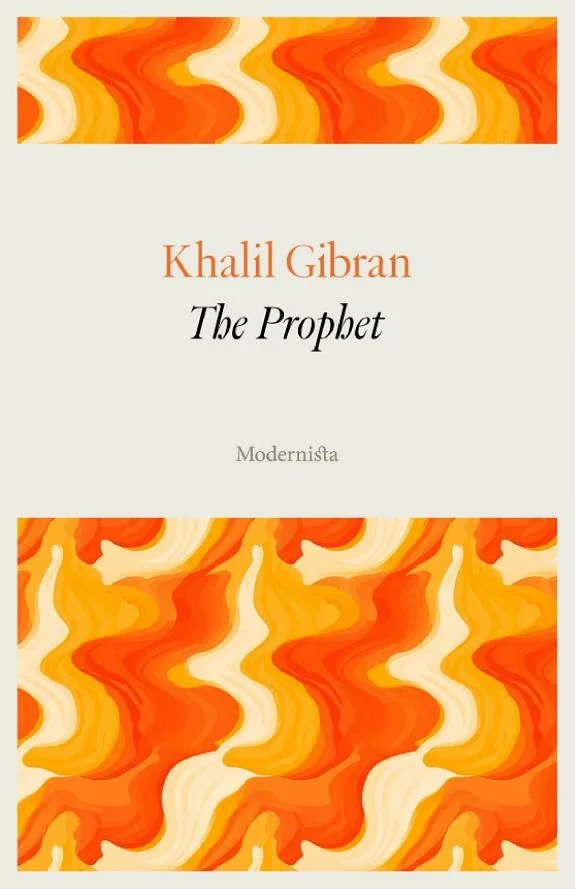
The Prophet
 77
77

The Prophet
Kahlil Gibran’s The Prophet, first presented to the world in 1923, continues to hold a peculiar place in the literary and spiritual landscape. Its enduring popularity is undeniable, yet its very accessibility can sometimes obscure the deeper currents of thought it attempts to convey. Almustafa’s pronouncements on love, for instance, while beautifully phrased, occasionally lean towards aphoristic simplicity rather than nuanced exploration. However, the section on ‘Giving’ offers a more grounded perspective, urging generosity not from pity but from abundance, a concept that resonates with certain Stoic principles of virtuous action. The work’s primary limitation is its lack of specific cultural or historical anchoring, making it feel almost placeless, which, while contributing to its universal appeal, can also render its wisdom abstract. A notable strength is its poetic structure; the rhythmic prose and carefully chosen metaphors elevate what could be mere philosophical tracts into something akin to secular scripture. The Prophet remains a significant text for its lyrical distillation of existential and spiritual questions, even if its answers invite more personal interpretation than definitive understanding.
📝 Description
77
Kahlil Gibran's The Prophet was first published in 1923.
The Prophet is a collection of twenty-six poetic essays spoken by the exiled prophet Almustafa as he prepares to leave the city of Orphalese. These pieces serve as a guide to living, addressing fundamental human experiences with a spiritual and philosophical bent. Gibran uses lyrical prose to reflect on topics such as love, marriage, children, work, joy, sorrow, freedom, and death. The book offers a contemplative perspective on life's universal questions.
This work appeals to readers looking for spiritual insight and philosophical reflection beyond conventional religious frameworks. It is suited for those who appreciate poetic language and allegorical storytelling to convey deep truths. Individuals interested in comparative spirituality, existential ideas, and the connection between poetry and philosophy will find much to consider. It is also for anyone wrestling with core questions about human connection, personal satisfaction, and the essence of existence.
First appearing in 1923, The Prophet emerged during a time of increased interest in spiritual and intellectual currents beyond Western materialism. Gibran, a Lebanese immigrant, connected with this milieu, drawing on Arabic literary traditions and Sufi thought. The book speaks to a desire for a spiritual path that integrates everyday life with deeper meaning, resonating with a broad audience seeking contemplative guidance outside established religious structures.
💡 Why Read This Book?
• Gain a unique perspective on integrating spiritual and everyday life, as Almustafa offers counsel on topics ranging from Work to Marriage, as he prepares to leave Orphalese. • Explore the concept of duality as interconnectedness, learning how Gibran presents seemingly opposing forces like Joy and Sorrow as essential parts of a unified existence. • Understand the power of poetic language in conveying profound philosophical ideas, particularly through Almustafa’s specific discourse on Beauty, which challenges conventional aesthetic appreciation.
⭐ Reader Reviews
Honest opinions from readers who have explored this book.
❓ Frequently Asked Questions
When was Kahlil Gibran's The Prophet first published?
Kahlil Gibran's The Prophet was first published in 1923, making it a significant work of early 20th-century literature.
What is the main setting of The Prophet?
The main setting for The Prophet is the fictional city of Orphalese, where the prophet Almustafa resides before his departure.
Who is the central character in The Prophet?
The central character is Almustafa, a prophet who has lived among the people of Orphalese for twelve years and is preparing to return to his island home.
What are some of the key themes discussed in The Prophet?
Key themes include love, marriage, work, freedom, pain, joy, sorrow, teaching, and death, all explored through Almustafa's poetic discourses.
What is the literary style of The Prophet?
The Prophet is written in a lyrical, poetic prose style, often employing allegory and aphorism to convey its spiritual and philosophical messages.
Is The Prophet considered a religious text?
While deeply spiritual, The Prophet is not tied to any specific organized religion. It offers universal philosophical insights that transcend denominational boundaries.
🔮 Key Themes & Symbolism
The Unity of Opposites
The work consistently presents apparent dualities not as conflicts but as integrated aspects of existence. Gibran, through Almustafa's voice, argues that concepts like Joy and Sorrow, or Reason and Passion, are inseparable. This perspective aligns with certain mystical traditions that seek to reconcile apparent contradictions, viewing them as two sides of a single, greater reality. The text encourages embracing both the light and the shadow within oneself and the world, recognizing their mutual dependence for a complete understanding of life.
The Sacredness of the Ordinary
Almustafa elevates everyday human activities and relationships to a level of spiritual significance. Discussions on Work, Marriage, and even Eating and Drinking are framed not as mundane tasks but as opportunities for profound connection and self-expression. This echoes esoteric philosophies that find the divine immanent in all things, suggesting that spiritual realization is not confined to ascetic practices or abstract contemplation but can be found in the full, conscious engagement with daily life.
Inner Authority and Self-Knowledge
A central tenet is the importance of internal wisdom and personal discovery. Almustafa repeatedly directs his listeners inward, emphasizing self-knowledge as the ultimate teacher. This speaks to Gnostic ideals that prioritize direct, personal gnosis (knowledge) over external dogma. The path to understanding love, freedom, or beauty is presented as a journey of introspection, where true answers lie within the individual’s own being, guided by an inner divine spark.
The Prophet's Role
Almustafa’s position as a prophet, preparing to leave his community, frames the entire work. His final discourses are a form of spiritual legacy, a distillation of wisdom offered freely before his departure. This carries the archetype of the spiritual guide or avatar in various traditions, whose role is to illuminate fundamental truths for humanity. The act of teaching itself is explored, emphasizing that true teaching is not mere transmission of information but the sparking of inner realization in the student.
💬 Memorable Quotes
Direct passages from the work, attributed to the author.
“And what is work but love made visible?”
— This statement reframes labor not as a burden or mere economic necessity, but as an act of devotion and a tangible expression of one's deepest affections and capacities.
“Your children are not your children. They are the sons and daughters of Life’s longing for itself.”
— This challenges possessive notions of parenthood, suggesting children are independent beings with their own life force, entrusted to us temporarily for nurturing.
“And sorrow, what is it but the well from which your understanding springs?”
— This interpretation posits that painful experiences are not merely negative events but are crucial sources of wisdom, depth, and empathy.
“You give but little when you give of your possessions. It is when you give of yourself that you truly give.”
— This emphasizes that true generosity involves offering one's inner being—time, energy, spirit—rather than just material wealth.
“For in the dew of little things the heart finds its morning and is refreshed.”
— This highlights the profound spiritual nourishment available in appreciating the small, seemingly insignificant moments and details of daily existence.
🌙 Esoteric Significance
Tradition
The Prophet draws heavily from a syncretic blend of Sufi mysticism, Christian Gnosticism, and Romantic transcendentalism. While not adhering strictly to any single lineage, it shares with Sufism an emphasis on divine love, the unity of all being, and the direct experience of the divine. Its Gnostic underpinnings are evident in the focus on inner knowledge (gnosis) and the inherent divinity within the individual. The Romantic influence is seen in its exaltation of emotion, nature, and the individual spirit’s quest for meaning.
Symbolism
The central figure of Almustafa, the Prophet, symbolizes the enlightened sage or avatar, a universal messenger delivering profound truths. Orphalese represents the mundane world, the community of souls grappling with existence before their spiritual awakening. The act of departure symbolizes the transition from teaching to the cosmic return, or the integration of wisdom into the fabric of the universe. The very structure of the book, with its distinct discourses, mirrors the unfolding of cosmic principles or stages of spiritual development.
Modern Relevance
The Prophet’s influence persists in contemporary New Age spirituality, self-help literature, and therapeutic practices that emphasize mindfulness, emotional intelligence, and holistic well-being. Thinkers and practitioners in fields like positive psychology and transpersonal psychology often reference Gibran’s accessible philosophy. Its emphasis on integrating spiritual insights into everyday life continues to inform modern approaches to work-life balance, personal growth, and finding meaning in ordinary experiences.
👥 Who Should Read This Book
• Seekers of spiritual wisdom who appreciate poetic expression and philosophical depth, looking for guidance beyond conventional religious doctrines. • Students of comparative religion and philosophy interested in texts that bridge Eastern and Western thought, particularly those exploring themes of unity and self-knowledge. • Individuals undergoing life transitions or grappling with existential questions, seeking reflections on love, work, freedom, and the nature of human experience.
📜 Historical Context
Published in 1923, The Prophet arrived during a period of intense spiritual seeking in the West, fueled by movements like Theosophy and an increased interest in Eastern philosophies. Gibran’s work resonated with this zeitgeist, offering a spiritual perspective that felt both ancient and modern. While rooted in his Lebanese heritage and Arabic literary traditions, his English prose found a vast audience. The book’s philosophical outlook can be seen as a counterpoint to the rising tide of secularism and materialism. Critically, its reception was slow but steady, eventually becoming a global bestseller. Unlike overtly religious texts, Gibran’s work provided a universally accessible spiritual language. Its enduring appeal stands in contrast to the more academic or esoteric spiritual writings of contemporaries like Aleister Crowley or the philosophical inquiries of Bertrand Russell, offering a more poetic and broadly applicable form of wisdom.
📔 Journal Prompts
Almustafa’s discourse on Giving: Reflect on a recent instance where you gave something of yourself, not just your possessions.
The balance of Reason and Passion: How do these two forces manifest in your own life, and how can they be harmonized?
Self-knowledge as the ultimate teacher: What is one truth you have learned about yourself through introspection, separate from external advice?
The meaning of Beauty: Consider Almustafa's perspective; what everyday phenomena reveal a deeper, spiritual beauty to you?
The nature of Children: Reflect on the idea that children are 'sons and daughters of Life’s longing for itself' in your own relationships.
🗂️ Glossary
Almustafa
The central character, a prophet who has lived in Orphalese for twelve years and is preparing to depart, delivering final discourses on life's fundamental aspects.
Orphalese
The fictional city where Almustafa resides and delivers his teachings. It represents the collective human experience and the community seeking wisdom.
Prophet
In the context of the book, not necessarily a religious figure, but one who possesses profound spiritual insight and articulates universal truths about life and existence.
Love
A central theme discussed by Almustafa, encompassing romantic, familial, and universal affection, explored as both a giving and receiving force.
Work
Presented not as toil, but as an expression of love and a vital part of human existence, connecting the individual to the cosmos.
Joy and Sorrow
Discussed as inseparable companions, both essential for the soul's growth and understanding, representing the dualistic nature of experience.
Giving
Explored as an act of abundance and self-expression, where true giving involves offering one's essence rather than mere possessions.
This book appears in 1 collection
🔮 Readers Also Liked
Browse all →








From the “Eastern Mysticism” Collection
View all →







More Free Mysticism & Contemplation Books
View all →