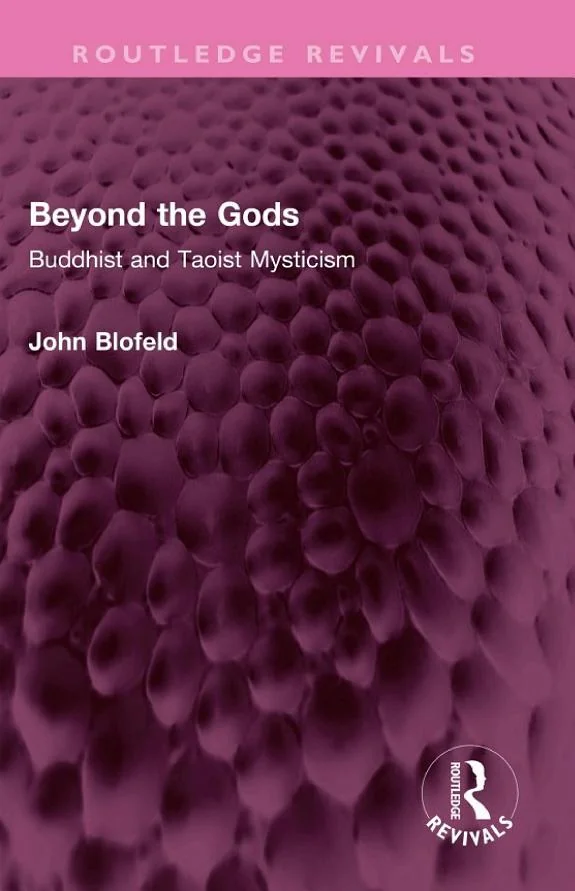
Beyond the Gods
 79
79

Beyond the Gods
John Blofeld's Beyond the Gods offers a rare glimpse into the lived experience of mysticism, moving beyond abstract theology to the grounded reality of monastic life. His approach, rooted in personal encounters with figures in Tibetan and Chinese spiritual traditions, provides a compelling counterpoint to purely academic studies. The vivid descriptions of mountain retreats and encounters with lamas are particularly strong, painting an intimate portrait of devotion. However, the work occasionally suffers from a somewhat dated perspective on Western spiritual needs, reflecting the specific cultural milieu of the 1970s. A notable strength lies in his nuanced discussion of Tantric Buddhism, presented with a clarity that avoids sensationalism. While Blofeld argues persuasively for the universality of mystical experience, the book's structure, while personal, can sometimes feel less like a rigorous argument and more like a collection of observations. Ultimately, Beyond the Gods serves as a valuable, if sometimes idiosyncratic, bridge between Eastern contemplative traditions and Western spiritual seekers.
📝 Description
79
John Blofeld's 1974 book, Beyond the Gods, argues genuine spiritual seekers operate outside organized religion.
Published in 1974, John Blofeld's Beyond the Gods details his personal encounters with mystical traditions. Blofeld suggests that authentic spiritual seekers find common ground beyond the strictures of organized religion, drawing parallels across diverse practices. He observed that Eastern spirituality held growing relevance for the modern Western psyche, which he saw as troubled and disoriented.
Blofeld's account is rooted in direct interactions and his own observations rather than purely academic study. This book is intended for serious students of comparative mysticism and esoteric philosophy who value firsthand accounts. It appeals to those interested in the practical application of spiritual disciplines across cultures, especially those disillusioned with conventional religious frameworks. Readers seeking to understand the connection between Eastern contemplative methods and Western spiritual needs will find value here.
Beyond the Gods emerged during the 1970s, a period marked by significant Western interest in Eastern philosophies and contemplative practices. Blofeld's work aligns with a broader movement that sought spiritual insights beyond traditional Western religious structures. It echoes the interest in Zen and other Eastern traditions seen in figures associated with the Beat Generation and the counterculture. Blofeld's direct engagement with practitioners in their original settings provided an experiential perspective on mysticism, distinguishing it from more abstract Western interpretations of Eastern thought.
💡 Why Read This Book?
• Learn about the practical mystical practices of Taoism and Tibetan Tantric Buddhism through Blofeld's direct observations in their original settings, offering a departure from Western philosophical interpretations. • Understand how Blofeld's 1974 encounters with monks and recluses in China and Tibet illustrate the transcendence of religious boundaries, providing a model for contemporary cross-cultural spiritual dialogue. • Gain insight into the relevance of Eastern mysticism for Western spiritual seekers, as articulated in the book's exploration of Ch'an (Zen) and its potential to address modern anxieties.
⭐ Reader Reviews
Honest opinions from readers who have explored this book.
❓ Frequently Asked Questions
When was John Blofeld's 'Beyond the Gods' originally published?
John Blofeld's 'Beyond the Gods' was originally published in 1974. This edition aims to bring his insights on Eastern mysticism and comparative spirituality to a new generation of readers.
What Eastern spiritual traditions are discussed in 'Beyond the Gods'?
The book specifically discusses the mystical practices of Taoism, Ch'an (Zen) Buddhism, and the Tantric Buddhism of Tibet, drawing on Blofeld's direct encounters.
What is Blofeld's central argument about true mystics?
Blofeld's central argument is that true mystics transcend the limitations of specific religious doctrines, finding common ground and universal truths across diverse spiritual paths.
What kind of experiences does Blofeld draw upon in the book?
Blofeld draws upon his personal experiences and direct encounters with monks, lamas, and recluses in their mountain retreats, offering firsthand accounts of spiritual life.
Does 'Beyond the Gods' offer practical guidance for spiritual practice?
While not a step-by-step manual, the book offers insights into the contemplative methods and philosophical underpinnings of Eastern traditions, which can inform personal practice.
What is the relevance of this book for Western readers?
Blofeld posits that Eastern mysticism holds increasing relevance for the Western world, offering potential solutions and perspectives for troubled minds and spirits seeking deeper meaning.
🔮 Key Themes & Symbolism
Transcending Religious Boundaries
The core thesis of Beyond the Gods is that genuine mystical experience operates independently of, and often in opposition to, organized religious structures. Blofeld illustrates this through his encounters with individuals who embody spiritual realization irrespective of their nominal affiliation. He suggests that the shared essence of spiritual paths is more significant than their doctrinal differences, a concept particularly relevant in a world seeking unity amidst diversity. This theme challenges sectarianism and promotes a universalist understanding of spiritual attainment.
Eastern Mysticism for the West
Blofeld argues that Eastern contemplative traditions offer potent antidotes to the spiritual malaise affecting the West. He highlights the depth and practicality of Taoism, Ch'an, and Tibetan Buddhism as pathways to understanding and inner peace. His personal accounts of these traditions in their original cultural contexts provide a compelling case for their applicability to modern Western concerns, suggesting that ancient wisdom holds keys to contemporary spiritual challenges. The work aims to bridge the perceived gap between Eastern esoteric knowledge and Western psychological needs.
The Value of Direct Experience
A significant aspect of Beyond the Gods is its emphasis on experiential knowledge over theoretical dogma. Blofeld's narrative is built upon his direct interactions with monks, lamas, and hermits in their natural environments. These firsthand accounts lend authenticity and weight to his observations. He prioritizes the wisdom gained through lived spiritual discipline and personal insight, showcasing how true understanding often arises from immersion in practice and communion with nature, rather than solely from textual study.
Chinese Religious Landscape
The book offers a vivid portrayal of the religious scene in China during Blofeld's time of observation. This includes insights into the syncretic nature of Chinese spirituality, where Taoism, Buddhism, and folk traditions often intermingle. By describing the living traditions and the interactions between different spiritual communities, Blofeld provides a nuanced understanding of the cultural and social fabric within which these mystical practices are embedded. This offers a valuable historical and anthropological perspective on the diffusion and adaptation of spiritual ideas.
💬 Memorable Quotes
Direct passages from the work, attributed to the author.
“True mystics transcend religious boundaries.”
— This central tenet suggests that authentic spiritual realization is not confined to any single creed or doctrine. It implies a universal core to spiritual experience that connects seekers across diverse traditions, valuing inner realization over external affiliation.
“Eastern mysticism has increasing relevance for the troubled minds and spirits of the West.”
— Blofeld observes a spiritual void or disorientation in Western society and proposes that the wisdom and practices of Eastern traditions can offer solace, perspective, and a path to inner equilibrium.
“The book is based on encounters with monks, lamas, and recluses in their mountain retreats.”
— This highlights the author's methodology: a personal, experiential approach grounded in direct observation and interaction with practitioners in their authentic environments, rather than solely relying on textual analysis.
“Vivid description of the Chinese religious scene.”
— This points to the book's inclusion of socio-cultural context, detailing the complex interplay of various religious and spiritual practices within Chinese society during the period of Blofeld's research.
“Chapters on the mystical practices of Taoism, Ch’an (Zen) and the Tantric Buddhism of Tibet.”
— These specific mentions indicate the book's focus on key Eastern esoteric traditions, exploring their unique methods and philosophical underpinnings through Blofeld's firsthand observations and understanding.
🌙 Esoteric Significance
Tradition
Blofeld's work is deeply rooted in the comparative study of esoteric traditions, particularly those emanating from the East. While not strictly adhering to a single lineage like Hermeticism or Kabbalah, he bridges these with Taoist, Buddhist (especially Ch'an and Vajrayana), and general mystical concepts. His approach aligns with the perennial philosophy, suggesting an underlying unity in diverse spiritual expressions, and fits within the broader esoteric milieu of the mid-20th century that sought to synthesize Eastern and Western wisdom.
Symbolism
Key symbols explored include the concept of the Tao as the ineffable, underlying principle of reality in Taoism, often understood as the 'Way.' In Buddhist contexts, mandalas and the nature of emptiness (sunyata) in Tantric Buddhism are implicitly explored through descriptions of practice and cosmology. The mountain retreat itself serves as a potent symbol of isolation, aspiration, and the ascent towards spiritual realization, a common motif across various ascetic traditions.
Modern Relevance
Contemporary interest in mindfulness, contemplative practices, and non-dual philosophies shows a direct lineage to the Eastern traditions Blofeld championed. Thinkers and practitioners exploring embodied cognition, transpersonal psychology, and cross-cultural spiritual integration often revisit Blofeld's era and figures like him for foundational insights into bridging Eastern methods with Western psychological frameworks. His emphasis on direct experience continues to inform those seeking authentic spiritual paths beyond dogma.
👥 Who Should Read This Book
• Students of comparative religion and mysticism seeking firsthand accounts of Eastern spiritual practices, moving beyond theoretical analysis to experiential insights. • Western spiritual seekers disillusioned with conventional religious structures who are exploring alternative pathways to meaning and inner peace, particularly those drawn to Eastern philosophies. • Researchers interested in the history of Western engagement with Eastern thought, specifically focusing on the mid-20th century and the personal journeys of Westerners encountering these traditions.
📜 Historical Context
Published in 1974, Beyond the Gods emerged during a period of significant Western engagement with Eastern spirituality, fueled by post-war cultural shifts and figures like Alan Watts and Aldous Huxley. This era saw a growing disillusionment with Western materialism and a search for alternative meaning, making works exploring Zen Buddhism and Taoism particularly resonant. Blofeld's approach, focusing on personal encounters in China and Tibet, offered an alternative to the more academic or philosophical treatments of Eastern thought prevalent at the time. His work engaged with a broader cultural current that also saw the rise of Theosophy and other esoteric movements, though Blofeld's focus remained distinctly on the experiential aspects of these traditions. While not subject to specific censorship, the reception of such works often involved a blend of intense interest from spiritual seekers and skepticism from mainstream academic or religious institutions.
📔 Journal Prompts
The concept of transcending religious boundaries as experienced by Blofeld's informants.
Reflections on the relevance of Taoism for contemporary Western life.
The symbolic significance of mountain retreats for spiritual discipline.
Personal resonance with the idea of Eastern mysticism offering solace for Western spiritual needs.
Encountering Ch'an (Zen) principles in daily life.
🗂️ Glossary
Taoism
An ancient Chinese philosophy and religion emphasizing living in harmony with the Tao, the fundamental principle of the universe. It focuses on naturalness, simplicity, and balance, often involving practices like meditation and qigong.
Ch'an (Zen)
A school of Mahayana Buddhism that originated in China. Ch'an emphasizes direct experience and meditation as the path to enlightenment, often using koans (paradoxical riddles) and mindfulness practices.
Tantric Buddhism
A form of Buddhism, prevalent in Tibet, that utilizes esoteric rituals, visualizations, mantras, and yogic practices to achieve enlightenment. It often involves working with deities and symbolic representations of cosmic forces.
Lama
A title for a teacher of the Dharma in Tibetan Buddhism. Lamas are spiritual guides who have attained a high level of realization and are responsible for instructing disciples.
Recluse
An individual who lives in seclusion, often for religious or spiritual reasons. Recluses typically withdraw from society to pursue contemplation, asceticism, or direct communion with the divine.
Mystic
A person who seeks or claims to have attained direct, intuitive knowledge of or union with ultimate reality or the divine, often through contemplation and spiritual practices.
Esoteric
Intended for or likely to be understood by only a small number of people with a specialized knowledge or interest. In spiritual contexts, it refers to teachings or practices that are hidden or revealed only to initiates.
This book appears in 1 collection
🔮 Readers Also Liked
Browse all →






From the “Eastern Mysticism” Collection
View all →








More Free Mysticism & Contemplation Books
View all →