William Ralph Inge
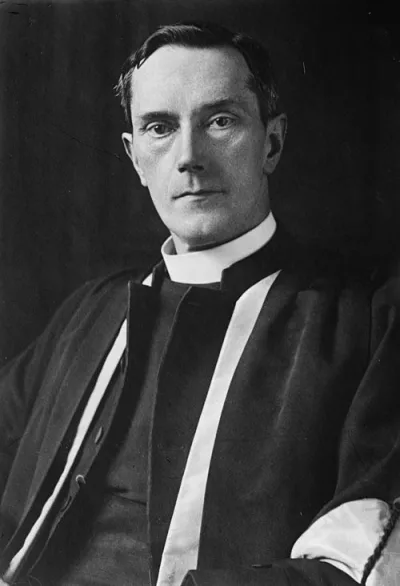
William Ralph Inge was an English author, priest, and academic known for his theological writings and philosophical insights.
William Ralph Inge, born in 1860, was an English author, Anglican priest, and academic who held prominent positions including Professor of Divinity at Cambridge and Dean of St Paul's Cathedral. Though known personally as Ralph, he was widely recognized by his title, Dean Inge. He was nominated for the Nobel Prize in Literature on three occasions. His early life included a rigorous education at Eton College and King's College, Cambridge, where he excelled academically.
Inge's career spanned academia and the Church of England, with teaching roles at Eton and Oxford, and a brief period as a parish vicar. His most significant academic appointments were as Lady Margaret's Professor of Divinity at Cambridge and later as Dean of St Paul's. Beyond his clerical duties, Inge was a prolific writer, contributing numerous articles, lectures, sermons, and over 35 books. He also served as a columnist for the Evening Standard for many years and was a trustee of the National Portrait Gallery. He retired from active ministry in 1934 and passed away in 1954 at the age of 93.
Philosophical and Theological Contributions
William Ralph Inge is primarily recognized for his significant contributions to the understanding of Neoplatonic philosophy and Christian mysticism. His scholarly work often explored the intersection of these traditions, reflecting a deep engagement with thinkers like Plotinus. Inge advocated for a spiritually oriented faith, one that prioritized individual experience and inspiration over institutional authority. This perspective led him to critically examine the Roman Catholic Church. His theological outlook generally synthesized traditional Christian doctrines with Platonic philosophical concepts, aligning him with intellectual currents such as the Cambridge Platonists, notably Benjamin Whichcote, whom he admired.
Social and Political Commentary
Inge was known for his often critical and sometimes pessimistic views on societal trends, earning him the moniker 'The Gloomy Dean.' He expressed skepticism about the notion of inevitable human progress, arguing in his 1920 Romanes Lecture that advancements in knowledge and technology did not necessarily equate to improvements in human nature itself. He also voiced concerns about democracy, warning of its potential to devolve into mob rule and the tyranny of the majority. While critical, he supported parliamentary systems over autocracy and famously described democracy as "the worst form of Government except for all those other forms that have been tried from time to time." Inge also held views on social issues such as population control and eugenics, though he later resigned from the Eugenics Society in protest. He critiqued welfare programs he felt unfairly burdened the successful and supported British Jews against anti-Semitic sentiments.
Key Ideas
- Advocacy for spiritual religion based on individual experience
- Critique of institutional religious authority
- Synthesis of Christian theology and Platonic philosophy
- Skepticism regarding the concept of linear human progress
- Concerns about the potential pitfalls of democracy
- Support for population control and eugenics (initially)
Notable Quotes
“Democracy is a form of government which may be rationally defended, not as being good, but as being less bad than any other.”
“It is contrary to all our traditions... to do what Mr. Belloc wishes us to do—to refuse to forget a man’s racial origins while he lives among us as a good Englishman […] we have enriched our stock by blending it with desirable foreigners of all sorts.”
“It is not their fault that they have been excluded from agriculture and similar pursuits […] It was not by their own choice that they were impounded in Ghettos, or driven to money-lending.”
“we ought to be ashamed of anti-Jewish prejudice”
“The sensible man takes his neighbours as he finds them, and is not too ready to believe in dark conspiracies.”
Books by William Ralph Inge
5 free public domain books · Read online or download