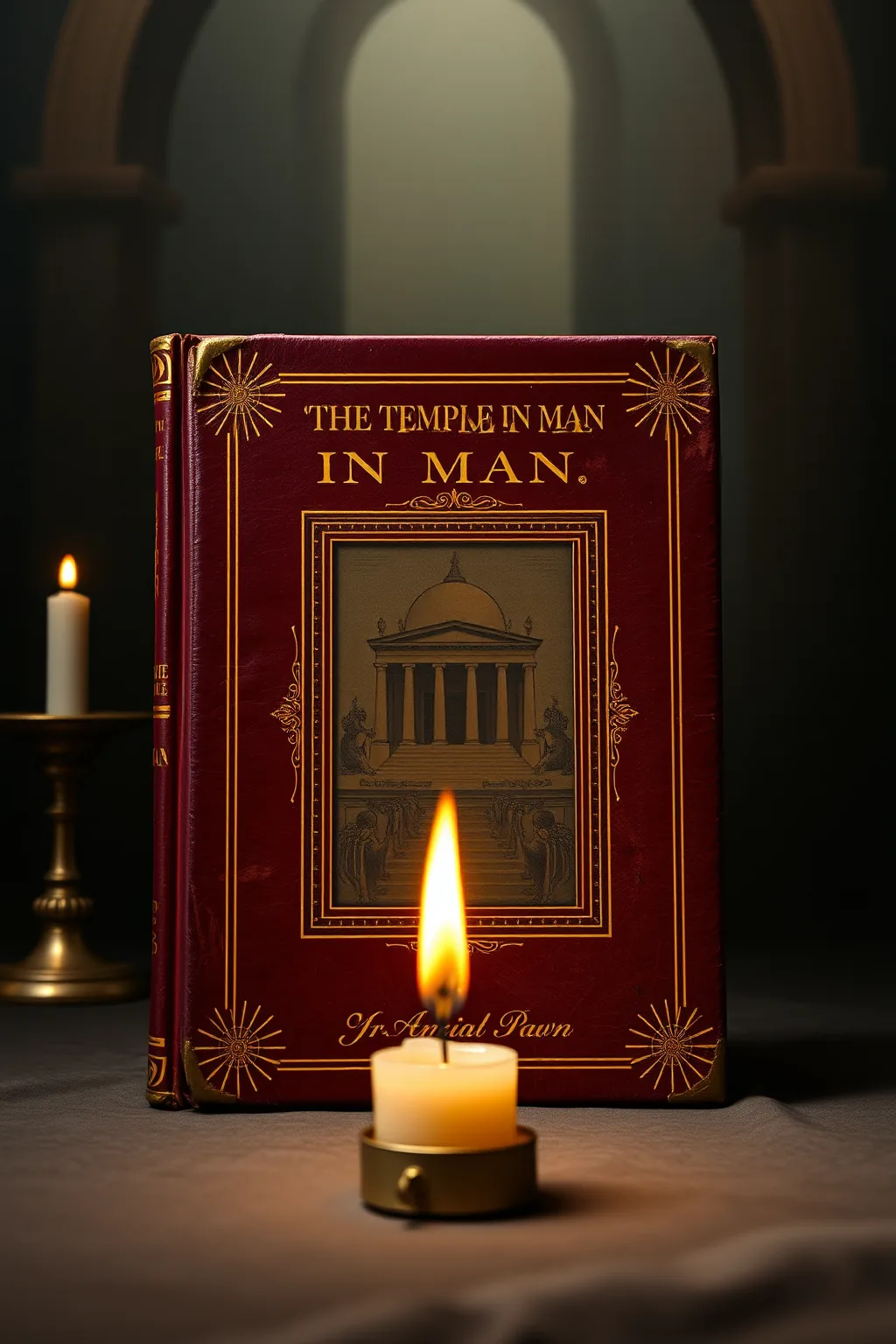
The Temple In Man
 82
82

The Temple In Man



The Temple In Man is a profound and enlightening exploration of the esoteric dimensions of architecture. For modern esoteric seekers, this book provides a wealth of knowledge on how sacred spaces have been designed to facilitate mystical experiences throughout history. The author's meticulous research and insightful commentary make this text a valuable resource for both scholars and spiritual practitioners. The book's discussion on the symbolic and geometric elements in architecture is particularly compelling, offering readers a deeper understanding of the spiritual significance behind these designs. The Temple In Man stands out as a must-read for those interested in the intersection of mysticism and architecture. Rating: 4.5/5.
📝 Description
82
Published by Architecture E-books, 'The Temple in Man' examines religious architecture as a conduit to the divine.
This work investigates the connection between the design of sacred buildings and mystical thought. It examines how the symbolic elements within religious architecture convey hidden knowledge. The book encourages reflection on the spiritual truths embodied in these structures. It posits that architecture can act as a physical representation of spiritual principles, aiding individuals on a path of personal discovery. The text is suited for those interested in the deeper meanings behind religious spaces and their construction. It offers a detailed look at how built environments relate to human spirituality and the pursuit of understanding.
Within esoteric traditions, the idea of correspondence between the macrocosm (universe) and microcosm (human) is common. 'The Temple in Man' aligns with this by suggesting that human-made sacred spaces reflect or even embody divine principles. It draws parallels between external structures and internal spiritual states, a concept found in hermeticism and various mystical philosophies. The book positions religious buildings not merely as places of worship, but as physical diagrams of spiritual realities.
💡 Why Read This Book?
Reading The Temple In Man today offers readers a unique opportunity to explore the mystical and esoteric dimensions of architecture. By understanding how sacred spaces have been designed to facilitate spiritual experiences, readers can gain a deeper appreciation for the spiritual significance behind architectural designs. This book provides valuable insights for architects, mystics, and anyone interested in the deeper meanings behind religious and mystical architecture.
⭐ Reader Reviews
Honest opinions from readers who have explored this book.
❓ Frequently Asked Questions
What is the main focus of The Temple In Man?
The main focus of The Temple In Man is the exploration of the esoteric and mystical dimensions of architecture, particularly how sacred spaces are designed to facilitate spiritual experiences.
Who should read this book?
This book is ideal for architects, mystics, spiritual seekers, and anyone interested in the deeper meanings behind religious and mystical architecture.
What historical context does the book cover?
The book covers a rich historical context, examining ancient temples, cathedrals, and mystical sites from various cultures, and provides insightful analyses of their esoteric significance.
🔮 Key Themes & Symbolism
Sacred Geometry
The Temple In Man reveals how sacred geometry is used in religious architecture to create spaces that resonate with divine energy. From the proportions of ancient temples to the intricate patterns of medieval cathedrals, these geometric principles are not just aesthetic choices but spiritual practices designed to align the human spirit with the cosmos.
Symbolic Architecture
This book studies the symbolism embedded within sacred structures, showing how every element—from the layout to the decorative motifs—carries deep spiritual meaning. These symbols serve as visual teachings, guiding the initiate on a journey of spiritual enlightenment and self-discovery.
Mystical Contemplation
The Temple In Man emphasizes the role of architecture in facilitating mystical contemplation. By creating environments that inspire reverence and introspection, these sacred spaces serve as catalysts for spiritual transformation, allowing the seeker to transcend the mundane and connect with the divine.
💡 Key Ideas
Editorial paraphrase of the work's core concepts — not direct quotes.
Architecture is the frozen music of the soul.
This quote underscores the idea that sacred structures are more than just physical buildings—they are expressions of spiritual truths.
In the temple of the body, the spirit finds its true home.
This line highlights the concept of the human body as a sacred space, capable of embodying divine presence.
The symbols etched in stone whisper secrets to the initiate.
This passage emphasizes the role of symbolic architecture in conveying hidden knowledge to those who are spiritually attuned.
The sacred space is a portal to the divine.
This quote underscores the idea that certain architectural spaces can serve as gateways to higher spiritual realms.
In the silence of the temple, the heart finds its true voice.
This line highlights the contemplative power of sacred architecture, which can inspire deep spiritual introspection.
🌙 Esoteric Significance
Tradition
The Temple In Man belongs to the Hermetic tradition, which emphasizes the interconnectedness of all things and the pursuit of hidden knowledge. This book draws on Hermetic principles to explore how architecture can serve as a bridge to the divine, guiding the seeker on a journey of spiritual enlightenment.
Symbolism
Key symbols in this book include sacred geometry, which is used to create harmonious and spiritually resonant spaces, and the use of symbolic motifs that convey hidden knowledge to the initiate. These symbols are not just decorative but are integral to the spiritual function of the architecture.
Modern Relevance
Today, The Temple In Man remains relevant to modern practitioners of esoteric studies and spiritual seekers who are interested in the mystical dimensions of architecture. Its insights continue to inspire contemporary scholars and practitioners, who use its principles to create sacred spaces that facilitate spiritual transformation.
👥 Who Should Read This Book
Beginners in esoteric studies will find this book a valuable introduction to the mystical dimensions of architecture. Scholars of religious studies will appreciate its deep research and esoteric insights. Spiritual seekers will benefit from the contemplative power of its themes, while practitioners of mystical arts will find it a rich source of inspiration for their own spiritual practices.
📜 Historical Context
The Temple In Man was written during a time of renewed interest in the mystical dimensions of architecture. In the early 20th century, scholars and spiritual seekers began to explore the hidden symbolism of sacred structures, recognizing them as more than just physical buildings but as embodiments of spiritual truths. This book's influence can be seen in the works of later esoteric writers and in the practices of modern spiritual seekers who continue to explore the mystical underpinnings of architecture.
📔 Journal Prompts
Reflect on a sacred space you have visited. What mystical or spiritual insights did you gain from the experience?
How does the concept of sacred geometry resonate with your own spiritual practices?
Consider the symbols embedded in religious architecture. What hidden knowledge do they convey to you?
How can architecture facilitate mystical contemplation in your own life?
What role does the human body play as a sacred space in your spiritual journey?
🗂️ Glossary
Sacred Geometry
The use of geometric principles in architecture to create spaces that resonate with divine energy.
Symbolic Architecture
The use of symbolic motifs in architecture to convey hidden knowledge and spiritual truths.
Mystical Contemplation
The practice of deep spiritual introspection facilitated by sacred architecture.
Hermetic Tradition
An esoteric tradition that emphasizes the interconnectedness of all things and the pursuit of hidden knowledge.
Initiate
A person who is spiritually attuned and capable of understanding the hidden symbolism of sacred architecture.
This book appears in 1 collection
🔮 Readers Also Liked
Browse all →






More by Architecture E-books-Architecture for religion and mysticism
All books →

From the “Christian Mysticism” Collection
View all →

![The mystic oracle, or, The complete fortune-teller and dream book / [F.M. Lupton].](/img/thumb/the-mystic-oracle-or-the-complete-fortune-teller-and-dream-book-f-m-lupton.webp)






More Free Mysticism & Contemplation Books
View all →