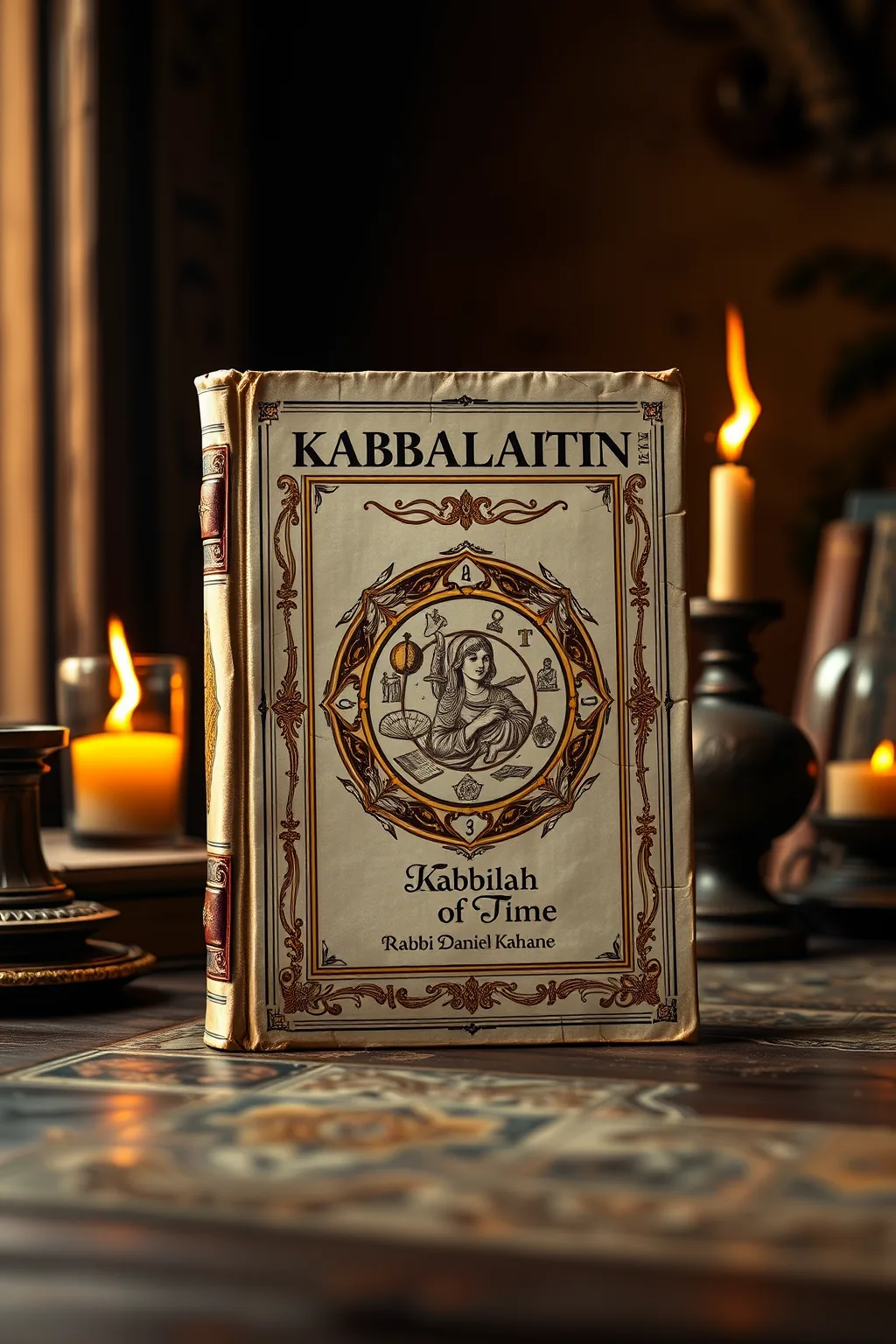
Kabbalah of Time
 61
61

Kabbalah of Time


Rabbi Daniel Kahane's "Kabbalah of Time" is a luminous exposition on the esoteric dimension of the Jewish calendar. Kahane's scholarship shines, making accessible the profound Kabbalistic concepts that imbue each festival and season with cosmic significance. He expertly bridges the gap between astrological observations and the spiritual underpinnings of time, offering readers a unique perspective on divine Providence. This work is essential for anyone seeking to understand the mystical pulse of Jewish tradition and its profound connection to universal cycles. A truly illuminating read for serious students of Kabbalah and celestial wisdom.
📝 Description
61
Rabbi Daniel Kahane's "Kabbalah of Time" explains the Jewish calendar as a spiritual conduit.
Rabbi Daniel Kahane's "Kabbalah of Time" examines the Jewish calendar not just as a sequence of dates, but as a system that channels spiritual energy. The book details how celestial alignments and hidden currents influence our experience of time, drawing on Kabbalistic principles. Kahane shows how this perspective reveals the cyclical nature of creation and the divine energies at play.
Readers will find discussions on the astrological influences that shape human lives within this framework. The work aims to help individuals perceive time as a sacred, unfolding process rather than a simple linear progression. It is intended for those interested in the mystical dimensions of the yearly cycle and the deeper meanings within Jewish tradition.
This work situates itself within the esoteric traditions of Kabbalah, specifically focusing on its temporal and cosmological dimensions. It interprets the observances and structure of the Jewish calendar through a Kabbalistic lens, connecting the cycles of days, months, and festivals to divine emanations and cosmic forces. The book aims to illuminate the hidden spiritual significance of time as understood in Jewish mysticism, moving beyond a purely historical or religious interpretation to one that emphasizes an active, dynamic interplay between the celestial and the human.
💡 Why Read This Book?
Uncover the mystical blueprint of the Jewish year, revealing the hidden spiritual energies and astrological influences that shape our lives. "Kabbalah of Time" transforms your perception of time, offering practical insights for spiritual growth and a deeper connection to the divine. Ideal for seekers of esoteric wisdom, students of Kabbalah, and practitioners of Jewish mysticism.
⭐ Reader Reviews
Honest opinions from readers who have explored this book.
❓ Frequently Asked Questions
What is the primary focus of "Kabbalah of Time"?
The book's primary focus is on the esoteric and Kabbalistic understanding of the Jewish calendar, exploring the spiritual significance and astrological underpinnings of its cycles and festivals.
Is prior knowledge of Kabbalah required to read this book?
While some familiarity with Kabbalistic concepts may enhance the experience, Rabbi Kahane's clear explanations make the material accessible to dedicated beginners eager to explore its depths.
How does the book connect the Jewish calendar to astrology?
It elucidates how the specific timing of Jewish holidays and observances aligns with celestial movements and astrological influences, revealing a divinely orchestrated cosmic rhythm.
What kind of spiritual insights can one gain from this book?
Readers can gain insights into the cyclical nature of creation, the flow of divine energy through time, and methods for aligning personal spiritual practice with cosmic patterns.
Who is the intended audience for "Kabbalah of Time"?
The book is intended for serious students of Kabbalah, Jewish mysticism, those interested in spiritual astrology, and anyone seeking a profound, esoteric understanding of time and its sacred dimensions.
🔮 Key Themes & Symbolism
The Sacred Architecture of Time
This theme explores the Kabbalistic concept of time not as a linear construct, but as a multidimensional spiritual reality. The Jewish calendar becomes a divine map, detailing the ebb and flow of cosmic energies, the appointed times for spiritual communion, and the cyclical renewal of creation. Readers will discover how each day, month, and festival holds specific energetic potentials, offering unique opportunities for spiritual growth, revelation, and connection to the Divine. It emphasizes the inherent sacredness within temporal progression.
Astrology as Divine Revelation
Rabbi Kahane illuminates the intricate relationship between celestial movements and the spiritual unfolding of time within the Kabbalistic framework. The book presents astrology not as mere fortune-telling, but as a language of the Divine, revealing the cosmic influences and divine intentions embedded within the temporal structure. Understanding these celestial alignments allows for a deeper appreciation of the interconnectedness of the macrocosm and microcosm, guiding practitioners toward a more harmonious existence aligned with universal rhythms.
The Kabbalistic Calendar as a Spiritual Conduit
This theme looks at how the Jewish calendar serves as a practical tool for spiritual ascent. Each observance, from Shabbat to the High Holy Days, is presented as a divinely ordained gateway, offering specific teachings and energetic infusions. The book reveals the hidden meanings and mystical practices associated with these times, empowering readers to actively engage with the spiritual currents of the year, fostering personal transformation and a profound sense of divine presence.
💬 Memorable Quotes
Direct passages from the work, attributed to the author.
“Each moment is a gate to eternity.”
— This highlights the Kabbalistic idea that within the present instant lies the potential for experiencing timelessness and profound connection to the divine realm.
“The celestial spheres sing the rhythm of creation.”
— This poetic phrase emphasizes the astrological connection, suggesting that the movements of the stars and planets are not random but a divine symphony dictating the sacred pace of existence.
“The calendar is the breath of the Divine in the world.”
— This conveys the profound spirituality of the Jewish calendar, viewing it as a direct manifestation of God's presence and divine timing woven into the fabric of daily life.
“To understand time is to understand God's plan.”
— This underscores the book's central thesis: by deciphering the temporal patterns and divine order within the calendar, one gains deeper insight into the overarching divine will and purpose for creation.
💡 Key Ideas
Editorial paraphrase of the work's core concepts — not direct quotes.
Time is not a river flowing, but a garden blooming.
This quote suggests time is not merely a passive progression but an active, unfolding process of creation and spiritual growth, full of potential and divine beauty.
🌙 Esoteric Significance
Tradition
This work is deeply rooted in the Lurianic Kabbalah, a mystical tradition that emphasizes the cosmic drama of creation, concealment, and redemption. It also draws from earlier Kabbalistic schools, integrating their insights on divine emanations (Sefirot) and the spiritual significance of Hebrew letters and names. The book's esoteric value lies in its revelation of the temporal dimension as a key aspect of divine manifestation and a pathway for human spiritual ascent.
Symbolism
Key symbols include the Sefirot (divine attributes), the cyclical nature of the festivals representing cosmic processes (e.g., Passover as exodus and liberation, Sukkot as dwelling in divine presence), and the Hebrew alphabet as a blueprint for creation. The book elucidates how the specific dates and sequences within the Jewish calendar are imbued with symbolic meaning, reflecting divine intention and energetic patterns that influence the earthly realm.
Modern Relevance
In an era often characterized by a sense of temporal fragmentation and existential disorientation, "Kabbalah of Time" offers a profound framework for re-establishing a sacred relationship with time. It provides tools for living a more intentional, spiritually aligned life by understanding the deeper currents that govern our existence. Its teachings resonate with contemporary seekers interested in cyclical living, mindfulness, and finding meaning in the rhythm of life, bridging ancient wisdom with modern spiritual aspirations.
👥 Who Should Read This Book
This book is an indispensable resource for serious students of Kabbalah and Jewish mysticism, offering a profound exploration of temporal spirituality. Scholars of religion and comparative mysticism will find its interdisciplinary approach to time, faith, and celestial patterns useful. Spiritual seekers yearning for a deeper understanding of the divine order and their place within it will be profoundly moved. Practitioners of Jewish meditative and contemplative arts will discover new dimensions for their practice, enhancing their connection to the sacred rhythms of the year.
📜 Historical Context
Written by Rabbi Daniel Kahane, a prominent figure in modern Jewish thought and mysticism, "Kabbalah of Time" emerges from a rich tradition of Kabbalistic scholarship and practice. Its genesis can be traced to the mid-20th century, a period of intense spiritual searching and a renewed interest in the esoteric dimensions of Jewish heritage following the profound upheaval of the Holocaust. Kahane's work draws upon centuries of Kabbalistic texts, including the Zohar and the writings of Isaac Luria, while infusing them with contemporary relevance. The book stands as a evidence of the enduring power of Kabbalah to offer meaning and guidance, particularly in understanding the cyclical nature of existence and finding spiritual order amidst temporal flux.
📔 Journal Prompts
How does your personal perception of time align with or diverge from the Kabbalistic view presented?
Choose a Jewish festival discussed in the book and reflect on its symbolic meaning in your life today.
What are the astrological influences you observe in your life, and how might they be understood through a Kabbalistic lens?
Consider a personal challenge you are facing. How might understanding the 'time' of its occurrence offer a new perspective?
How can you actively integrate the concept of 'sacred time' into your daily routine?
🗂️ Glossary
Sefirot
The ten divine emanations or attributes through which God manifests and interacts with the universe, forming the structure of Kabbalistic cosmology.
Malkhut
The tenth Sefirah, often translated as 'Kingdom,' representing the Divine Presence in the material world and the receptive aspect of the Godhead.
Tzimtzum
The Kabbalistic concept of divine self-contraction, creating a 'vacant space' in which creation can occur, signifying God's withdrawal to make room for existence.
Olam Ha'zeh
A Hebrew term meaning 'this world,' referring to the material, temporal realm in which human life and spiritual endeavors take place.
Kabbalah
An esoteric tradition within Judaism that seeks to understand the mystical nature of God and the universe, often through symbolic interpretation of scripture and contemplation.
This book appears in 1 collection
🔮 Readers Also Liked
Browse all →








From the “Kabbalah” Collection
View all →
![EBOOK COLLECTION ( PART 8) [ CSI][h 33t]](/img/thumb/ebook-collection-part-8-csi-h-33t.webp)






More Free Kabbalah & Jewish Mysticism Books
View all →