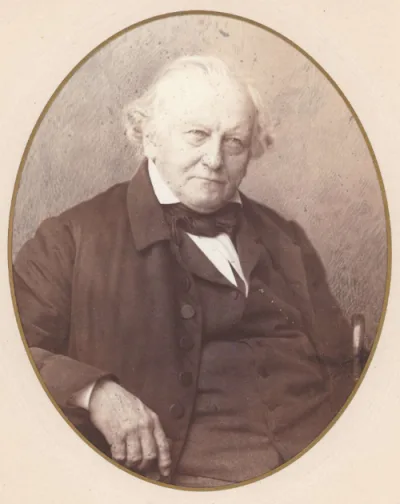
Anna Kingsford, Edward Maitland
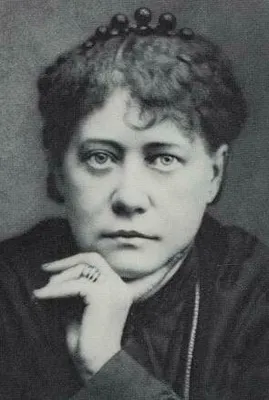
Helena Blavatsky co-founded the Theosophical Society, promoting a synthesis of science, religion, and philosophy, though her life and claims faced significant controversy.
Helena Petrovna Blavatsky, born into Russian aristocracy in 1831, became a prominent mystic and writer, co-founding the Theosophical Society in 1875. She developed an interest in Western esotericism early on, claiming extensive world travels and training in Tibet by spiritual adepts. However, many biographers question the veracity of these journeys, suggesting she spent that time in Europe. Blavatsky was involved in the Spiritualist movement before relocating to the United States, where she co-founded the Theosophical Society with Henry Steel Olcott and William Quan Judge.
In 1877, she published "Isis Unveiled," articulating her Theosophical worldview as a revival of the "Ancient Wisdom" underlying all religions. Her work synthesized science, religion, and philosophy, drawing on Hermeticism and Neoplatonism. Blavatsky and Olcott later moved to India, where they converted to Buddhism. Despite opposition and accusations of fraud, Theosophy gained traction. Blavatsky returned to Europe in 1885, publishing "The Secret Doctrine" and other works before her death in 1891. She remains a controversial figure, seen by some as a sage and by others as a charlatan, yet her ideas significantly influenced Western esotericism and the spread of Eastern philosophies.
Early Life and Influences
Helena Petrovna Hahn von Rottenstern was born into an aristocratic family in Yekaterinoslav, Russian Empire, in 1831. Her childhood was marked by frequent moves across the empire due to her father's military career, potentially influencing her later nomadic life. She received a broad education, including music, art, and languages. Early exposure to Tibetan Buddhism through interactions with Kalmyk people and her discovery of her great-grandfather's esoteric library in Saratov are noted as significant influences. She also claimed early visionary experiences of a "Mysterious Indian" figure, which some biographers link to her later concept of spiritual "Masters." Her family background included aristocratic Russian, German, and French heritage.
Theosophical Society and Key Works
Blavatsky co-founded the Theosophical Society in New York City in 1875 with Henry Steel Olcott and William Quan Judge. Her seminal work, "Isis Unveiled" (1877), presented her Theosophical system as a synthesis of science, religion, and philosophy, aiming to revive ancient wisdom traditions. Later, in India, she and Olcott converted to Buddhism. Despite facing accusations of fraudulent phenomena and internal strife, she continued her work, publishing "The Secret Doctrine," "The Key to Theosophy," and "The Voice of the Silence" after returning to Europe in 1885.
Controversy and Legacy
Throughout her life, Blavatsky was a polarizing figure. Supporters viewed her as an enlightened spiritual teacher, while critics accused her of being a charlatan and fabricating paranormal events. Biographers have noted the difficulty in establishing a factual account of her life due to her own contradictory and falsified autobiographical statements. Nevertheless, her teachings and the movement she helped establish played a crucial role in popularizing Eastern religions and philosophies like Hinduism and Buddhism in the West, and significantly impacted the development of various Western esoteric traditions and the New Age movement.
Key Ideas
- Theosophy as the synthesis of science, religion, and philosophy
- Revival of the "Ancient Wisdom" underlying all religions
- The existence of spiritual "Masters of the Ancient Wisdom"
Books by Anna Kingsford, Edward Maitland
1 free public domain book · Read online or download