Paulo Coelho
Paulo Coelho is a Brazilian author known for his best-selling novel 'The Alchemist', exploring spiritual themes.
Born in Rio de Janeiro in 1947, Paulo Coelho's early life included a challenging period where his parents committed him to a mental institution. After escaping multiple times, he eventually left and pursued a more unconventional path, traveling extensively and experimenting with drugs in the 1960s. He initially studied law at his parents' insistence but dropped out to follow his dream of writing.
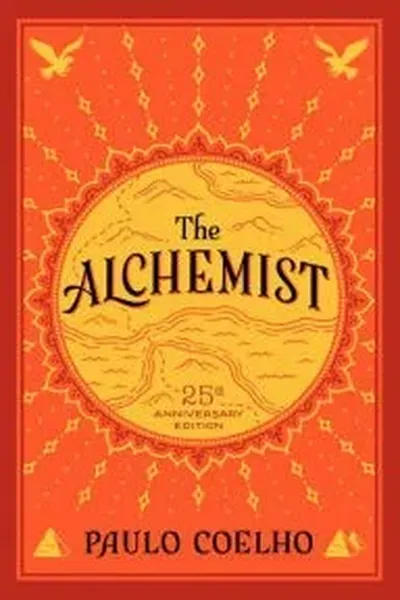
Coelho's career began in music as a songwriter before transitioning to writing. His first book, 'Hell Archives' (1982), saw little success. A significant personal experience was walking the Camino de Santiago in 1986, which he described as a spiritual turning point, leading to his novel 'The Pilgrimage' (1987). His most famous work, 'The Alchemist' (1988), initially had a small print run but later achieved international bestseller status, influenced by Sufi traditions. His writings often blend fictional narratives with autobiographical elements and philosophical reflections.
Early Life and Spiritual Awakening
Paulo Coelho was born in Rio de Janeiro in 1947. His early years included attendance at a Jesuit school and a difficult period where his parents institutionalized him in a mental health facility at age 17 due to his aspirations. He managed to escape this institution three times before his release at age 20. Following his parents' wishes, he briefly enrolled in law school but abandoned this path, choosing instead to live as a hippie and travel through various parts of the Americas, North Africa, Mexico, and Europe during the 1960s, a time when he also began using drugs. A pivotal moment in his life was the 1986 walk along the Camino de Santiago in northwestern Spain, an experience he later characterized as a profound personal spiritual transformation.
Literary Career and Notable Works
After his travels, Coelho returned to Brazil and worked as a songwriter for notable artists before turning his full attention to writing. His initial literary attempts, such as 'Hell Archives' in 1982, did not gain significant traction. He also contributed to 'Practical Manual of Vampirism' in 1986, a work he later disavowed. His 1987 book, 'The Pilgrimage,' was inspired by his Camino de Santiago journey. The subsequent year, he penned 'The Alchemist,' which, despite a small initial print run and lack of immediate publisher interest, eventually became a global phenomenon after being re-released and promoted alongside his later book 'Brida.' The novel's widespread success was further amplified by its publication in English by HarperCollins in 1994. Coelho has indicated that Sufi traditions influenced his writing, particularly 'The Alchemist' and 'The Zahir.'
Themes and Reception
Coelho's literary output spans autobiographical novels, fiction, and collections of essays or teachings. While he identifies as Catholic, his philosophical and spiritual viewpoints, which incorporate elements described as New Age, pantheistic, and relativistic, have drawn criticism for being at odds with traditional Catholic doctrine. His works have achieved immense global reach, with translations into eighty-three languages and sales exceeding 320 million copies across more than 170 countries. Despite his commercial success, critical reviews of his later writings have sometimes characterized them as superficial. A biographical film, 'Paulo Coelho's Best Story,' was released in 2014 and internationally in 2015, depicting his life.
Key Ideas
- Spiritual transformation through journeys and experiences
- Influence of Sufi traditions on personal philosophy
- Exploration of personal destiny and life's journey
- Blending of autobiographical elements with fiction
Books by Paulo Coelho
17 free public domain books · Read online or download