Daniel Heydon
Heydon is a privately owned English village with a long history, notable for its architecture and filming locations.
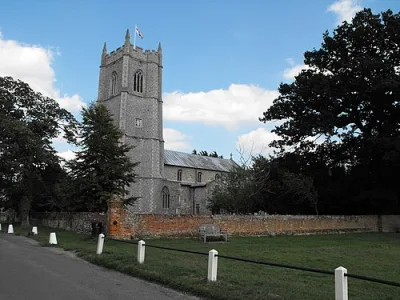
The village of Heydon, located in Norfolk, England, is a privately owned estate with a history dating back potentially before the Domesday Book. While not mentioned in the 1086 Domesday Book, its name is believed to originate from "high down" or "plain on the hill," appearing as "Heidon" in 1196. A market charter was granted in 1311, and the village features the 14th/15th-century Church of St. Peter and St. Paul, a Grade I listed building with rediscovered wall paintings.
The estate, including Heydon Hall (built in 1582), has been owned by the Bulwer family since 1756, making it one of the few entirely privately owned villages in England. The village has retained an old-fashioned character, with no new buildings erected since 1887. Historically, its population peaked in 1831 and has since declined significantly. Heydon was designated Norfolk's first conservation area in 1971 after winning "Best Kept Village" awards.
The village has served as a filming location for various television and film productions, including "The Go Between" and a Monty Python sketch. Amenities include a pub, tea room, bakery, and several small businesses, though it no longer has a post office or convenience shop. The village hosts annual events like a tug of war competition and Guy Fawkes Night celebrations.
Historical Development and Ownership
Heydon's origins are not recorded in the Domesday Book of 1086, suggesting it was part of a now-depopulated settlement. The name "Heydon" is thought to mean "high down" or "plain on the hill," with early documentation from 1196. The village received a market charter in 1311. Central to its history is Heydon Hall, an Elizabethan manor built in 1582 and subsequently expanded. The Bulwer family has owned the estate, including the village, since 1756, making Heydon a rare example of a wholly privately owned English village. This continuous private ownership has contributed to the village's preserved, traditional rural character, with new construction ceasing in the late 19th century.
Architecture and Heritage Sites
The village is characterized by several historically significant buildings. The Church of St. Peter and St. Paul, dating from the 14th/15th century, is a Grade I listed building notable for wall paintings uncovered in 1970. Heydon Hall, a Grade I listed manor house completed in 1584, has undergone modifications and restorations. The Earle Arms, an 18th-century public house by the village green, is Grade II listed and features a "Regionally Important Historic Interior," possibly a coaching inn since the 16th century. The Jubilee Memorial Well House, built in 1887, exemplifies Tudor Revival architecture and is Grade II listed. The village was recognized as Norfolk's first conservation area in 1971.
Filming Location and Community Life
Heydon's picturesque and preserved setting has made it a popular location for film and television productions. It has been featured in productions such as the film "The Go Between" (1970), "Riders" (1993), "A Cock and Bull Story" (2005), and the soap opera "Weaver's Green." A sketch for "Monty Python's Flying Circus" was also filmed in the village. The community life is centered around the village green, with amenities including a pub, tea room, and bakery. Traditional events like the annual tug of war and Guy Fawkes Night celebrations contribute to the village's enduring character. The village now operates with a parish meeting due to its small population.
Books by Daniel Heydon
2 free public domain books · Read online or download