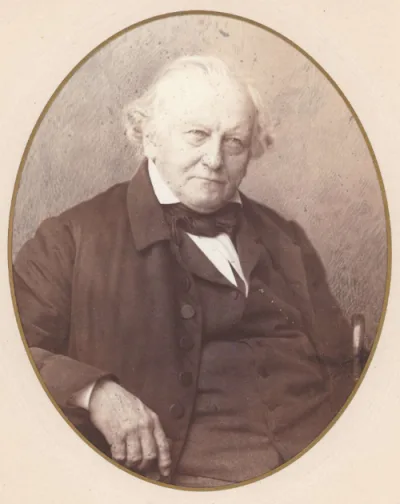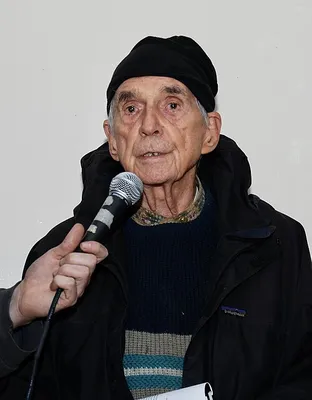
Daniel Berrigan
Daniel Berrigan was a Jesuit priest, poet, and author known for his anti-war activism and co-founding the Plowshares movement.
Daniel Berrigan, born in 1921, was an American Jesuit priest, poet, playwright, and author who became a prominent figure in anti-war activism. His outspoken opposition to the Vietnam War led to multiple arrests and a period as one of the FBI's most wanted. He co-founded the Plowshares movement in 1980, an anti-nuclear protest group that continued his legacy of civil disobedience. Throughout his life, Berrigan was a prolific writer, publishing approximately 50 books, and also served as a teacher and university educator.
Berrigan's activism extended beyond the Vietnam War. He was a proponent of a consistent life ethic, protesting against abortion as well as nuclear weapons. He also dedicated significant time to pastoral care for AIDS patients in New York City, reflecting on his experiences in his book 'Sorrow Built a Bridge: Friendship and AIDS.' His involvement in the Catonsville Nine incident, where draft files were destroyed, became a landmark event in the tactics of anti-war resistance. Berrigan passed away in 2016, leaving a legacy as a radical Christian pacifist and social justice advocate.
Early Life and Priesthood
Daniel Joseph Berrigan was born in Minnesota in 1921 and was the fifth of six sons. His family later moved to Syracuse, New York. A devout Catholic, he joined the Jesuits after high school in 1939 and was ordained a priest in 1952. He earned degrees from St. Andrew-on-Hudson and Woodstock College. Berrigan began his career as a teacher at St. Peter's Preparatory School and later taught French and theology at Brooklyn Preparatory School. He also held positions at Le Moyne College, where he was a professor of New Testament studies and founded its International House. During this period, he won the Lamont Prize for his poetry collection 'Time Without Number' and developed a reputation for radicalism, opposing poverty and advocating for changes in the relationship between clergy and laity.
Anti-War Activism and Civil Disobedience
Berrigan's activism intensified in the 1960s, particularly his opposition to the Vietnam War. Inspired by discussions with French Jesuits and witnessing the war's impact, he co-founded the Catholic Peace Fellowship and Clergy and Laymen Concerned About Vietnam (CALCAV). He traveled to Hanoi in 1968 to receive American prisoners of war. A pivotal moment in his activism was the 1968 Catonsville Nine incident, where he and eight other Catholic protesters destroyed draft files. This act of civil disobedience led to his arrest and a prison sentence, but he evaded capture for a time, becoming the first priest on the FBI's most wanted list. The Catonsville Nine trial significantly influenced anti-war resistance tactics, shifting towards civil disobedience. Berrigan also participated in the Writers and Editors War Tax Protest.
Plowshares Movement and Later Activism
In 1980, Daniel Berrigan, along with his brother Philip and others, initiated the Plowshares movement, a group dedicated to nonviolent resistance against nuclear weapons. The movement's first action involved trespassing at a nuclear missile facility and damaging missile nose cones. This led to further arrests and legal battles, with Berrigan and his associates eventually being re-sentenced and paroled after years of appeals. Berrigan also championed a consistent life ethic, protesting against abortion in 1991. Furthermore, he provided pastoral care to AIDS patients in New York City, documenting his experiences in 'Sorrow Built a Bridge: Friendship and AIDS,' which explored the human impact of the epidemic and the ostracism faced by many patients, particularly gay Catholics.
Key Ideas
- Christian Pacifism
- Anti-War Activism
- Civil Disobedience
- Consistent Life Ethic
- Opposition to Nuclear Weapons
Notable Quotes
“But how shall we educate men to goodness, to a sense of one another, to a love of the truth? And more urgently, how shall we do this in a bad time?”
“We confront the Roman Catholic Church, other Christian bodies, and the synagogues of America with their silence and cowardice in the face of our country's crimes. We are convinced that the religious bureaucracy in this country is racist, is an accomplice in this war, and is hostile to the poor.”
“I see an 'interlocking directorate' of death that binds the whole culture. That is, an unspoken agreement that we will solve our problems by killing people in various ways; a declaration that certain people are expendable, outside the pale. A decent society should no more have an abortion clinic than The Pentagon.”
“We deal with very many gay Catholics who have felt terribly hurt and misused by the church. There are some people who want to be reconciled with the church and there are others who have great bitterness. So I try to perform whatever human or religious work that seems called for.”
“Both the church and the state are finding ways to kill people with AIDS, and one of the ways is ostracism that pushes people between the cracks of respectability or acceptability and leaves them there to make of life what they will or what they cannot.”
Books by Daniel Berrigan
2 free public domain books · Read online or download