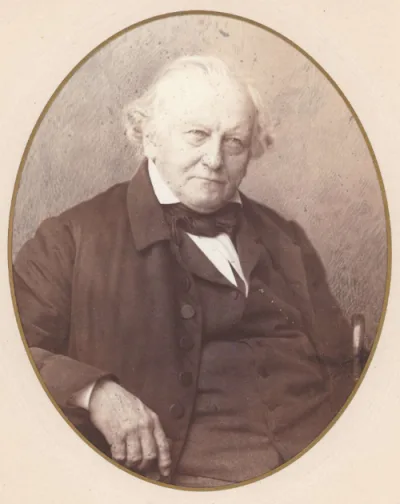
✍️ Author Biography
Richard Marsh
📅 1830 – 1911
🌍 British
📚 3 free books
⭐ Known for: Daintree (1893)
Richard Marsh, born Richard Bernard Heldmann, was a prolific Victorian and Edwardian author known for his supernatural thriller 'The Beetle'.
Richard Marsh, whose birth name was Richard Bernard Heldmann, was a highly productive English author active in the late 19th and early 20th centuries. He penned nearly 80 volumes of fiction, encompassing genres like horror, crime, romance, and humour. Marsh is most remembered today for his 1897 novel, 'The Beetle,' a supernatural thriller that achieved significant popularity, initially outselling Bram Stoker's 'Dracula.' The novel remained in print for many decades and has seen recent republications. Marsh's career trajectory involved an early period writing boys' adventure stories under his birth name before adopting the pseudonym 'Richard Marsh' after a period of imprisonment for forgery. His later work explored themes relevant to the fin de siècle, including societal anxieties, the New Woman, and imperial concerns, often incorporating elements of mystery and the occult.
Early Life and Literary Beginnings
Born Richard Bernard Heldmann in 1857, Marsh initially pursued a literary career under his own name, focusing on boys' school and adventure stories for magazines like 'Union Jack.' He even served as co-editor for this publication under the mentorship of G. A. Henty. However, his association with 'Union Jack' ended abruptly in 1883. Following this, Heldmann ceased publishing under his birth name and adopted the pseudonym 'Richard Marsh' a few years later. The reasons for this change were long debated, with speculation suggesting a desire to distance himself from his father's German-Jewish heritage. However, it was later revealed that Heldmann had served eighteen months of hard labor for issuing forged checks in Britain and France.
The Beetle and Supernatural Themes
Marsh's most commercially successful novel was 'The Beetle,' published in 1897, the same year as 'Dracula.' This supernatural thriller, which tells the story of a mysterious oriental figure causing havoc in London through hypnosis and shape-shifting, initially proved more popular than Stoker's iconic work. 'The Beetle' delves into various fin de siècle concerns, such as the New Woman, urban poverty, radical politics, and Britain's imperial ventures. The novel's narrative structure, employing multiple perspectives, was a common technique in late 19th-century suspense fiction. Its enduring appeal led to it remaining in print until 1960 and subsequent adaptations for film and stage.
Genre Exploration and Later Works
Beyond 'The Beetle,' Richard Marsh produced a wide array of fiction, including notable horror novels like 'The Goddess: A Demon' (1900) and 'The Joss: A Reversion' (1901), which explored themes of animated idols and transformation. Mystery and crime were also recurring elements in his work, as seen in 'Philip Bennion's Death' (1897) and 'The Datchet Diamonds' (1898). Marsh also incorporated science fiction elements, such as in 'A Spoiler of Men' (1905), where a villain uses chemical injections to control others. He even ventured into speculative fiction with 'A Second Coming' (1900), imagining Christ's return to early 20th-century London. Marsh was recognized as a writer who understood the literary market and often pushed the boundaries of contemporary literary conventions.
Short Fiction and Notable Creations
Marsh demonstrated considerable skill in crafting short stories, which appeared in prominent literary periodicals like 'The Strand Magazine.' His collections, such as 'The Seen and the Unseen' (1900) and 'Marvels and Mysteries' (1900), featured a blend of humor, crime, romance, and the occult. His experiences likely informed stories like 'The Death Whistle' (1903), which deals with revenge. Marsh also created memorable characters for serial narratives, including the rival collectors Mr. Pugh and Mr. Tress, involved with bizarre artifacts, and Miss Judith Lee, a deaf teacher who uses her lip-reading skills to solve mysteries. Another popular character was Sam Briggs, whose adventures as a clerk and later a World War I soldier were serialized.