Horace Walpole
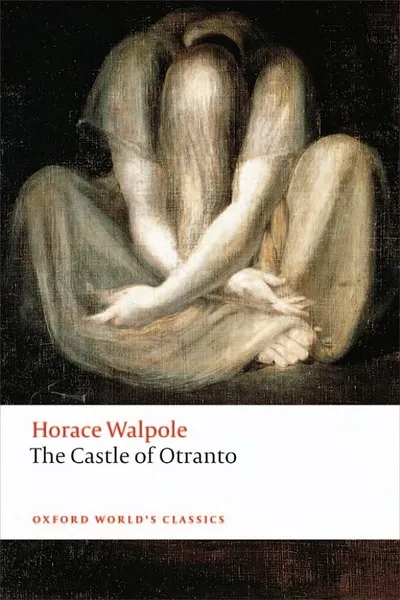
Horace Walpole was a British politician, writer, and antiquarian known for the Gothic novel 'The Castle of Otranto' and his extensive letters.
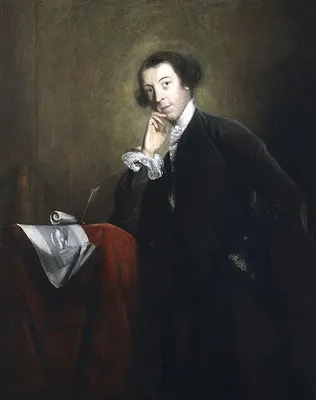
Horace Walpole, born in 1717, was the youngest son of Britain's first Prime Minister, Sir Robert Walpole. He pursued a career in politics as a Whig Member of Parliament, though he also developed a reputation as a writer, historian, and antiquarian. Walpole's most significant literary contribution is widely considered to be 'The Castle of Otranto,' published in 1764, which is credited as the first Gothic novel. His extensive correspondence, published in numerous volumes, offers valuable insights into the social and political landscape of his era. He also commissioned the rebuilding of his home, Strawberry Hill House, in a Gothic style, predating the Victorian revival of the architectural movement.
Walpole's personal life and beliefs have been subjects of discussion. He was educated at Eton and King's College, Cambridge, where he was influenced by the unorthodox theologian Conyers Middleton, fostering a lifelong skepticism towards certain Christian doctrines and a dislike for superstition. He never married and had no known serious romantic relationships with women, leading to speculation about his sexual orientation and descriptions of him as asexual or effeminate by contemporaries and biographers. He inherited several government offices from his father, providing him with a substantial income.
Literary and Architectural Legacy
Horace Walpole's enduring fame stems largely from his literary and architectural endeavors. He is celebrated as the author of 'The Castle of Otranto' (1764), a work that pioneered the Gothic novel genre, influencing subsequent generations of writers. Beyond this seminal novel, Walpole's vast collection of letters provides a rich tapestry of observations on 18th-century British society and politics, deemed of significant historical value and published in extensive collections. His architectural contributions are embodied in Strawberry Hill House, his residence in Twickenham. Walpole meticulously redesigned and expanded this estate, imbuing it with a distinct Gothic Revival aesthetic decades before the style became widely popular in the Victorian era. This unique home became a notable architectural statement and a center for intellectual gatherings, hosting members of the Blue Stockings Society.
Early Life and Intellectual Development
Born in London in 1717, Horace Walpole was the youngest son of Sir Robert Walpole, the first British Prime Minister. His education included stints at Eton College and King's College, Cambridge. During his university years, he was influenced by Conyers Middleton, an unconventional theologian whose skeptical views on core Christian tenets resonated with Walpole, shaping his lifelong aversion to superstition and intolerance, despite his nominal Anglican faith. His mother's death in 1737 profoundly affected him, described by one biographer as the most significant emotional event of his life. Walpole never married and his romantic life has been a subject of biographical interest and speculation.
Political and Financial Background
As the son of a powerful politician, Horace Walpole entered public life with advantages. His father secured for him several lucrative sinecure positions, providing a considerable income that allowed him to pursue his interests without financial hardship. He served as a Member of Parliament for various constituencies, including the rotten borough of Callington and later Castle Rising, for over two decades. While in Parliament, he aligned with Whig principles, demonstrating classical liberal views on issues such as slavery and the American Revolution. His political career coincided with significant shifts in government, including his father's eventual downfall. The Jacobite Rising of 1745 highlighted his precarious position, dependent on the Hanoverian succession his family supported.
Key Ideas
- Pioneering the Gothic novel genre
- Revival of Gothic architecture
- Skepticism towards superstition and bigotry
- Observations on 18th-century social and political life through correspondence
Notable Quotes
“Now comes the Pretender's boy, and promises all my comfortable apartments in the Exchequer and Custom House to some forlorn Irish peer, who chooses to remove his pride and poverty out of some large old unfurnished gallery at St. Germain's. Why really, Mr. Montagu, this is not pleasant! I shall wonderfully dislike being a loyal sufferer in a threadbare coat, and shivering in an antechamber at Hanover, or reduced to teach Latin and English to the young princes at Copenhagen”
“I was too young, too fond of my own diversions, nay, I do not doubt, too much intoxicated by indulgence, vanity, and the insolence of my situation, as a Prime Minister's son, not to have been inattentive and insensible to the feelings of one I thought below me; of one, I blush to say it, that I knew was obliged to me; of one whom presumption and folly perhaps made me deem not my superior then in parts, though I have since felt my infinite inferiority to him.”
Books by Horace Walpole
4 free public domain books · Read online or download