The Dark Other
 75
75

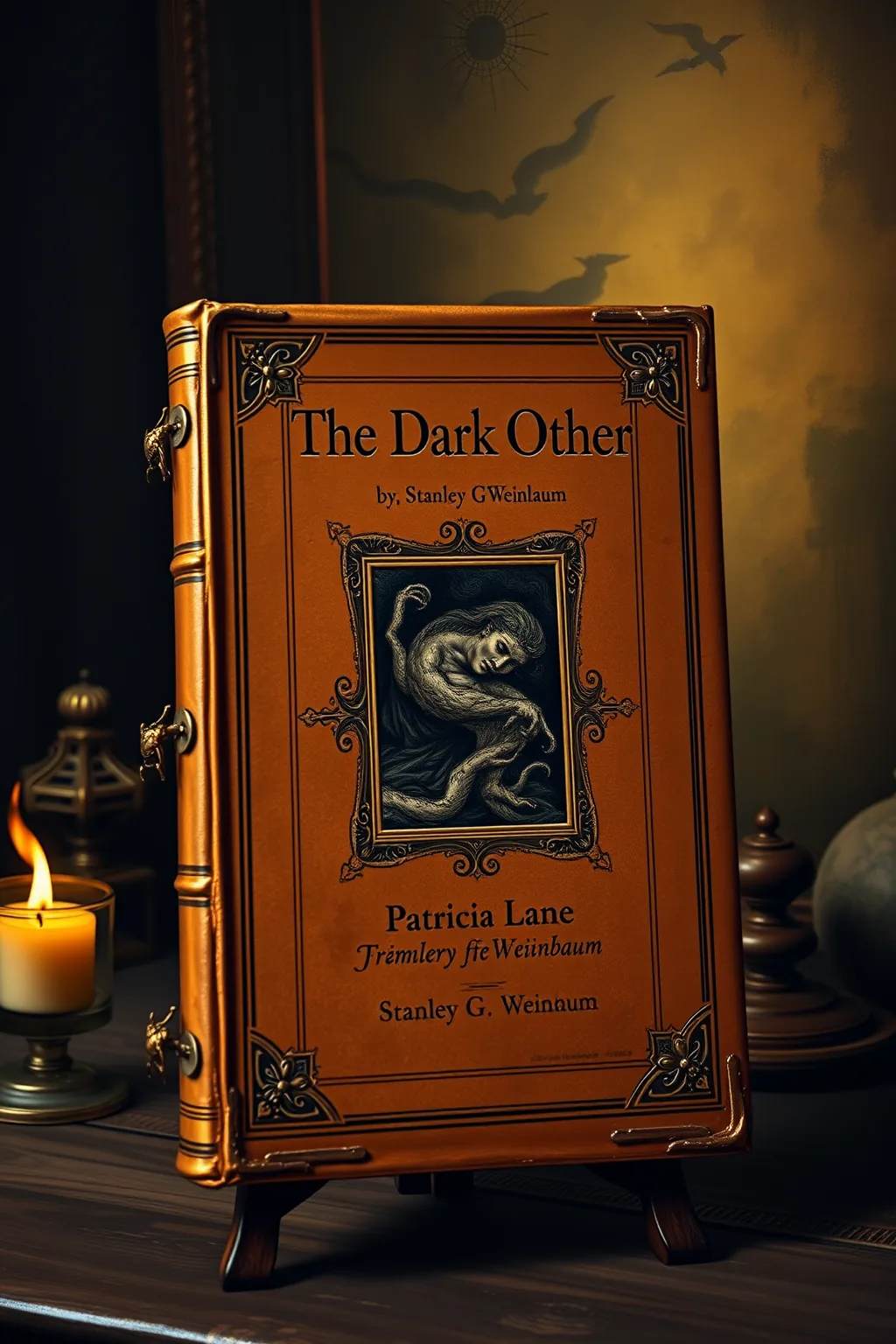
The Dark Other


Sophia Crane (Associate Editor) — 'The Dark Other' stands as a chilling testament to Weinbaum's early exploration of consciousness's labyrinthine depths. Beyond its gripping narrative, the novel offers profound insights into the duality of the self and the hidden potentials within. Weinbaum doesn't just tell a story; he probes the very essence of being, hinting at psychic phenomena and the esoteric nature of our inner landscapes. It’s a must-read for aficionados of psychological thrillers, speculative fiction, and anyone intrigued by the metaphysical underpinnings of identity. The book's enduring power lies in its ability to resonate with the seeker's quest for deeper self-understanding.
📝 Description
75
Stanley G. Weinbaum's 1934 novel 'The Dark Other' examines the hidden self.
In 'The Dark Other,' Stanley G. Weinbaum presents a narrative focused on Patricia Lane and writer Nicholas Devine. Their relationship becomes a conduit for exploring unsettling psychological phenomena and the idea of a secondary consciousness. The story unfolds as Lane experiences growing unease, suggesting a reality beyond ordinary perception.
Weinbaum constructs an atmosphere that mixes dread with intellectual inquiry. The novel prompts readers to consider the fundamental nature of identity and the hidden influences that guide human lives. It questions the stability of the self when confronted with the unknown.
Published in 1934, 'The Dark Other' engages with themes of consciousness and hidden realities that resonated with occult and esoteric thought of the early 20th century. Writers of the period often explored the idea of a hidden self or a subconscious mind that could be influenced by external or internal forces beyond rational control. Weinbaum’s work touches upon these concepts, placing it within a literary tradition that contemplated the limits of perception and the potential for unseen dimensions to affect human experience.
✍️ Author
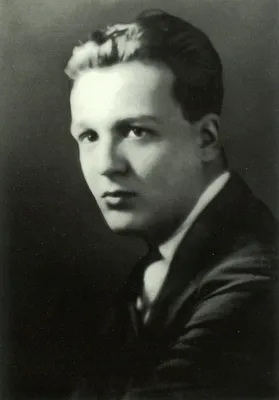
Stanley G Weinbaum
Stanley Grauman Weinbaum (April 4, 1902 – December 14, 1935) was an American science fiction writer. His first story, "A Martian Odyssey", was published to great acclaim in July 1934; the alien Tweel was arguably the first character to satisfy John W.
💡 Why Read This Book?
Embark on a profound exploration of the human mind's hidden dimensions and the unsettling possibility of a dual consciousness. 'The Dark Other' offers a unique blend of psychological suspense and early speculative fiction, ideal for seekers of esoteric truths, scholars of metaphysical literature, and practitioners interested in the nature of self and perception. Discover the unsettling beauty of what lies beneath the surface.
⭐ Reader Reviews
Honest opinions from readers who have explored this book.
❓ Frequently Asked Questions
What is the core theme of 'The Dark Other'?
The core theme revolves around the unsettling concept that another mind, or a hidden 'other self,' may exist within human identity, challenging our perception of individuality and consciousness.
Who is Nicholas Devine?
Nicholas Devine is an ambitious writer fascinated by horror, whose relationship with Patricia Lane becomes a catalyst for exploring the novel's darker, psychological themes.
Is 'The Dark Other' a horror novel?
While it contains elements of psychological horror, 'The Dark Other' is more accurately described as speculative fiction that uses horror to explore profound metaphysical and psychological concepts.
What makes this book relevant to esoteric studies?
The novel delves into the hidden aspects of consciousness, the duality of the self, and the potential for unseen forces to influence our reality, aligning with many esoteric inquiries into the nature of being.
When was 'The Dark Other' first published?
Stanley G. Weinbaum's 'The Dark Other' was first published in 1950.
🔮 Key Themes & Symbolism
The Duality of Self
This novel plunges into the unsettling concept of a fractured or dual consciousness, suggesting that the 'self' we perceive might be a mere facade for deeper, more complex psychic structures. It questions the singularity of identity, proposing that an 'other' self, with its own distinct awareness and potential, could reside within us, influencing our thoughts and actions in ways we cannot comprehend. This theme resonates deeply with esoteric traditions that explore the multiple layers of the soul and the unconscious mind.
The Unseen Influence
Weinbaum masterfully crafts an atmosphere where unseen forces and hidden potentials permeate the narrative. The story suggests that our reality is not solely dictated by tangible events but is also shaped by subtle energies and psychic connections that lie beyond empirical observation. This exploration of the invisible realm is a central to many occult and metaphysical philosophies, prompting readers to consider the energetic and spiritual dimensions that influence our lives and relationships.
Perception and Reality
At its heart, 'The Dark Other' is an investigation into the subjective nature of perception and its role in shaping our reality. The characters' experiences are filtered through their own psychological lenses, blurring the lines between what is objectively real and what is internally constructed. This aligns with esoteric thought that emphasizes the power of the mind to manifest and perceive reality, suggesting that our understanding of the universe is intrinsically linked to our inner state and our capacity to access deeper levels of awareness.
💬 Memorable Quotes
Direct passages from the work, attributed to the author.
“The horror was not in what was seen, but in what was known.”
— This speaks to a deeper, existential dread rooted in self-awareness and the terrifying realization of one's own deeper meaning or potential for corruption.
“The veil between worlds grew thin.”
— Suggests a permeable boundary between the mundane and the supernatural or psychic, where influences from unseen realms begin to intrude upon normal experience.
“He wrote of shadows, and the shadows wrote back.”
— Illustrates a dangerous symbiosis between creative expression and the darker, perhaps sentient, forces that can be invoked through such endeavors.
“Identity was a fragile illusion.”
— A profound statement on the precariousness of selfhood, hinting that what we consider our stable identity is easily fractured or challenged by internal or external forces.
💡 Key Ideas
Editorial paraphrase of the work's core concepts — not direct quotes.
There was another mind there, not mine.
This quote captures the central mystery, hinting at an alien consciousness or a hidden aspect of the self asserting its presence, challenging the protagonist's sense of sole dominion over her own thoughts.
🌙 Esoteric Significance
Tradition
This work strongly speaks to the Western Esoteric Tradition, particularly its branches that explore consciousness, the subtle body, and the nature of the soul. It echoes Gnostic ideas of hidden knowledge and the 'other' within, as well as Jungian psychology's exploration of the shadow self and the collective unconscious. The novel can be seen as a fictionalized exploration of concepts like psychic projection, doppelgängers, and the inherent duality present in all existence.
Symbolism
The 'dark other' itself serves as a potent symbol for the repressed self, the shadow archetype, or an external psychic entity. The setting, often imbued with a sense of claustrophobia and unease, symbolizes the internal field of the characters' minds. The act of writing and the stories within stories can symbolize the process of uncovering hidden truths or the dangerous allure of studying forbidden knowledge. The encroaching darkness represents the unknown and the loss of control over one's own identity.
Modern Relevance
In an age increasingly defined by digital identities, the fragmented self, and the exploration of consciousness through neuroscience and psychology, 'The Dark Other' remains remarkably relevant. Its exploration of the unseen forces that shape us and the potential for an 'other' within speaks to contemporary discussions on mental health, identity politics, and the very definition of what it means to be human. The novel's themes encourage introspection and a critical examination of our own inner worlds.
👥 Who Should Read This Book
This novel is a compelling choice for a diverse readership. **Beginners** to metaphysical fiction will find a gripping narrative that gently introduces complex ideas. **Scholars** of literature and psychology will appreciate its nuanced exploration of identity and the subconscious. **Seekers** of esoteric knowledge will discover a body of themes related to consciousness and the hidden self. **Practitioners** of mind-based disciplines may find resonance in its portrayal of internal struggles and the power of perception. Anyone intrigued by the mysteries of the human psyche and the blurred lines between reality and illusion will be captivated.
📜 Historical Context
Published in 1950, 'The Dark Other' emerged during a period of significant cultural and intellectual transition. The post-war era saw a burgeoning interest in psychology, particularly Freudian and Jungian theories, which explored the subconscious and archetypal realms. Simultaneously, science fiction was evolving beyond 'space opera' into more complex narratives that grappled with philosophical and psychological themes. Weinbaum, known for his innovative speculative fiction, tapped into this zeitgeist, blending the era's fascination with the mind's deeper meaning and the unknown with a chilling narrative. The novel reflects a growing unease with the self and the potential for internal fragmentation, mirroring societal anxieties about identity and the unseen forces shaping human experience.
📔 Journal Prompts
Reflect on a time you felt a disconnect between your outward persona and an inner feeling. How might this relate to the concept of a 'dark other'?
Explore the idea of a hidden self. What qualities or desires might reside in your own 'dark other' if it were to manifest externally?
Consider the power of perception in shaping reality. How might your current beliefs or fears be creating a specific version of your world?
If your subconscious could communicate directly, what messages or warnings might it convey to your conscious mind?
Analyze the relationship between Nicholas Devine and Patricia Lane. How does their shared fascination with the macabre influence their individual psyches?
🗂️ Glossary
Doppelgänger
In folklore and psychology, a doppelgänger is a look-alike or double of a living person. In literature, it often symbolizes a hidden aspect of the self or an omen of misfortune, aligning with the 'other' self concept.
Subconscious Mind
The part of the mind of which we are not aware but which influences our actions and feelings. This is the primary battleground for the 'dark other' in the narrative.
Psychic Phenomena
Events or abilities that are believed to originate from the mind or consciousness, transcending the known laws of physics, such as telepathy or precognition, which are hinted at in the novel.
Archetype
A recurring symbol or motif in literature, art, or mythology, representing universal patterns of human nature and experience. The 'dark other' can be seen as a manifestation of the shadow archetype.
Metaphysical
Concerned with the fundamental nature of reality, existence, and being, often extending beyond the physical world. This term describes the novel's deeper philosophical inquiries.
This book appears in 1 collection
🔮 Readers Also Liked
Browse all →




From the “Transcendental Meditation” Collection
View all →


![Aloysii Charitini [pseud.] Discurs von trüglichen Kennzeichen der Zauberey, worinnen viel abergläubische Meinungen vernunfftmässig untersucht und verworffen; wie auch ... 1708: Iss 174](/img/thumb/aloysii-charitini-pseud-discurs-von-tr-glichen-kennzeichen-der-zauberey-worinnen-viel-abergl-ubische-meinungen-vernunfftm-ssig-untersucht-und-verworffen-wie-auch-1708-iss-174-brunneman-jacob-d-1735.webp)

More Free Supernatural & Occult Fiction Books
View all →